Acacia reficiens
Wawra
FabaceaeBark/Sap

iNaturalist · cc-by-nc
(c) Alex Dreyer, some rights reserved (CC BY-NC)
(c) Alex Dreyer, some rights reserved (CC BY-NC)

iNaturalist · cc-by-nc
(c) Alex Dreyer, some rights reserved (CC BY-NC)
(c) Alex Dreyer, some rights reserved (CC BY-NC)
iNaturalist · cc0
no rights reserved
no rights reserved
What to Eat
Edible parts: Bark
The inner bark is sweet and is chewed.
Where to Find It
It is a tropical plant.
Africa, Angola, East Africa, Kenya,
Countries: Angola, Burkina Faso, Burundi, Benin, Botswana, Congo (DRC), Central African Republic, Congo (Republic), Cote d'Ivoire, Cameroon, Cape Verde, Djibouti, Algeria, Egypt, Eritrea, Ethiopia, Gabon, Ghana, Gambia, Guinea, Equatorial Guinea, Guinea-Bissau, Kenya, Comoros, Liberia, Lesotho, Libya, Morocco, Madagascar, Mali, Mauritania, Mauritius, Malawi, Mozambique, Namibia, Niger, Nigeria, Rwanda, Seychelles, Sudan, Sierra Leone, Senegal, Somalia, South Sudan, Sao Tome & Principe, Eswatini, Chad, Togo, Tunisia, Tanzania, Uganda, South Africa, Zambia, Zimbabwe
How to Identify
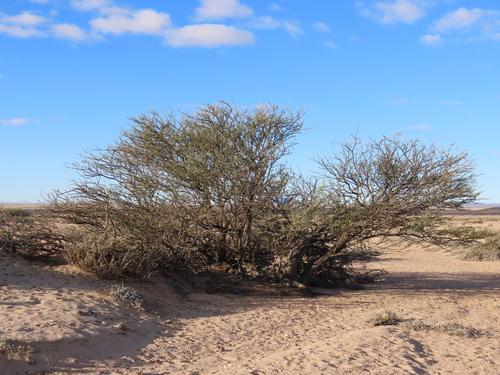
A shrub or small tree. It grows 5 m tall. There are prickles along the stem. The leaves are twice divided and there are 8-18 pairs of pinnae. There are up to 50 pairs of pinnules on each pinnae. The flowers are yellow. They are in large clusters at the ends of branches. The pods are flattened.
Names & Synonyms
Nchorai
References (2)
- Ichikawa, M., 1980, The Utilization of Wild Food Plants by the Suiei Dorobo in Northern Kenya. J. Anthrop. Soc. Nippon. 88(1): 25-48
- Mutie, F. G., 2020, Conservation of Wild Food Plants and Their Potential for Combatting Food Insecurity in Kenya as Exemplified by the Drylands of Kitui County. Plants 2020, 9, 1017




