Pouteria bangii
(Rusby) T. D. Penn.
SapotaceaeFruit

iNaturalist · cc-by-nc
(c) Geovane Siqueira, some rights reserved (CC BY-NC), uploaded by Geovane Siqueira
(c) Geovane Siqueira, some rights reserved (CC BY-NC), uploaded by Geovane Siqueira

iNaturalist · cc-by-nc
(c) Geovane Siqueira, some rights reserved (CC BY-NC), uploaded by Geovane Siqueira
(c) Geovane Siqueira, some rights reserved (CC BY-NC), uploaded by Geovane Siqueira
What to Eat
Edible parts: Fruit
The fruit is edible.
Where to Find It
It is a tropical plant. It grows in rainforest and savanna.
Amazon, Bolivia, Brazil, Colombia, Ecuador, Guianas, Peru, South America,
How to Identify
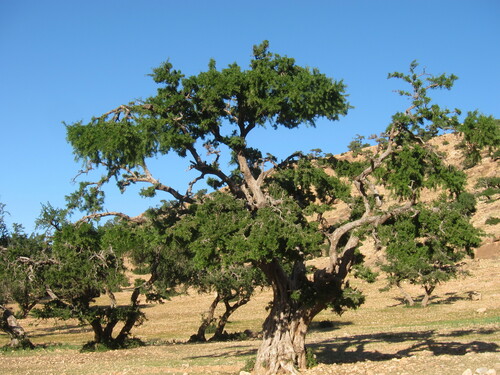
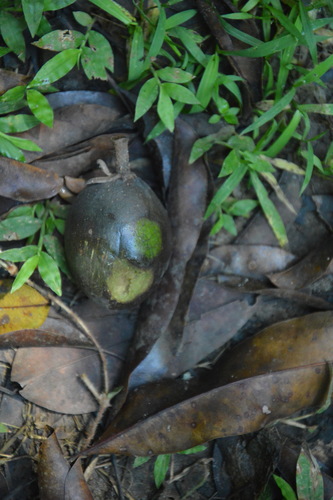
A tree. It grows 30 m tall. The trunk is 40 cm across. The bark is finely cracked along its length. There are 5-20 flowers in a group. The fruit are oblong and 2.5-3 cm long by 1.5-1.7 cm wide. They can be larger. They are green to orange when ripe. There is one seed.
Names & Synonyms
Abiorana, Abiu-rosadinha, Airo tao, Aspeba, Bapeba, Guaracica, Kucha aviyu, Leiteiro, Menimo, Ontogamo, Pepeboiti, Timbedawe, Tuma muri
Lucuma melinonii Engl.Podoluma glaziovii Baill. ex Glaz.Pouteria micans BaehniPseudocladia colombiana Aubrev.Sideroxylon bangii Rusbyand others
References (5)
- Lopez-Diago, D. & Garcia, N., 2021, Wild edible fruits of Colombia. Biota ColomBiana 22 (2) p 51
- Philips, O., 1992, The potential for harvesting fruits in tropical rainforests: new data from Amazonian Peru. Biodiversity and Conservation 2, 18-38
- Roa, J. A. G. & Boada, D. S. G., 2018, Fundación para el Fortalecimiento de la Fruticultura y Plantas Alimenticias no Convencionales en Colombia.
- Torre, de la, L., et al, 2008, Enciclopedia de las Plantas Útiles del Ecuador. Herbario QCA. Pontificia Universidad Católica del Ecuador. p 571
- Van Roosmalen, M.G.M., & Garcia, O. M., 2000, Fruits of the Amazonian Forest. Part 2: Sapotaceae. Acta Amazonica 30(2): 187-290