Curcuma longa
L.
Turmeric

(c) Manojk, some rights reserved (CC BY-SA)

(c) Kai Yan, Joseph Wong, some rights reserved (CC BY-NC-SA)

(c) Ji-Elle, some rights reserved (CC BY-SA)
What to Eat
Edible parts: Rhizome, Root, Leaves as condiment, Herb, Spice, Flowers
Turmeric is one of the key ingredients in many Asian dishes, imparting a mustard-like, earthy aroma and pungent, slightly bitter flavor to foods. It is used mostly in savory dishes, but also is used in some sweet dishes, such as the Lebanese cake sfouf. In India, turmeric leaf is used to prepare special sweet dishes, patoleo, by layering rice flour and coconut-jaggery mixture on the leaf, then closing and steaming it in a special utensil (chondrõ). Most turmeric is used in the form of rhizome powder to impart a golden yellow color. It is used in many products such as canned beverages, baked products, dairy products, ice cream, yogurt, yellow cakes, orange juice, biscuits, popcorn, cereals and sauces. It is a principal ingredient in curry powders. Although typically used in its dried, powdered form, turmeric also is used fresh, like ginger. Turmeric is used widely as a spice in South Asian and Middle Eastern cooking. Various Iranian khoresh recipes begin with onions caramelized in oil and turmeric. The Moroccan spice mix ras el hanout typically includes turmeric. In South Africa, turmeric is used to give boiled white rice a golden color, known as geelrys (yellow rice) traditionally served with bobotie. In Vietnamese cuisine, turmeric powder is used to color and enhance the flavors of certain dishes, such as bánh xèo, bánh khọt, and mì Quảng. The staple Cambodian curry paste, kroeung, used in many dishes, including fish amok, typically contains fresh turmeric. In Indonesia, turmeric leaves are used for Minang or Padang curry base of Sumatra, such as rendang, sate padang, and many other varieties. In the Philippines, turmeric is used in the preparation and cooking of kuning, satti, and some variants of adobo. In Thailand, fresh turmeric rhizomes are used widely in many dishes, in particular in the southern Thai cuisine, such as yellow curry and turmeric soup. Turmeric is used in a hot drink called "turmeric latte" or "golden milk" that is made with milk, frequently coconut milk. The turmeric milk drink known as haldī dūdh (haldī [हलदी] means turmeric in Hindi) is a traditional Indian recipe. Sold in the US and UK, the drink known as "golden milk" uses nondairy milk and sweetener, and sometimes black pepper after the traditional recipe (which may also use ghee). Turmeric can also be used in various other drinks such as turmeric juices and teas. Turmeric is approved for use as a food color, assigned the code E100. The oleoresin is used for oil-containing products. In combination with annatto (E160b), turmeric has been used to color numerous food products. Turmeric is used to give a yellow color to some prepared mustards, canned chicken broths, and other foods—often as a much cheaper replacement for saffron.
Known Hazards
Where to Find It
It is a tropical plant. It is widespread in coastal areas up to 1000 m altitude in the Philippines. It needs a hot moist climate and a well drained soil. The soil needs to be loose for good rhizomes. Plants can grow in the shade but the yield is lower. Plants are drought and frost tender. It needs a temperature above 13°C. It suits hardiness zones 10-11. In Sichuan and Yunnan.
Africa, Andamans, Andes, Asia, Australia, Bangladesh, Belize, Bhutan, Bougainville, Brazil, Cambodia, Caribbean, Central America, China, Chuuk, Colombia, Congo DR, Cook Islands, Costa Rica, Côte d'Ivoire, Cuba, East Africa, East Timor, Easter Island, Ethiopia, Fiji, FSM, Gambia, Guam, Guinea-Bissau, Hawaii, Himalayas, India, Indochina, Indonesia, Ivory Coast, Jamaica, Japan, Kiribati, Laos, Madagascar, Malawi, Malaysia, Maldives, Marianas, Marquesas, Mauritius, Micronesia, Mozambique, Myanmar, Nepal, New Caledonia, Niue, Northeastern India, Pacific, Pakistan, Palau, Papua New Guinea, PNG, Peru, Philippines, Pohnpei, Reunion, Rotuma, Samoa, Sao Tome and Principe, SE Asia, Sierra Leone, Sikkim, Slovenia, South America, Sri Lanka, St Lucia, Taiwan, Thailand, Tibet, Timor-Leste, Tonga, Uganda, USA, Vanuatu, Vietnam, Wallis & Futuna, West Africa, West Indies, West Timor, Yap, Zambia,
How to Identify
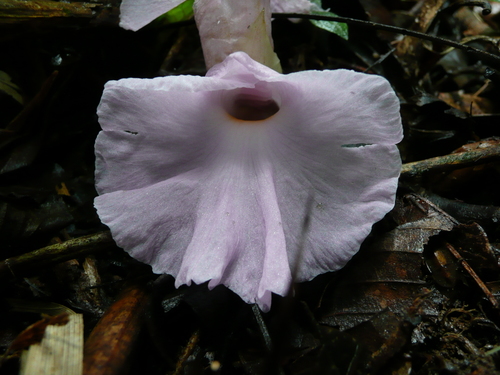
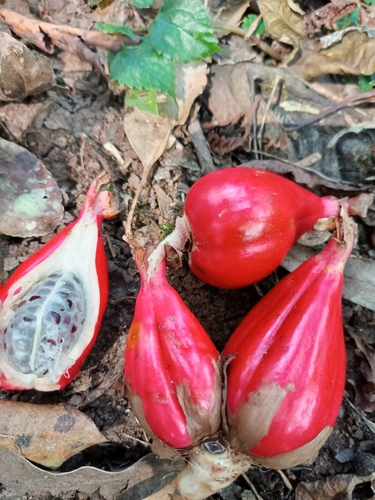
A herb in the ginger family which continues growing from year to year. For harvesting it is grown as an annual crop. It grows up to 1 m high and spreads to 50 cm across. The stem is erect. Under the ground it has bright orange fattened stem or rhizome. These have a sweet smell. The main fattened part is about 5-8 cm long by 1-5 cm across. It has thinner branches off it. These are thickened with secondary tubers. The leaves are in a cluster and have leaf stalks that clasp the stem. The leaves are sword shaped and have long leaf stalks. Leaves are long, flat and bright green. The flowers are dull yellow. They occur in clusters of 3-5. Normally the cultivated turmeric is a sterile triploid plant which does not bear fruit.
Nutrition Score: 65/100
| Part | Moisture | kJ | kcal | Protein | Vit A | Vit C | Iron | Zinc |
|---|---|---|---|---|---|---|---|---|
| Rhizome dried | 11.4 | 1481 | 353 | 7.8 | 0 | 25.9 | 41.4 | 4.4 |
| Roots fresh | 88.2 | 192 | 46 | 1.2 | — | — | 2.3 | — |
How to Grow
Plants are normally grown from pieces of the rhizome. Pieces with one or two buds are used. Larger side tubers are best. They are planted 6-8 cm deep. The distance between plants needs to be 30-40 cm. They can also be grown from seed where these occur. The roots are harvested as the leaves start to die back.
Propagation: Seed - best sown as soon as it is ripe. Germinates best at temperatures around 20°c. Division of the rhizome when the plant is dormant.
Medicinal Uses
Turmeric powder is about 60–70% carbohydrates, 6–13% water, 6–8% protein, 5–10% fat, 3–7% dietary minerals, 3–7% essential oils, 2–7% dietary fiber, and 1–6% curcuminoids. The golden yellow color of turmeric is due to curcumin. Phytochemical components of turmeric include diarylheptanoids, a class including numerous curcuminoids, such as curcumin, demethoxycurcumin, and bisdemethoxycurcumin. Curcumin constitutes an average of 3.14% by weight of assayed commercial samples of turmeric powder; curry powder contains much less (an average of 0.29%). Some 34 essential oils are present in turmeric, among which turmerone, germacrone, atlantone, and zingiberene are major constituents.
Other Uses
The root is a source of yellow and orange dyes for silk and wool. Most notably, it is used for colouring the robes of Buddhist monks. Turmeric is recognized in the dyeing industry as one of the 'direct colours', capable of dyeing cotton without a mordant. However, as the pigment is extremely sensitive to light, it easily discolours, and when applied to cotton, wool or silk it is usually used in a weak solution of acetic acid or alum. Alkali in the dye bath can be used to impart a reddish hue. The rhizomes are also used in as a cosmetic for the body and face. The dye can be used as an indicator of acids and alkalis. The cured and dried rhizomes produce an aromatic yellow-orange powder that is used for the preparation of solvent-extracted oleoresin. The root has insecticidal, fungicidal and nematicidal properties which make it a potential biocide.
Production
Leaves appear above ground in about 4 weeks. The crop is harvested in about 9-10 months when the lower leaves turn yellow. When the roots are harvested they are put in boiling water for an hour. This assists drying and avoids sprouting. They are then dried in the sun. The outer layer is removed by rubbing.
Other Information
It is a commercially cultivated vegetable. An important spice in rice eating cultures.
Notes
As Linnaeus used the wrong plant and Koenig used the right one it is recommended that Valeton's name be used. There are about 50 Curcuma species. They are mostly in SE Asia. It possibly has anti-cancer properties.
Names & Synonyms
Afan, Ago, Aieng, Ang, Angai, Angorik, Ano, Arishina, Ath-kaha, Avea, Besar, Bola dimputu, Cago, Dilao, Dilaw, Eka, Ena, Geelwortel, Gingisy, Guchol, Gumnei, Halada, Haldee, Haldi, Hardi, Haridra, Holdi, Indian saffron, Jiang huang, Kaha, Kalabaga, Kamin, Kar-jio, Kari, Kaya haldi, Kesol, Khamin, Khamin chan, Khamin kaeng, Kharkoum, Kingondi, Kinur, Kisinioang, Koneng, Kuchin, Kulalo, Kunik, Kunir, Kunir bentis, Kunjit, Kunyit, Kurkum, Lea, Luyang dilaw, Mango, Manjal, Manjano, Manjanu, Mbilichira, Munjal, Nanwin, Ng-kiew, Nghe, Nieshe, Oang, Oangitik, Ochol, Ong, Pangao, Pasupu, Raga, Rea, Renet, Renga, Rerega, Romiet, Rormeat, Sa nwin, Shrynai, Silik di, Talea, Tamotamo, Temu glenyeh, Temu kuning, Temu kunyit, Terea, Tius, Tumeric, Ukon, Wanghuolong, Wong geung fun, Wong-keong, Wong kueng, Yangoshigm Yu-chin, Yung-ba, Yuquilla, Zholty Imbir
References (111)
- Alegado, A. M. & De Guzman, R. B., 2014, Indigenous food crops of the Aetas tribe in the Philippines and their traditional methods of food preparation. in Promotion of Underutilized Indigenous Food Resources for Food Security and Nutrition in Asia and Pacific. FAO. Bangkok p 160 (As Curcuma domestica)
- Ali, A. M. S., 2005, Homegardens in Smallholder Farming Systems: Examples from Bangladesh. Human Ecology, Vol. 33, No. 2 pp. 245-270
- Ambasta, S.P. (Ed.), 2000, The Useful Plants of India. CSIR India. p 152
- Anderson, E. F., 1993, Plants and people of the Golden Triangle. Dioscorides Press. p 208 (As Curcuma domestica)
- Barrau, J., 1976, Subsistence Agriculture in Polynesia and Micronesia. Bernice P. Bishop Museu, Bulletin 223 Honolulu Hawaii. Kraus reprint. p 60
- Bernal, R., et al, (Eds), 2016, Catalogo de Plantas y Liquenes de Colombia, Volumen 2, Magnoliaceae a Zygophyllaceae. Universidad Nacional de Colombia. p 2565
- Bodkin, F., 1991, Encyclopedia Botanica. Cornstalk publishing, p 308
- Bourret, D., 1981, Bonnes-Plantes de Nouvelle-Caledonie et des Loyaute. ORSTOM. p 57
- Bremness, L., 1994, Herbs. Collins Eyewitness Handbooks. Harper Collins. p 163 (As Curcuma longa)
- Brouk, B., 1975, Plants Consumed by Man. Academic Press, London. p 266, 331 (As Curcuma longa)
- Brown, D., 2002, The Royal Horticultural Society encyclopedia of Herbs and their uses. DK Books. p 186 (As Curcuma longa)
- Brown, W.H., 1920, Wild Food Plants of the Philippines. Bureau of Forestry Bulletin No. 21 Manila. p 37 (As Curcuma longa)
- Bull. Jard. Bot. Buitenzorg ser. 2, 27:31. 1918
- Burkill, H. M., 1985, The useful plants of west tropical Africa, Vol. 5. Kew.
- Burkill, I.H., 1966, A Dictionary of the Economic Products of the Malay Peninsula. Ministry of Agriculture and Cooperatives, Kuala Lumpur, Malaysia. Vol 1 (A-H) p 716
- Call, C. A., et al, 2004, Participatory Rural Appraisal in the Upland Ecosystem of Mt Malindang, Misamis Occidental, Philippines. Biodiversity Research Programme for Development in Mindanao. p 62
- Cheifetz, A., (ed), 1999, 500 popular vegetables, herbs, fruits and nuts for Australian Gardeners. Random House p 123
- Chin, H. F., 1999, Malaysian Vegetables in Colour. Tropical Press. p 89
- Cobley, L.S. (rev. Steele, W.M.) 2nd Ed., 1976, An Introduction to the Botany of Tropical Crops. Longmans. p 232
- Cundall, P., (ed.), 2004, Gardening Australia: flora: the gardener's bible. ABC Books. p 447 (As Curcuma longa)
- Dhyani, S.K., & Sharma, R.V., 1987, Exploration of Socio-economic plant resources of Vyasi Valley in Tehri Garwhal. J. Econ. Tax. Bot. Vol. 9 No. 2 pp 299-310
- Esperanca, M. J., 1988. Surviving in the wild. A glance at the wild plants and their uses. Vol. 2. p 294
- Facciola, S., 1998, Cornucopia 2: a Source Book of Edible Plants. Kampong Publications, p 248
- Foo, J.T.S.(ed), 1996, A Guide to Common Vegetables. Singapore Science Foundation. p 149
- Fowler, D. G., 2007, Zambian Plants: Their Vernacular Names and Uses. Kew. p 74 (As Curcuma domestica)
- Franklin, J., Keppel, G., & Whistler, W., 2008, The vegetation and flora of Lakeba, Nayau and Aiwa Islands, Central Lau Group, Fiji. Micronesica 40(1/2): 169–225, 2008
- French, B.R., 1986, Food Plants of Papua New Guinea, A Compendium. Asia Pacific Science Foundation p 338
- French, B.R., 2010, Food Plants of Solomon Islands. A Compendium. Food Plants International Inc. p 315 (As Curcuma domestica)
- Gangte, H. E., et al, 2013, Wild Edible Plants used by the Zou Tribe in Manipur, India. International Journal of Scientific and Research Publications, Volume 3, Issue 5
- Guite, C., 2016, A study of wild edible plants associated with the Paite tribe of Manipur, India, International Journal of Current Research. Vol. 8, Issue, 11, pp. 40927-40932
- Hani Medicine of Xishuangbanna, 1999, p 439 (As Curcuma longa)
- Hedrick, U.P., 1919, (Ed.), Sturtevant's edible plants of the world. p 254
- Heywood, V.H., Brummitt, R.K., Culham, A., and Seberg, O., 2007, Flowering Plant Families of the World. Royal Botanical Gardens, Kew. p 409
- Hemphill, I, 2002, Spice Notes. Macmillan. p 396
- Hibbert, M., 2002, The Aussie Plant Finder 2002, Florilegium. p 78
- Hutton, W., 1997, Tropical Herbs and Spices of Indonesia. Periplus. p 57
- Hu, Shiu-ying, 2005, Food Plants of China. The Chinese University Press. p 327 (As Curcuma domestica)
- Jacquat, C., 1990, Plants from the Markets of Thailand. D.K. Book House p 116
- Jansen, P.C.M., 2005. Curcuma longa L. [Internet] Record from Protabase. Jansen, P.C.M. & Cardon, D. (Editors). PROTA (Plant Resources of Tropical Africa), Wageningen, Netherlands. < http://database.prota.org/search.htm>. Accessed 15 October 2009.
- Japanese International Research Centre for Agricultural Science www.jircas.affrc.go.jp/project/value_addition/Vegetables
- Johnson, N., 2002, Environmental Change in northern Thailand: Impact on Wild Edible Plant Availability. Ecology of Food and Nutrition, 41: 5, 373-399
- Kays, S. J., and Dias, J. C. S., 1995, Common Names of Commercially Cultivated Vegetables of the World in 15 languages. Economic Botany, Vol. 49, No. 2, pp. 115-152
- Khodram,S. D., et al, 2019, Local knowledge of edible flowers used in Mizoram. Indian Journal of Traditional Knowledge Vol 18(40 pp 715-723
- Kiple, K.F. & Ornelas, K.C., (eds), 2000, The Cambridge World History of Food. CUP p 434 (As Curcuma longa), p 1873
- Kohila, A. & Kensa, V. M., 2019, Survey of Wild Edible Plants of Dhanakarkulam Panchayath, Tirunelveli District, Tamil Nadu, India. Kong. Res. J. 6(2): 20-27, 2019
- Kuo, W. H. J., (Ed.) Taiwan's Ethnobotanical Database (1900-2000), http://tk.agron.ntu.edu.tw/ethnobot/DB1.htm
- Kybal, J., 1980, Herbs and Spices, A Hamlyn Colour Guide, Hamlyn Sydney p 90
- Lamont, S.R., et al, 1999, Species composition, and use of Homegardens among three Amazonian Villages. Economic Botany 53(3) pp 312-326
- Larsen, K., Ibrahim, H., Khaw, S.H., & Saw, L.G., 1999, Gingers of Peninsula Malaysia and Singapore. Natural History Publications (Borneo). p 44
- Latham, P., 2004, Useful Plants of Bas-Congo province. Salvation Army & DFID p 103
- Lazarides, M. & Hince, B., 1993, Handbook of Economic Plants of Australia, CSIRO. p 70 (As Curcuma longa)
- Lembaga Biologi Nasional, 1977, Ubi-Ubian, Balai Pustaka, Jakarta. p 52
- Lembaga Biologi Nasional, 1977, Ubi-Ubian, Balai Pustaka, Jakarta. p 78 (As Curcuma soloensis)
- Liefting, A., et al, Samoan plant names. http://en.wikipedia.org
- Lim, T. K., 2015, Edible Medicinal and Non Medicinal Plants. Volume 9, Modified Stems, Roots, Bulbs. Springer p 30
- Malaisse, F., 1997, Se nourrir en floret claire africaine. Approche ecologique et nutritionnelle. CTA., p 61
- Manandhar, N.P., 2002, Plants and People of Nepal. Timber Press. Portland, Oregon. p 181
- Marinelli, J. (Ed), 2004, Plant. DK. p 232
- Martin, F.W. & Ruberte, R.M., 1979, Edible Leaves of the Tropics. Antillian College Press, Mayaguez, Puerto Rico. p 98
- Martin, F.W. & Ruberte, R.M., 1979, Edible Leaves of the Tropics. Antillian College Press, Mayaguez, Puerto Rico. p 225
- McMakin, P.D., 2000, Flowering Plants of Thailand. A Field Guide. White Lotus. p 40
- Medhi, P. & Borthakur, S. K., 2012, Phytoresources from North Cachur Hills of Assam -3: Edible plants sold at Hflong market. Indian Journal of Natural Products and Resources. 3(1) pp 84-109 (As Curcuma domestica)
- Molla, A., Ethiopian Plant Names. http://www.ethiopic.com/aplants.htm
- Mulherin, J., 1994, Spices and natural flavourings. Tiger Books, London. p 92
- Murakami, A. et al, 2014, Screening for the In Vitro Anti-tumor-promoting Activities of Edible Plants from Malaysia. Bioscience, Biotechnology, and Biochemistry, 64:1, 9-16. (As Curcuma domestica)
- Murtem, G. & Chaudhrey, P., 2016, An ethnobotanical note on wild edible plants of Upper Eastern Himalaya, India. Brazilian Journal of Biological Sciences, 2016, v. 3, no. 5, p. 63-81
- Niwano, Y. et al., 2009, Extensive Screening for Plant Foodstuffs in Okinawa, Japan with Anti-Obese Activity on Adipocytes, in vitro. Plant Foods in Human Nutrition 64:6-10
- Norrington, L., & Campbell, C., 2001, Tropical Food Gardens. Bloomings Books. p 75
- Ochse, J. J. et al, 1931, Vegetables of the Dutch East Indies. Asher reprint. p 736
- Ojelel, S., et al, 2019, Wild edible plants used by communities in and around selected forest reserves of Teso-Karamoja region, Uganda. Journal of Ethnobiology and Ethnomedicine (2019) 15:3
- Owen, S., 1993, Indonesian Food and Cookery, INDIRA reprints. p 70
- Peekel, P.G., 1984, (Translation E.E.Henty), Flora of the Bismarck Archipelago for Naturalists, Division of Botany, Lae, PNG. p 109, 108 (As Curcuma longa)
- Peduruhewa, P. S., et al, 2021, Potential of Underutilized Wild Edible Plants as the Food for the Future – A Review. Journal of Food Security, Vol. 9, No. 4, 136-147
- Phon, P., 2000, Plants used in Cambodia. © Pauline Dy Phon, Phnom Penh, Cambodia. p 184
- Powell, J.M., Ethnobotany. In Paijmans, K., 1976, New Guinea Vegetation. Australian National University Press. p 109
- Priyadi, H., et al, Five hundred plant species in Gunung Halimun Salak National Park West Java. A checklist including Sundanese names, distribution and use. CIFOR, FFPRI, SLU p 121 (As Curcuma domestica)
- PROSEA (Plant Resources of South East Asia) handbook, Volume 13, 1999, Herbs and spices
- Purseglove, J.W., 1972, Tropical Crops. Monocotyledons. Longmans p 522
- Rajapaksha, U., 1998, Traditional Food Plants in Sri Lanka. HARTI, Sri Lanka. p 505 (As Curcuma domestica)
- Rashid, H. E., 1977, Geography of Bangladesh. Westview. p 280
- Recher, P, 2001, Fruit Spirit Botanical Gardens Plant Index. www.nrg.com.au/~recher/ seedlist.html p 4
- Sawian, J. T., et al, 2007, Wild edible plants of Meghalaya, North-east India. Natural Product Radiance Vol. 6(5): p 415
- Seidemann J., 2005, World Spice Plants. Economic Usage, Botany, Taxonomy. Springer. p 126
- Sirirugsa, P., 1999, Thai Zingiberaceae: Species Diversity and their Uses. http://www.iupac.org/symposia/roceedings/phuket 97
- Smith, A.C., 1979, Flora Vitiensis Nova, Lawaii, Kuai, Hawaii, Volume 1 p 196
- Smith, P.M., 1979, Turmeric, in Simmonds, N.W., (ed), Crop Plant Evolution. Longmans. London. p 322
- Solomon, C., 2001, Encyclopedia of Asian Food. New Holland. p 390
- Staples, G.W. and Herbst, D.R., 2005, A tropical Garden Flora. Bishop Museum Press, Honolulu, Hawaii. p 763
- Sukarya, D. G., (Ed.) 2013, 3,500 Plant Species of the Botanic Gardens of Indonesia. LIPI p 1097
- Sukenti, K., et al, 2016, Ethnobotanical study on local cuisine of the Sasak tribe in Lombok Island, Indonesia. Journal of Ethnic Foods. 3 (2016) 189-200 p 198 (As Curcuma domestica)
- Terra, G.J.A., 1973, Tropical Vegetables. Communication 54e Royal Tropical Institute, Amsterdam, p 42
- Thaman, R.R., 1976, The Tongan Agricultural System, University of the South Pacific, Suva, Fiji. p 393
- Thaman, R. R., 1987, Plants of Kiribati: A listing and analysis of vernacular names. Atoll Research Bulletin No. 296
- Thokchom, R., et al, 2016, Documentation and assessment of wild medicinal and edible flowers of valley districts of Manipur. International Journal of Research in Applied, Natural and Social Sciences. 4(11):13-20
- Turreira Garcia, N., et al, 2017, Ethnobotanical knowledgeof the Kuy and Khmer people in Prey Lang, Cambodia. Cambodian Journal of Natural History 2017 (1): 76-101
- Tyagi, R. K., et al, 2004, Conservation of Spices Germplasm in India. Indian J. Plant Genet. Resour. 17(3): 163-174
- Van Sam, H. et al, 2008, Uses and Conservation of Plant Species in a National Park. A case study of Ben En, Vietnam. Economic Botany 62:574-593
- van Wyk, B., 2005, Food Plants of the World. An illustrated guide. Timber press. p 164
- Vickery, M.L. and Vickery, B., 1979, Plant Products of Tropical Africa, Macmillan. p 87 (As Curcuma longa)
- Walter, A. & Lebot, V., 2007, Gardens of Oceania. ACIAR Monograph No. 122. p 265
- Wiersema, J. H. & Leon, B., 2013, World Economic Plants. A Standard Reference CRC Press. 2nd Ed. p 220
- Williams, C.N., Chew, W.Y., and Rajaratnam, J.A., 1989, Tree and Field Crops of the Wetter Regions of the Tropics. Longman, p 231
- Williamson, J., 2005, Useful Plants of Malawi. 3rd. Edition. Mdadzi Book Trust. p 91
- Woodward, P., 2000, Asian Herbs and Vegetables. Hyland House. p 62 (As Curcuma longa)
- World Checklist of Useful Plant Species 2020. Royal Botanic Gardens, Kew
- Wu Delin, Larsen, K., Zingiberaceae. Flora of China. (As Curcuma longa)
- Xu, You-Kai, et al, 2004, Wild Vegetable Resources and Market Survey in Xishuangbanna, Southwest China. Economic Botany. 58(4): 647-667.
- Yeshi, K. et al, 2017, Taxonomical Identification of Himalayan Edible Medicinal Plants in Bhutan and the Phenolic Contents and Antioxidant Activity of Selected Plants. TBAP 7 (2) 2017 pp 89 - 106
- Yuncker, T.G., 1959, Plants of Tonga, Bernice P. Bishop Museum, Hawaii, Bulletin 220. p 86 (As Curcuma longa)
- Zeven, A. C. & de West, J. M. J., 1982, Dictionary of cultivated plants and their regions of diversity. Wageningen. p 80
- Zizka, G., 1991, Flowering Plants of Easter Island. Palmarum Hortus Francofurtensis