Tabernaemontana coffeoides
Bojer ex A. DC.
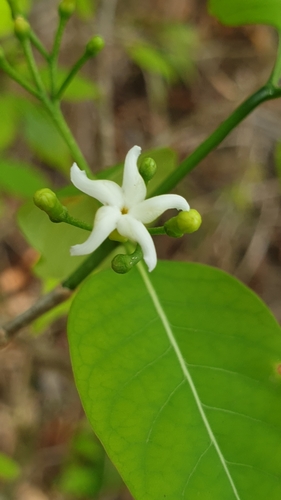
(c) David Rabehevitra, some rights reserved (CC BY-NC), uploaded by David Rabehevitra
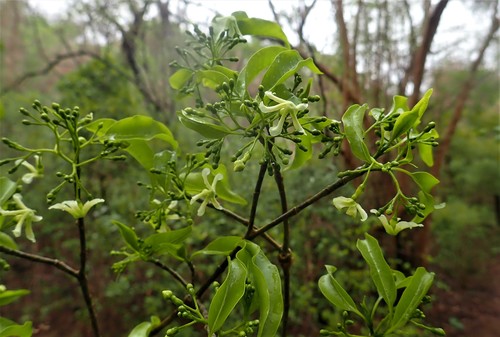
(c) miraille, some rights reserved (CC BY-NC), uploaded by miraille
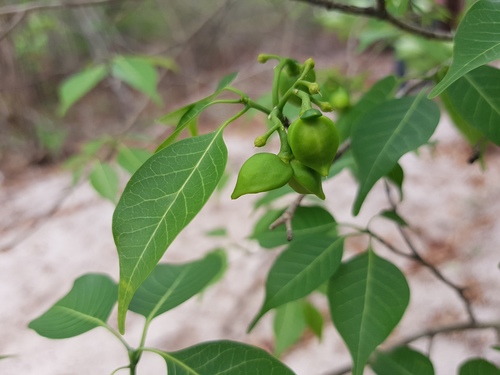
(c) feno, some rights reserved (CC BY-NC), uploaded by feno
What to Eat
Edible parts: Bark - flavouring, Medicine
The bitter bark is added to alcoholic beverages, some of which are used during circumcision rituals.
Where to Find It
It is a tropical plant. It can grow in savannah and up to 1,300 m above sea level.
Africa, Comoros, Madagascar, Seychelles,
How to Identify
A tropical shrub or small tree reaching 7 m tall with a trunk up to 10 cm across, found in savannahs and montane regions up to 1,300 m elevation.
How to Grow
The plant can flower and produce fruit all year round.
Medicinal Uses
The bark is used in traditional medicine and also prepared in alcoholic drinks.
Other Uses
The bark was formerly used to make string for cloth. The leaves and fruits are used to curdle the latex of rubber plants. In Mayotte, branched twigs were formerly used as an oil-lamp support. The wood is used for fuel.
Wikipedia
Source ↗Tabernaemontana coffeoides is a species of flowering plant in the family Apocynaceae. It grows as a shrub or small tree up to 10 m (30 ft) tall, with a trunk diameter of up to 20 cm (8 in). Its fragrant flowers feature white corolla lobes. Its habitat is on dunes or on rocks in dry forest, bush or savanna from sea level to 1,300 m (4,300 ft) altitude. Local medicinal uses include for weight loss and to combat fatigue. Tabernaemontana coffeoides is native to the Comoros and Madagascar. It is rich in pharmacologically interesting indole alkaloids.
Names & Synonyms
References (2)
- Ferns, Useful Tropical Plants.
- World Checklist of Useful Plant Species 2020. Royal Botanic Gardens, Kew


