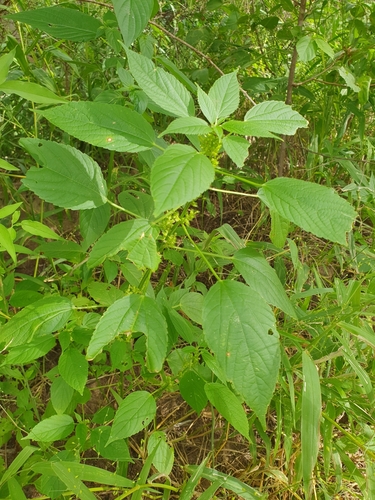
Astraea lobata
(L.) Klotzsch
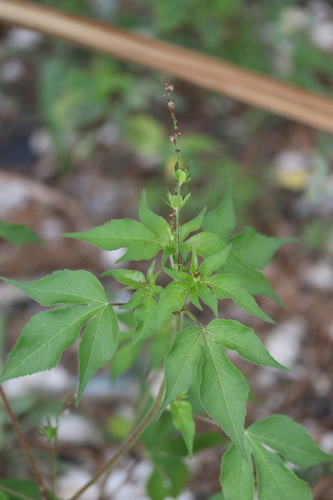
(c) Joshua Doby, some rights reserved (CC BY-NC), uploaded by Joshua Doby
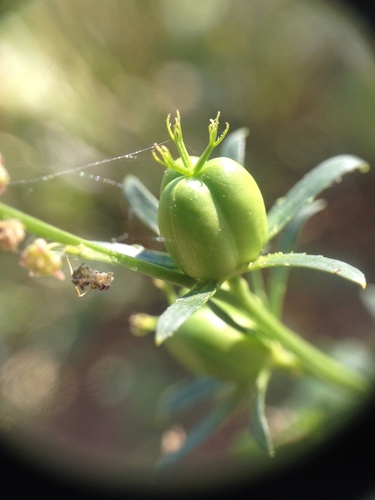
no rights reserved, uploaded by Étienne Lacroix-Carignan

(c) Keith Bradley, some rights reserved (CC BY-NC), uploaded by Keith Bradley
What to Eat
Tender young leaves - cooked. Extreme care should be taken, see the notes above on toxicity.
Known Hazards
Where to Find It
It is a tropical plant.
Brazil, Central America, Costa Rica, Nicaragua,
How to Identify
A herb.
How to Grow
The plant has spread from tropical America to become a widespread and often invasive weed in Africa. It has a strong tap-root and laterals, making it difficult to root out in cultivated land.
Medicinal Uses
The leaves are strongly purgative. In combination with another, undetermined, plant it is used for treating whooping-cough, all spasmodic coughing, and stomatitis. Boiled in a little water, the leaves are used as an enema for treating gynaecological affections. Mixed with palm-oil, a leaf-paste is rubbed on to guinea-worm sores. Heated leaves are rubbed on to areas of costal and rheumatic pain. The leaf sap is used as eye drops to treat eye problems and unconsciousness. The plant has use in topical application to treat ulcers, sores, etc, and for headache. A decoction is reported as a children’s medicine, but the purpose is not indicated. It is used to assuage the pain of scorpion-stings. A decoction of the bark is taken by enema as a purgative. A decoction of the flowers or roots is used as an antispasmodic in case where there is a risk of abortion, and also to treat hiccup. The penis is washed with a maceration of the leafy twigs to act as an aphrodisiac. The principal active ingredient, found throughout the plant, is crotonic acid, probably in combination with toxic albuminoids. Besides the presence of phytotoxins noted above, Brazilian samples of the plant are reported to contain tertiary and quaternary alkaloids and haemolytic saponins.
Other Uses
On sandy river-banks it may have some value against scour and erosion.
Wikipedia
Source ↗Astraea lobata is a flowering plant in the spurge family, Euphorbiaceae. It is native from Mexico south to Argentina.
Names & Synonyms
References (1)
- World Checklist of Useful Plant Species 2020. Royal Botanic Gardens, Kew