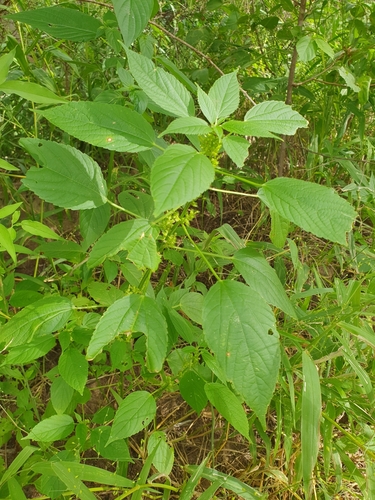
Macaranga spinosa
Mull.Arg.

(c) Bart Wursten, some rights reserved (CC BY-NC), uploaded by Bart Wursten

(c) Bart Wursten, some rights reserved (CC BY-NC)
What to Eat
Edible parts: Medicine
Where to Find It
It is a tropical plant.
Africa, Angola, Benin, Burundi, Cameroon, Central African Republic, CAR, Congo DR, Congo R, Côte d'Ivoire, Equatorial Guinea, Gabon, Guinea, Guinée, Ivory Coast, Uganda, West Africa,
How to Identify
A small tropical tree growing to 13 m tall, with small spiny branches, belonging to the Euphorbiaceae family.
How to Grow
A dioecious species, both male and female forms need to be grown if fruit and seed are required.
Medicinal Uses
Used medicinally.
Other Uses
Potters sprinkle an extract from the crushed stem bark on pots that come from the fire and are still red hot, to make them waterproof. A water extract of the stem bark contains procyanidins, of which the pyrolysis products have waterproofing properties. The wood is used for construction of house posts, stools and spoons. The wood is used for fuel and to make charcoal. In the forest-savanna transition zone in littoral Congo, it is one of the pioneer species involved in forest expansion.
Names & Synonyms
Boengi
References (1)
- World Checklist of Useful Plant Species 2020. Royal Botanic Gardens, Kew