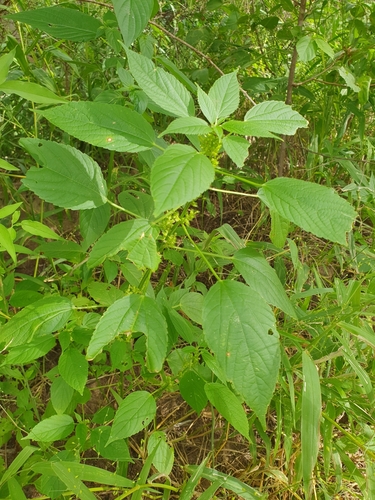
Mallotus barbatus
Mull.Arg.

(c) John Howes, some rights reserved (CC BY-NC), uploaded by John Howes
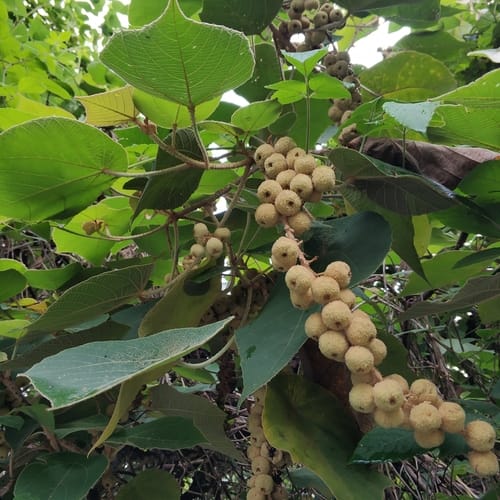
(c) 刘光裕 Liu Guangyu, some rights reserved (CC BY-NC)

(c) Russell Barrett, some rights reserved (CC BY-NC)
What to Eat
Edible parts: ?, Medicine
Where to Find It
It is a tropical plant.
Asia, Cambodia, China, India, Indonesia, Laos, Malaysia, Myanmar, SE Asia, Thailand, Vietnam,
How to Identify
A shrub or small tree. It grows 2-6 m tall. The small branches have a brown coating.
How to Grow
Plants can flower and produce fruit all year round. Usually a dioecious species, though some plants also have bisexual flowers. If dioecios, both male and female forms need to be grown if fruit and seed are required.
Medicinal Uses
The roots and fruits are used against muscle stiffness.
Other Uses
The seeds yield a fatty oil used for making candles. The fibrous bark has been used for cordage and to make artificial feathers. The sapwood is straw coloured with pinkish brown streaking. The wood is soft and resistant to the attacks of termites. It is used for pulp for paper making. The wood is used for fuel.
Names & Synonyms
References (1)
- World Checklist of Useful Plant Species 2020. Royal Botanic Gardens, Kew