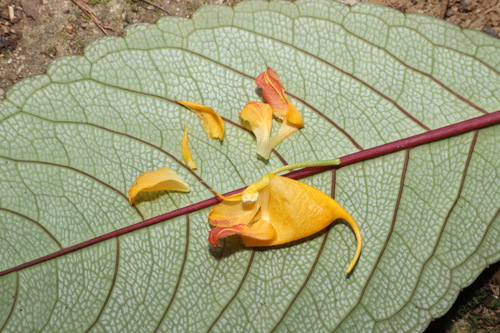
Impatiens pulchra
Hooker f. & Thomson

iNaturalist · cc-by
(c) Jody Shugart, some rights reserved (CC BY), uploaded by Jody Shugart
(c) Jody Shugart, some rights reserved (CC BY), uploaded by Jody Shugart
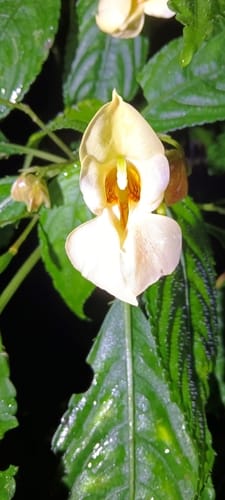
iNaturalist · cc-by-nc
(c) yunqian, some rights reserved (CC BY-NC)
(c) yunqian, some rights reserved (CC BY-NC)
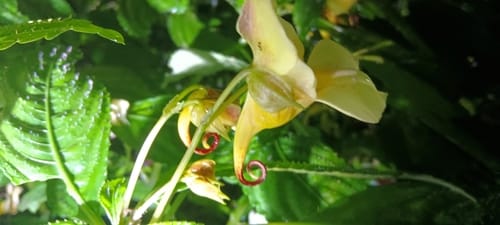
iNaturalist · cc-by-nc
(c) yunqian, some rights reserved (CC BY-NC)
(c) yunqian, some rights reserved (CC BY-NC)
What to Eat
Edible parts: Stem, Leaves
The stems and leaves are eaten.
Where to Find It
It is a subtropical plant. In Yunnan.
Asia, China, Himalayas, India, Myanmar, Nepal, Northeastern India, SE Asia, Thailand,
Countries: United Arab Emirates, Afghanistan, Armenia, Azerbaijan, Bangladesh, Bahrain, Brunei, Bhutan, China, Georgia, Indonesia, Israel, India, Iraq, Iran, Jordan, Japan, Kyrgyzstan, Cambodia, North Korea, South Korea, Kuwait, Kazakhstan, Laos, Lebanon, Sri Lanka, Myanmar, Mongolia, Maldives, Malaysia, Nepal, Oman, Philippines, Pakistan, Qatar, Saudi Arabia, Singapore, Syria, Thailand, Tajikistan, Timor-Leste, Turkmenistan, Turkey, Taiwan, Uzbekistan, Vietnam, Yemen
How to Identify
A herb. It grows each year from seed. It grows 20-40 cm tall. It has many fibrous roots. The leaves are alternate and 5-10 cm long by 2.5-3.5 cm wide. There are teeth along the edge. There are 1 or 2 flowers in a group in the axils of the upper leaves.
Names & Synonyms
Gei gai, La you, Ya die da
Impatiens annulifera Hook.f.Impatiens mengtszeana Hook.f.
References (1)
- Cao, Y., et al, 2020, Ethnobotanical study on wild edible plants used by three trans-boundary ethnic groups in Jiangcheng County, Pu’er, Southwest China. Journal of Ethnobiology and Ethnomedicine (2020) 16:66 (As Impatiens mengtszeana)