Cyathea dealbata
(G. Forster) Swartz
Tree fern, Ponga fern, Silver fern

(c) David Hutchinson, some rights reserved (CC BY-NC), uploaded by David Hutchinson
(c) John B, some rights reserved (CC BY-NC), uploaded by John B
(c) Laura, some rights reserved (CC BY-NC), uploaded by Laura
What to Eat
Edible parts: Leaves, Fronds, Stem
The pith from the stem is starchy and nutritious, normally roasted but also edible raw. Use the core near the growing tip — not the trunk itself, which is composed of a peaty substance from decaying roots. Reported flavors vary widely: bitter, sweet, astringent, or reminiscent of a bad turnip. Note that harvesting the stem kills the plant, so this use cannot normally be condoned. Young fronds can be cooked as a vegetable; harvested just before they unfurl, they are juicy and slimy with a flavor like bitter celery.
Where to Find It
It does best in a sheltered position. It is damaged by hot sunlight. It grows naturally in dry open forest. It grows well in well-drained humus. It can stand some frost. It suits hardiness zones 9-11. Geelong Botanical Gardens.
Australia, Chatham Islands, New Zealand*,
How to Identify
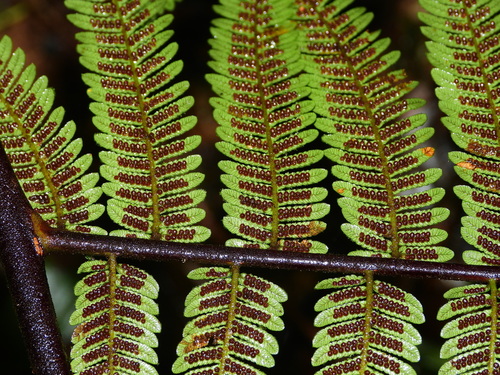
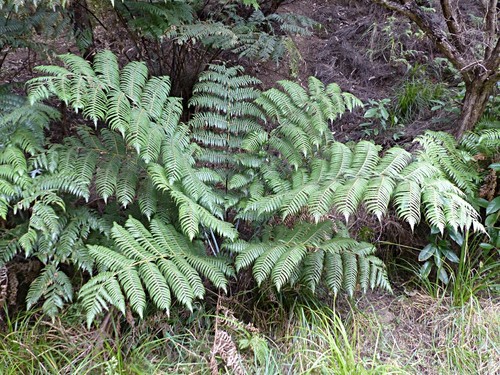
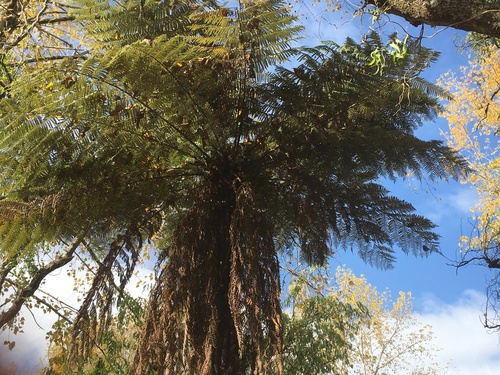
A large tree fern. It has an erect trunk. It can be 10 m tall. Occasionally it has a creeping form. The fronds are about 4 m long. Underneath the fronds is white. The fronds are divided 3 times. The stalk is pale brown with a silver blush. It can be glossy and twisted. The bases of the stalks remain sticking out from the trunk.
How to Grow
Plants can be grown by spores.
Propagation: Surface-sow spores at any time of year in a light position in a warm greenhouse. Keep the growing medium moist by standing the pot in shallow water or enclosing it in a plastic bag. Germination takes one to three months at 25°C. Prick out patches of young plants into small pots and stand these in shallow water until well established. Grow on in a shady greenhouse position for at least the first two winters before planting out in late spring.
Medicinal Uses
None known
Other Uses
None known
Wikipedia
Source ↗An evergreen tree fern reaching 9 m tall and 2 m wide. Hardy to UK zone 9 and frost tender. Year-round foliage. Accommodates light, medium, or heavy soils across a range of pH levels. Grows in full to semi-shade and prefers moist or wet soil conditions.
Notes
It is New Zealand's National emblem. There are about 800 Cyathea species.
Names & Synonyms
References (10)
- Bodkin, F., 1991, Encyclopedia Botanica. Cornstalk publishing, p 308
- Cundall, P., (ed.), 2004, Gardening Australia: flora: the gardener's bible. ABC Books. p 448
- Etherington, K., & Imwold, D., (Eds), 2001, Botanica's Trees & Shrubs. The illustrated A-Z of over 8500 trees and shrubs. Random House, Australia. p 247
- Goudey, C.J., 1988, A Handbook of Ferns for Australia and New Zealand. Lothian. p 83
- Hedrick, U.P., 1919, (Ed.), Sturtevant's edible plants of the world. p 255
- Hibbert, M., 2002, The Aussie Plant Finder 2002, Florilegium. p 78
- Large, M.F., & Braggins, J.E., 2004, Tree Ferns. CSIRO Publishing, Melbourne, Australia. p 120 Plates 41-44
- Lord, E.E., & Willis, J.H., 1999, Shrubs and Trees for Australian gardens. Lothian. p 95
- Plants for a Future database, The Field, Penpol, Lostwithiel, Cornwall, PL22 0NG, UK. http://www.scs.leeds.ac.uk/pfaf/
- Salmon, J.T., 1989, The Native Trees of New Zealand. Heinmann Reid p 362