Leptospermum javanicum
Blume

(c) Abu Hamas, some rights reserved (CC BY-SA), uploaded by Abu Hamas

(c) ramadhannmf, some rights reserved (CC BY-NC)
What to Eat
Edible parts: ?
Where to Find It
It is a tropical plant. It grows between 1,500-3,000 m above sea level.
Asia, Indonesia, Malaysia, Myanmar, Philippines, SE Asia, Thailand,
How to Identify
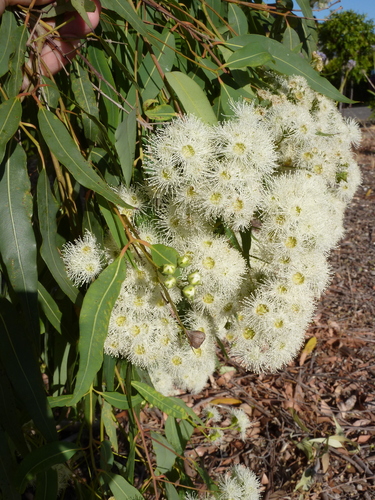
A tree. It grows 6 m tall. The bark is fibrous. The small branches are covered with soft hairs. The leaves are egg shaped and dark green above and pale underneath. They are 10-30 mm long by 4-9 mm wide. The flowers occur singly and are white. The fruit is a woody capsule. 4-5 mm long and 6-7 mm wide.
Medicinal Uses
It has anticancer properties.
Wikipedia
Source ↗Leptospermum javanicum is a species of tree that is native to Myanmar, western and central Malesia. It has fibrous bark on the trunk, leaves that are much paler on the lower surface, relatively large white flowers and woody fruit.
Notes
It has anticancer properties.
Names & Synonyms
References (1)
- World Checklist of Useful Plant Species 2020. Royal Botanic Gardens, Kew