Berberis swaseyi
Buckley
Texas barberry
BerberidaceaeFruit

iNaturalist · cc-by-nc
(c) Greg Lasley, some rights reserved (CC BY-NC), uploaded by Greg Lasley
(c) Greg Lasley, some rights reserved (CC BY-NC), uploaded by Greg Lasley
iNaturalist · cc-by-nc
(c) Geoff Hoese, some rights reserved (CC BY-NC), uploaded by Geoff Hoese
(c) Geoff Hoese, some rights reserved (CC BY-NC), uploaded by Geoff Hoese

iNaturalist · cc-by-nc
(c) Chuck Sexton, some rights reserved (CC BY-NC), uploaded by Chuck Sexton
(c) Chuck Sexton, some rights reserved (CC BY-NC), uploaded by Chuck Sexton
What to Eat
Edible parts: Fruit
The berries are edible.
Where to Find It
It is a temperate plant. It grows on limestone.
North America, USA,
Countries: Antigua & Barbuda, Barbados, Bahamas, Belize, Canada, Costa Rica, Cuba, Dominica, Dominican Republic, Grenada, Guatemala, Honduras, Haiti, Jamaica, St Kitts & Nevis, St Lucia, Mexico, Nicaragua, Panama, Puerto Rico, El Salvador, Trinidad & Tobago, United States, St Vincent
How to Identify
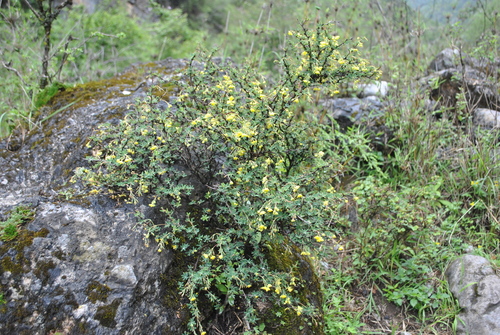
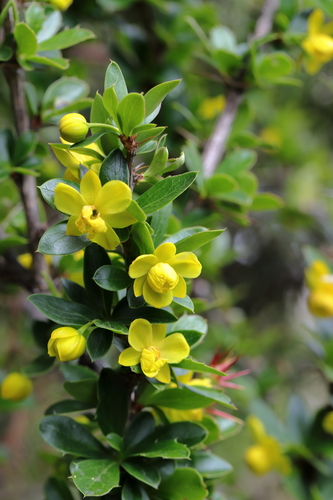
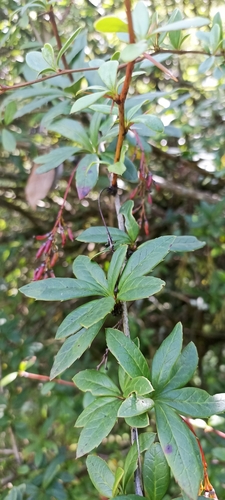
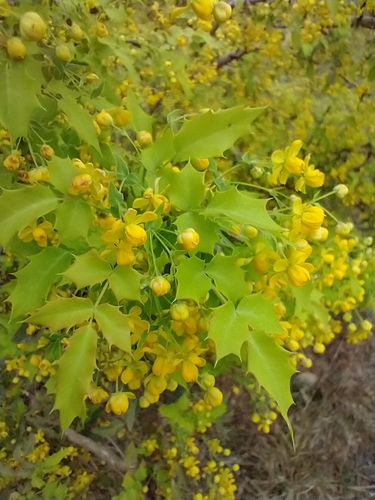
A shrub. It grows 1-2 m tall. The leaves have 5-9 leaflets. The leaflets have teeth. The flowers are yellow. The fruit are white or red berries and 9-16 mm across.
Wikipedia
Source ↗Berberis swaseyi (Texas barberry) is a rare species of barberry endemic to the Edwards Plateau region of Texas. It grows in limestone ridges and canyons. The species is evergreen, with thick, rigid, five-to-nine foliolate leaves. Berries are dry or juicy, white to red, about 9–16 mm in diam. The compound leaves place this species in the group sometimes segregated as the genus Mahonia.
Names & Synonyms
Mahonia swaseyi (Buckley ex M. J. Young) FeddeOdostemon swaseyi (Buckley) A. Heller
References (1)
- World Checklist of Useful Plant Species 2020. Royal Botanic Gardens, Kew