Semecarpus bracteatus
Lauterb.

gbif · cc0
President and Fellows of Harvard College
President and Fellows of Harvard College

gbif · cc0
President and Fellows of Harvard College
President and Fellows of Harvard College

gbif · cc0
President and Fellows of Harvard College
President and Fellows of Harvard College
What to Eat
Edible parts: ?
Where to Find It
It is a tropical plant. It has been recorded at 1,700 m above sea level.
Asia, Indonesia, Papua New Guinea, PNG, SE Asia,
Countries: United Arab Emirates, Afghanistan, Armenia, Azerbaijan, Bangladesh, Bahrain, Brunei, Bhutan, China, Georgia, Indonesia, Israel, India, Iraq, Iran, Jordan, Japan, Kyrgyzstan, Cambodia, North Korea, South Korea, Kuwait, Kazakhstan, Laos, Lebanon, Sri Lanka, Myanmar, Mongolia, Maldives, Malaysia, Nepal, Oman, Papua New Guinea, Philippines, Pakistan, Qatar, Saudi Arabia, Singapore, Syria, Thailand, Tajikistan, Timor-Leste, Turkmenistan, Turkey, Taiwan, Uzbekistan, Vietnam, Yemen
How to Identify
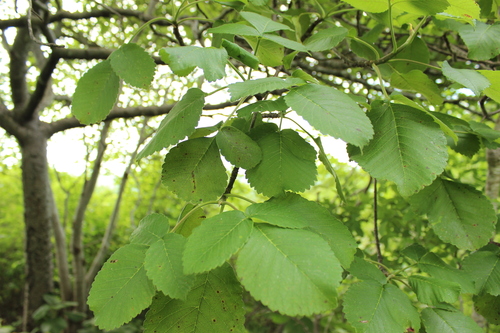
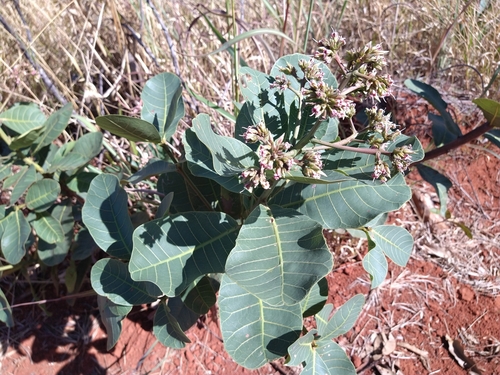
A tree. It grows 21-32 m tall. The trunk is 42-80 cm across. The bark is light yellowish brown. It has cracks along it. The leaves are spaced and in spirals. They are oblong and 9-38 cm long by 5-14 cm wide. The flower panicles are 30 cm long and at the ends of branches.
Names & Synonyms
Semecarpus archboldianus Merr. & L. M. Perry
References (1)
- World Checklist of Useful Plant Species 2020. Royal Botanic Gardens, Kew