Pongamia pinnata
(L.) Pierre
Beach walnut
(c) taiwan_reevesia, some rights reserved (CC BY-NC), uploaded by taiwan_reevesia
(c) Rujuta Vinod, some rights reserved (CC BY-NC), uploaded by Rujuta Vinod
(c) Hareesha A S, some rights reserved (CC BY-NC), uploaded by Hareesha A S
What to Eat
Edible parts: Fruit
The seed contains 27–40% oil, but this oil is unlikely to be edible.
Known Hazards
Where to Find It
It is a tropical plant. It grows near the beach.
Asia, Australia, Central America, Nicaragua, Pacific, Samoa, Vanuatu,
How to Identify
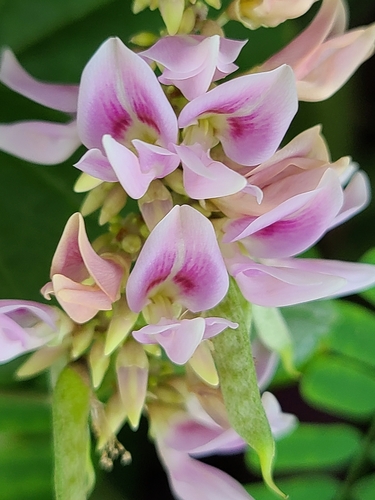
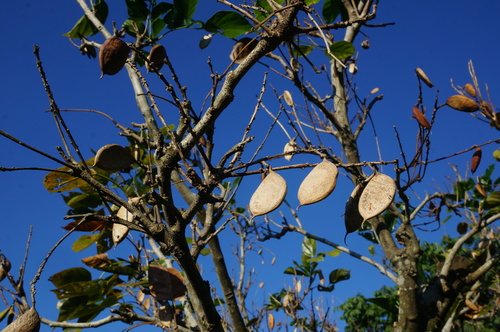
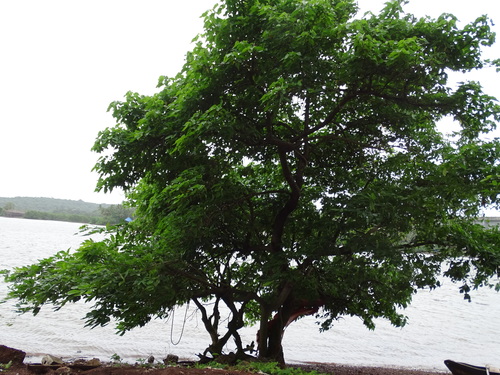
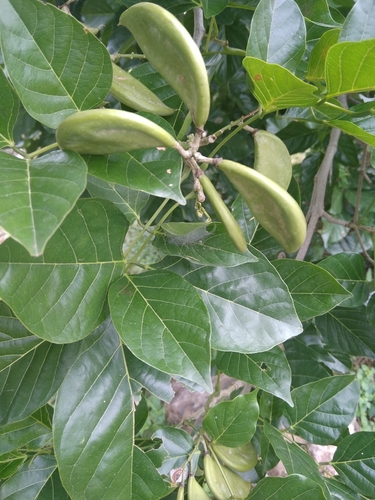
A tree. It grows 3-15 m tall. The leaves have 5-9 leaflets. They are opposite. They are narrowly oval and 3-10 cm long and 2.5-5 cm wide. The pods are oblong and 5-7 cm long by 2-3 cm wide. . They are flattened and have thick walls. The seeds are 2 cm across.
How to Grow
Native to humid tropical and subtropical environments, it is found at elevations from sea level to 1,200 metres. It grows in areas where the mean annual temperature ranges from a minimum of 1 - 16°c, up to a maximum of 27 - 38 (exceptionally 50)°c, and the mean annual rainfall is 500 - 2,500 mm, with a dry season of 2 - 6 months. Mature plants can tolerate light frosts. The plant can grow on most soil types. The best growth is found on deep well-drained sandy loams with assured moisture, but it will also grow on sandy soils and heavy swelling clay soils. It does not do well on dry sands, although it tolerates saline conditions, alkalinity and waterlogged soils. Tolerant of shade, it can grow under the shade of other trees, but will also grow well in full sun. Established plants are drought resistant. Plants are wind-resistant, tolerating at least some salt-laden air. Plants become nutrient deficient if growing in soils with a pH higher than 7.5. The plant has a long, thick taproot and widely spreading lateral roots. The spread of roots on this species, about 9 metres in 18 years, is greater than most other species; moreover it produces root suckers profusely. Because of these characteristics, pongam is unsuitable for agroforestry and has the potential to become a weed if not managed carefully. Pod production commences when seedlings are 5 - 7 years old. The pods do not open naturally, and must decay before the seeds can germinate. Individual trees yield 9 - 90 kg of pods annually, while mature trees yield 8 - 24 kg of seeds annually. Growth of young trees is fairly slow; a growth of 1.3 metres in height and 0.4 cm in diameter in 13 months was recorded in India. Trees coppice well and can also be pollarded. When planted as a shade or ornamental tree, pruning may be necessary to obtain a trunk of appropriate height. This species has a symbiotic relationship with certain soil bacteria, these bacteria form nodules on the roots and fix atmospheric nitrogen. Some of this nitrogen is utilized by the growing plant but some can also be used by other plants growing nearby.
Propagation: Seed requires no pre-treatment and is usually sown in situ, germinating within 1–5 weeks. Germination is hypogeal, with the radicle developing quickly before the plumule emerges. In nursery beds, seed can be sown at close spacing — 7.5 x 15 cm is recommended — as young plants tolerate shade well. Seedlings reach 25–30 cm in their first growing season and should be transplanted at the start of the next rainy season when approximately 60 cm tall. Soil should be retained around the large root systems during transplanting. Seeds exhibit orthodox storage behaviour and remain viable for about a year in airtight containers. Natural reproduction occurs profusely from seed and commonly from root suckers; spontaneous seedlings and root suckers can cause serious weed problems. Propagation is also possible from stump cuttings of 1–2 cm root-collar diameter, branch cuttings, and root suckers.
Medicinal Uses
The seed oil is taken internally as a stomachic and cholagogue for dyspepsia and sluggish liver, and applied externally as a liniment for skin diseases and rheumatic joints. It has been shown to enhance pigmentation in skin affected by leucoderma or scabies. Powdered seed is given as an expectorant for bronchitis and whooping cough, and prescribed as a febrifuge and tonic. A paste of powdered seed is spread on sores and rheumatic joints. An infusion of the leaves relieves rheumatism, and a leaf decoction serves as a cough remedy. Crushed leaves are applied as a poultice for parasitic skin diseases and to relieve bleeding haemorrhoids, while the expressed juice is used on herpes and itches. The flowers are claimed to have anti-diabetic action. Fresh stem bark is astringent, taken internally to relieve bleeding haemorrhoids and applied to reduce enlargement of the spleen. Root bark contains a bitter alkaloid and is used as an abortifacient. The antiseptic root juice is applied to sores and ulcers and used to clean teeth.
Other Uses
Because of its extensive lateral root network and ability to fix atmospheric nitrogen, this species is well suited for controlling soil erosion and binding sand dunes. It tolerates moderate salinity, making it useful for reclaiming saline and marginal wastelands and for reforestation. Grass grows normally beneath the tree, so it has been planted to provide shade in pastures and grown as a windbreak and shade provider for tea plantations in Sri Lanka. Leaves and presscake incorporated into soil improve fertility. Decomposed flowers provide rich nutrition for greenhouse plants. Leafy twigs are used for green manuring in rice paddies, sugarcane fields, and coffee plantations. The tree is used as a host for the hemiparasitic sandalwood Santalum album. The seed yields 27–40% of a thick yellow or reddish-brown oil with a bitter taste, disagreeable aroma, and specific gravity of 0.9371 at 15°C. This oil is used as a lubricant, varnish, water-paint binder, and in soap making, and was formerly used as lamp fuel before being largely replaced by kerosene. Two kilos of mature pods yield approximately one kilo of husked kernels; extracted oil amounts to 13.4% of the whole seed pod and 26.97% of the kernels. The presscake applied to soil acts as a pesticide, particularly against nematodes. Dried leaves stored with grain repel insects. Bark fibre is made into string, twine, or rope. The roots yield a natural pigment called pinnatin, and wood ash is used in dyeing. The wood ranges from white to yellowish-grey with no distinct heartwood, is beautifully grained, medium to coarse textured, and moderately strong but not considered quality timber as it is not durable, tends to split and warp during seasoning, and is susceptible to insect attack. It is used for cabinet making, cartwheels, posts, agricultural implements, tool handles, and combs, and is also suitable as pulp for paper making. With a calorific value of 4,600 kcal/kg, it is commonly used as fuelwood.
Wikipedia
Source ↗Fast-growing evergreen tree reaching 20 meters tall and wide. Hardy to UK zone 10, nitrogen-fixing species tolerating sandy, loamy, clay, and saline soils. Grows in full sun, light shade, or deep shade, preferring moist or wet conditions in alkaline to very alkaline soils.
Names & Synonyms
References (1)
- Lebot, V. & Sam, C., Green desert or ‘all you can eat’? How diverse and edible was the flora of Vanuatu before human introductions?. Terra australis 52 p 409