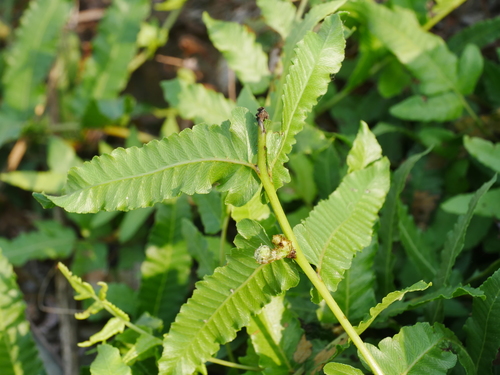
Cyclosorus truncatus
(Poir) Farwell
Giant creek fern
ThelypteridaceaeLeaves
iNaturalist · cc-by-nc
(c) 歐陽秀華, some rights reserved (CC BY-NC)
(c) 歐陽秀華, some rights reserved (CC BY-NC)
iNaturalist · cc-by-nc
(c) 歐陽秀華, some rights reserved (CC BY-NC)
(c) 歐陽秀華, some rights reserved (CC BY-NC)
iNaturalist · cc-by-nc
(c) 金翼白眉, some rights reserved (CC BY-NC)
(c) 金翼白眉, some rights reserved (CC BY-NC)
What to Eat
Edible parts: Fronds, Leaves
The fronds and leaves are edible.
Where to Find It
A tropical plant. It grows along the sides of streams and in wet places in forests. In southern China it grows between 100-1,300 m above sea level.
Asia, Australia, China, India, Indochina, Indonesia, Japan, Laos, Malaysia, Myanmar, Pacific, Papua New Guinea, PNG, Philippines, SE Asia, Sri Lanka, Taiwan, Thailand, Vietnam,
Countries: United Arab Emirates, Afghanistan, Armenia, Australia, Azerbaijan, Bangladesh, Bahrain, Brunei, Bhutan, China, Fiji, Micronesia, Georgia, Indonesia, Israel, India, Iraq, Iran, Jordan, Japan, Kyrgyzstan, Cambodia, Kiribati, North Korea, South Korea, Kuwait, Kazakhstan, Laos, Lebanon, Sri Lanka, Marshall Islands, Myanmar, Mongolia, Maldives, Malaysia, Nepal, Nauru, New Zealand, Oman, Papua New Guinea, Philippines, Pakistan, Palau, Qatar, Saudi Arabia, Solomon Islands, Singapore, Syria, Thailand, Tajikistan, Timor-Leste, Turkmenistan, Tonga, Turkey, Tuvalu, Taiwan, Uzbekistan, Vietnam, Vanuatu, Samoa, Yemen
How to Identify
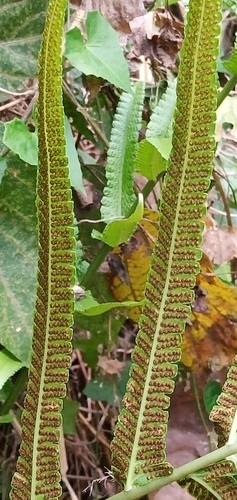
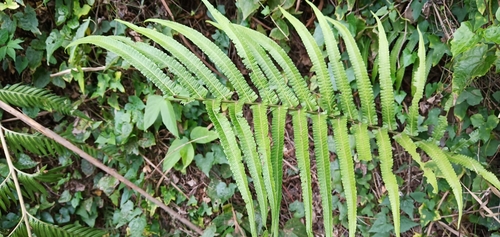
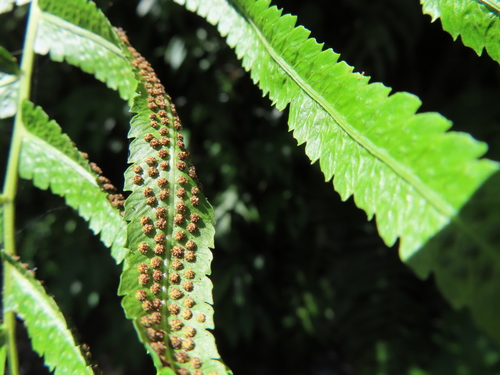
A fern. It has a short underground stem or rhizome. The stipes are 50-112 cm long. The base of the leaflets is swollen. There are 25-40 segments. There are teeth along the edge. The leaf blade is 75-150 cm long by 28-50 cm wide.
Notes
There are now only 2 recognised Cyclosorus species. Others are now in other genera.
Names & Synonyms
Jie lie mao jue
Cyclosorus truncatus var. truncatusNephrodium truncatum (Poir.) C. Presl.Pneumatopteris truncata (Poir.) HolttumPolypodium truncatum Poir.Thelypteris truncata (Poir.) K. Iwats
References (2)
- Powell, J.M., Ethnobotany. In Paijmans, K., 1976, New Guinea Vegetation. Australian National University Press. p 109
- www.eFloras.org Flora of China