Cynanchum paniculatum
(Bunge) Kitag.
Xu chang qing
(c) sergeyprokopenko, some rights reserved (CC BY-NC)
(c) sergeyprokopenko, some rights reserved (CC BY-NC)

(c) anenkhonov, some rights reserved (CC BY-NC)
What to Eat
Edible parts: Leaves
The leaves are edible boiled — some caution is advised given the toxicity notes associated with this plant.
Where to Find It
It is a temperate plant. It grows on sunny mountain slopes.
Asia, China, Japan, Korea, Mongolia, Taiwan,
How to Identify
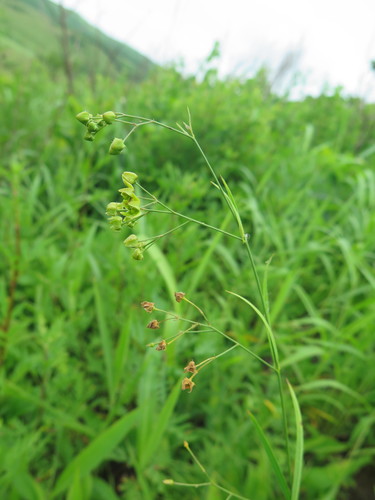
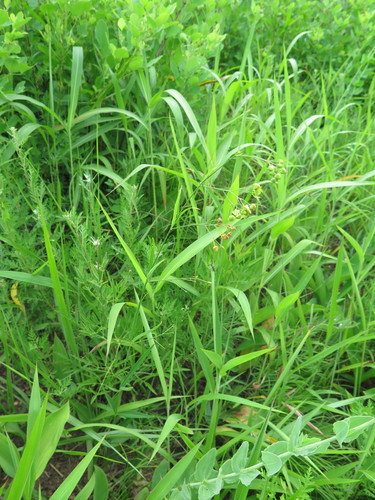
A herb. The roots have many fibres. The stem is slender and erect. It grows 1 m tall. The leaves are opposite and 5-13 cm long by 1-2 cm wide.
How to Grow
Propagation: Sow seed in spring in a greenhouse. Once seedlings are large enough to handle, prick them out into individual pots and grow on under cover for at least their first winter before planting into permanent positions in late spring or early summer, after the last expected frosts. Division can be carried out in spring.
Medicinal Uses
A decoction of the root or whole plant is anodyne and carminative, and it stimulates blood circulation. It is used in the treatment of rheumatoid arthritis, lumbago, abdominal pain and vomiting, acute gastro-enteritis, hepatitis, liver cirrhosis, ascites, snake bites, and traumatic injuries. The root is also used to calm nervous afflictions and travel sickness.
Other Uses
None known
Wikipedia
Perennial climbing vine reaching 1 m with hermaphrodite insect-pollinated flowers blooming July to August. Adaptable to light sandy, medium loamy, and heavy clay soils with mildly acidic to basic pH. Tolerates semi-shade and full light in moist soil.
Notes
It is used in medicine. There are about 150 Cynanchum species.
Names & Synonyms
References (4)
- J. Jap. Bot. 16:20. 1940
- Li Ping-tao; Michael G. Gilbert, W. Douglas Stevens, ASCLEPIADACEAE Flora of China.
- Plants for a Future database, The Field, Penpol, Lostwithiel, Cornwall, PL22 0NG, UK. http://www.scs.leeds.ac.uk/pfaf/
- Urgamal, M., Oyuntsetseg, B., Nyambayar, D. & Dulamsuren, Ch. 2014. Conspectus of the vascular plants of Mongolia. (Editors: Sanchir, Ch. & Jamsran, Ts.). Ulaanbaatar, Mongolia. “Admon“ Press. 334pp. (p. 79-90).


