Aeschynomene aspera
(L./Wall.) Muhl. ex Willd.
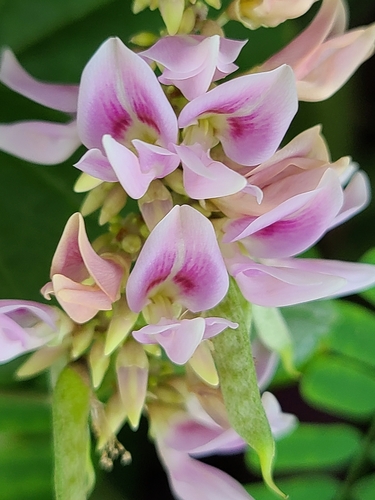
(c) Aravinth, some rights reserved (CC BY), uploaded by Aravinth

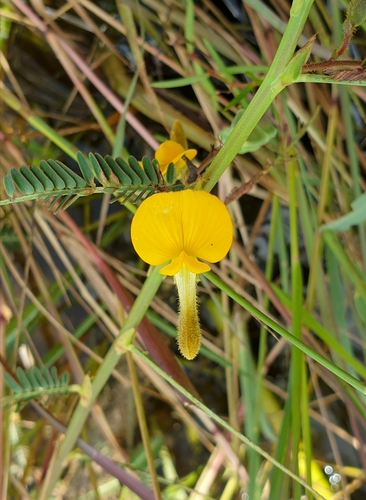
(c) Manoj Karingamadathil, some rights reserved (CC BY-SA), uploaded by Manoj Karingamadathil
What to Eat
Edible parts: Leaves, Flowers
The leaves and flowers are eaten in salads, particularly in times of food shortage.
Where to Find It
A tropical plant. It grows in wet areas of rice fields. It is also grown in tanks.
Africa, Asia, Cambodia, China, India, Indochina, Japan, Laos, Malaysia, Myanmar, Pacific, Pakistan, Philippines, SE Asia, Sri Lanka, Thailand, Vietnam,
How to Identify
A slender shrub or annual herb. It grows 0.5-1.5 m tall. The stems can be erect, trailing or floating. Leaves have several leaflets. These are small and narrow. The flowers are pale yellow and hang from the leaf axils. The fruit is a pod.
How to Grow
Plants are grown from seed.
Medicinal Uses
It is used as medicine.
Other Uses
The pith from the stems is very light. Known as ambatch wood, it weighs around 110 - 190 kilos per cubic metre and is one of the lightest known woods. It can be used as a cork substitute in various applications and is used in India to make sun helmets, or sola-topis. It is also used to make a range of other items, including art paper products, floats on water, artificial flowers and other decorations to offer to the Gods and Goddesses during festivals. The plant is used as a green manure
Wikipedia
Source ↗Aeschynomene aspera is a species of flowering plant in the family Fabaceae. It is also known by the names sola (Odia ସୋଲ), shola (Bengali শোলা) sola pith plant, pith plant, laugauni (Hindi), Bendu-chettu (Telugu), ponguchedi (Malayalam) or Netti (Tamil). The low density wood of this plant is used to make hats known as pith helmets or sola topis. It is native to Bangladesh, Bhutan, Cambodia, India, Indonesia, Laos, Malaysia, Myanmar, Nepal, Pakistan, Sri Lanka, Thailand, and Vietnam. It is an aquatic plant and is considered a minor weed of rice paddies across its range.
Other Information
A famine food.
Notes
There are 150 Aeschynomene species. It is used as medicine.
Names & Synonyms
Attuneddi, Bendu, Dhondia, Dienma nham, Jilugu benda, Kadessum, Neerjilagu, Nir jiluga, Sano kang kok, Sano, Shola, Snao am bahs, Sola, Sudday keeray, Tano
References (11)
- Ambasta S.P. (Ed.), 2000, The Useful Plants of India. CSIR India. p 17
- Flora of Pakistan. www.eFloras.org
- Manandhar, N.P., 2002, Plants and People of Nepal. Timber Press. Portland, Oregon. p 75
- Pham-Hoang Ho, 1999, An Illustrated Flora of Vietnam. Nha Xuat Ban Tre. p 972
- Phon, P., 2000, Plants used in Cambodia. © Pauline Dy Phon, Phnom Penh, Cambodia
- Reddy, K. N., et al, 2006, Traditional knowledge on wild food plants in Andhra Pradesh. Indian Journal of Traditional Knowledge 6(1) pp 223-229
- SHORTT,
- Singh, H.B., Arora R.K.,1978, Wild edible Plants of India. Indian Council of Agricultural Research, New Delhi. p 17
- Sp. pl. 2:713. 1753
- Swapna, M. M. et al, 2011, A review on the medicinal and edible aspects of aquatic and wetland plants of India. J. Med. Plants Res. 5 (33) pp. 7163-7176
- WATT