Detarium microcarpum
Guill. et Perr.
Sweet dattock

(c) ONG OeBenin, some rights reserved (CC BY-NC), uploaded by ONG OeBenin
(c) didolanvijustin, some rights reserved (CC BY-NC)
What to Eat
Edible parts: Fruit, Leaves, Seeds, Vegetable, Seeds - spice
This species is highly appreciated by local peoples due to its variety of uses; it is said to be one of the most appreciated in the environments where it occurs naturally. The fruit can be eaten raw or cooked, but for the most part, its pulp is transformed into flour. The seed flour is a traditional emulsifying, flavouring and thickening agent used to prepare cakes, bread, couscous, baby food and local beer. Its seed kernels are added to egusi soup, or are cooked and eaten as vegetables. The leaves are used as a condiment or vegetables, as are its flowers. Medicinal properties are in the roots, stems, bark, leaves and fruits to treat ailments including tuberculosis, meningitis and diarrhea. The species showed strong inhibitory effects on HIV-1 or HIV-2 infection in methanol extracts. Leaves and roots are also used to treat farm animals. Detarium microcarpum has several other uses for rural communities, leaves being used to thatch roofs, seeds dried and made into necklaces or are ground and used as a fragrance (considered to have an aphrodisiac effect) and mosquito repellent prepared from the roots. Leaves and roots are also used to treat farm animals. Hardness, as well as its moisture, weathering and pest resistance makes it useful for construction and carpentry. It lights quickly making it high-quality fuel wood and charcoal. The fruit is rich in vitamin C (3.2 mg), with 4.8 g protein and 64.5 g of sugar per 100 g. It was found to have the highest total phenolic, flavonoid and antioxidant values among fourteen wild edible fruits from Burkina Faso. The fruit pulp has been found to have high proportions of carbohydrate (40-42.0%) and protein (29.1-30.9%). The seeds yield 7.5% oil with the predominant fatty acid being linoleic acid. The hulled seed flour contains per 100 g: 3.5–6.5 g water, 3 g crude fibre, 13–15 g crude fat, 13.5–27 g crude protein, 39 g carbohydrate, Ca 500 mg, Mg 500 mg, Fe 100 mg.
Known Hazards
Where to Find It
A tropical plant. It suits hot, dry tropical climates. It grows in the drier regions of West and Central Africa. It can grow in arid places. It grows in savannah woodland.
Africa*, Benin, Burkina Faso, Cameroon, Central Africa, Central African Republic, CAR, Chad, Côte d'Ivoire, Gambia, Ghana, Guinea, Guinée, Guinea-Bissau, Ivory Coast, Mali, Niger, Nigeria, Sahel, Senegal, Sierra Leone, Sudan, Togo, West Africa,
How to Identify
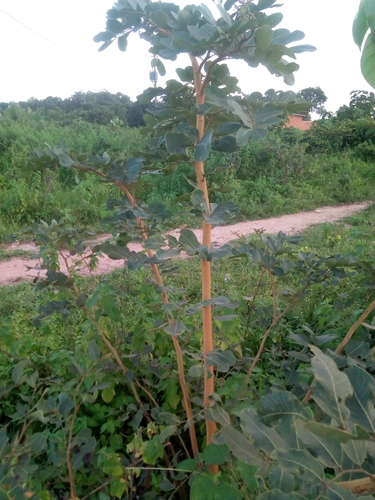
A small tree. It grows to 10 m high. The trunk is straight. It is 30 cm across. The roots extend sideways. The leaves are compound with 3-4 pairs of leaflets and a leaflet at the end. The leaves are 14-20 cm long and the leaflets are 7-11 cm long by 4-5 cm wide. The flowers are in groups. They contain both sexes and have a scent. The fruit is an oval pod. It is 2.5-4.5 cm across. It turns yellow when ripe. There is about 1 cm of flesh and one seed.
Nutrition Score: 50/100
| Part | Moisture | kJ | kcal | Protein | Vit A | Vit C | Iron | Zinc |
|---|---|---|---|---|---|---|---|---|
| Fruit dried | 11.1 | 1300 | 311 | 4.9 | — | — | 1.8 | — |
How to Grow
It can be grown from seed. It can also be grown from shoots from the trunk. Stored seed are soaked in sulphuric acid for 30 minutes then washed and soaked in water for 24 hours. The dormancy can be broken by boiling in water for 7 minutes then soaking in water for 24 hours. It can be cut back and will re-grow. Plants can be budded. Plants can be grown from stem cuttings.
Propagation: Seed - germinates best if pre-treated. To break dormancy, stored seeds are soaked in sulphuric acid for 30 minutes, followed by thorough washing and soaking in water for 24 hours. Scarification with sand and additional fungicide treatment also improves germination. Dormancy can also be broken by boiling the seeds for 7 minutes followed by soaking in lukewarm water for 24 hours. In a nursery, germination started 8 - 10 days after sowing. After 47 days, 71 - 100% of the seeds sown in polythene bags had germinated. Natural germination is hampered by bush fires and dry spells. Direct-sown plantations have not been successful because of the slow early growth. Seeds can be stored at ambient temperature (26°C) for 5 years. Grafting adult twigs or shoots.
Medicinal Uses
The bark, leaves and roots are widely used throughout the plant's native range because of their diuretic and astringent properties. Modern research has verified the presence of medicinally active compounds. The bark has been found to contain 2 tetranorditerpenes, the clerodane diterpenes catechine and cis-2-oxokolavenic acid (0.5%), the diterpene copalic acid (1.7%) and coumarin (1%). An ethanol extract of the bark has demonstrated antimicrobial action against Pseudomonas aeruginosa, Citrobacter freundii, Klebsiella pneumoniae, Staphylococcus aureus, Streptococcus pyogenes and Listeria monocytogenes. The extract also showed moderate antitumor activity against breast cancer cells. The flavones present in a methanol extract of the plant showed strong inhibitory effects on HIV-1 or HIV-2 infection. A bark extract showed significant molluscicidal activity against Lymnaea natalensis. The bark, leaves and roots are prepared as infusions or decoctions to treat a wide range of ailments including rheumatism; venereal diseases and urogenital infections; haemorrhoids; caries; problems of the digestive system such as biliousness, stomach-ache, intestinal worms, diarrhoea and dysentery. They are also used against malaria, leprosy and impotence. Applied externally, the fresh bark or leaves are used to treat wounds, to prevent and cure infections. A decoction of the powdered bark is widely taken to alleviate pain such as in headache, sore throat, back pain and painful menstruation. The bark is also used to treat measles, nocturia, hypertension, itch and tiredness A decoction of the leaves or roots is taken to treat paralysis, meningitis, tiredness, cramps and difficult delivery. A decoction of the leaves is taken to treat fainting and convulsions. The leaves, combined with the leaves of Sclerocarya birrea and Acacia macrostachya, and pounded in milk, are considered a very efficient treatment for snakebites. The powdered seeds are applied to skin infections and inflammations. The fruit is eaten to cure meningitis and malaria. A preparation of the fruits is taken to treat dizziness. Externally, the fruit pulp is used for treating skin infections.
Other Uses
The tree produces a fragrant resin. The seeds are used as frankincense. The heated roots are sweetly scented and are used as a perfume and as a mosquito-repellent. A methanol extract of the leaves has exhibited strong feeding deterrent activity against the termite Reticulitermes speratus. The seeds are used to make necklaces for women. In southern Mali the leaves are used as roofing material. The leaves are used to make masks. The dark brown wood is hard, tough, moderately heavy, with a regular grain, and is easy to work. It is durable and long-lasting even under water. The wood is used for carpentry, fence poles and joinery. The wood is well appreciated as firewood, as it lights quickly even if wet, burns slowly and gives off a pleasant aroma. The tree is well integrated in the traditional agroforestry systems of the Sahel, and it can be coppiced well. The leaves are used as an organic fertilizer.
Wikipedia
Source ↗Detarium microcarpum (Bambara: Ntamajalan), commonly known as sweet detar, sweet dattock or tallow tree, is an underutilized species of tree legume that grows naturally in the drier regions of West and Central Africa. It has a wide range of uses due to its medicinal properties, edible fruit (eaten raw, cooked, or made into flour with many uses of its own) and hardwood, which is used as fuel. This makes it valuable and appreciated by local communities, but further research and effort are needed for its domestication.
Other Information
It is commonly used in West Africa.
Notes
Also as Caesalpinaceae.
Names & Synonyms
Abiu leile, Amule, Bodo, Boto, Codode, Compon-dogo, Dori, Gbehoun, Kagadega, Kerlalagada, Konkondje, Kpagra, Lienegh, Lyede, M'beta, M'petch, Madagurumi, Mamboli, Mobdey, Mounhayona, Mumasoko, Pompodogo, Sara-onco, Saroco, Tallow tree, Tamba coumba, Tamba dala, Wanta, Wonko
References (39)
- Abbiw, D.K., 1990, Useful Plants of Ghana. West African uses of wild and cultivated plants. Intermediate Technology Publications and the Royal Botanic Gardens, Kew. p 46
- Achigan-Dako, E, et al (Eds), 2009, Catalogue of Traditional Vegetables in Benin. International Foundation for Science.
- Akinola, R., et al, 2020, A Review of Indigenous Food Crops in Africa and the Implications for more Sustainable and Healthy Food Systems. Sustainability 2020, 12, 3493; (
- Alyegba, S. S. et al, 2013, Ethnobotanical Survey of Edible Wild Plants in Tiv Communities of Benue State, Nigeria. Journal of Natural Sciences Research. Vol.3, No.7
- Ambe, G., 2001, Les fruits sauvages comestibles des savanes guinéennes de Côte-d’Ivoire : état de la connaissance par une population locale, les Malinké. Biotechnol. Agron. Soc. Environ. 5(1), 43-48
- Assogbadjo, A. E. et al, 2013, Specific Richness and Cultural Importance of Wild Edible Trees in Benin. Acta Hort. 979, ISHS 2013
- Atato, A., et al, 2010, Diversity of Edible Wild Fruit Tree Species of Togo. Global Science Books.
- Awodoyin, R.O., Olubode, O.S., Ogbu, J.U., Balogun, R.B., Nwawuisi, J.U. and Orji, K.O., 2015, Indigenous Fruit Trees of Tropical Africa: Status, Opportunity for Development and Biodiversity Management. Agricultural Sciences, 6, 31-41
- Ayantunde, A. A., et al, 2009, Uses of Local Plant Species by Agropastoralists in South-western Niger. Ethnobotany Research and Applications. Vol. 7: 53-66
- Belem, B., et al, 2007, Use of Non Wood Forest Products by local people bordering the “Parc National Kaboré Tambi”, Burkina Faso. The Journal of Transdisciplinary Environmental Studies vol. 6, no. 1 p 9
- Belem, M., et al, 2017, Strategy of Conservation and Protection of Wild Edible Plants Diversity in Burkina Faso. ANADOLU 27 (2) 2017, 82- 90
- Bojang, L., 1999, Non-wood Forest Products in The Gambia. EC-FAO Partnership Programme.
- Bonou, A., et al, 2013, Valeur economique des Produits Forestiers Non Ligneux (PFNL) au Benin. Editions Universitaires Europeennes p 88
- Burkill, H. M., 1985, The useful plants of west tropical Africa, Vol. 3. Kew.
- Codjia, J. T. C., et al, 2003, Diversity and local valorisation of vegetal edible products in Benin. Cahiers Agricultures 12:1-12
- Diarra, N. et al, 2016, Etude ethnobotanique des plantes alimentaires utilisées en période de soudure dans les régions Sud du Mali. Int. J. Biol. Chem. Sci. 10(1): 184-197
- FAO Corporate Document Repository. The Major Significance of 'Minor' Forest Products. Appendix 3
- Gallagher, D. E., 2010, Farming beyond the escarpment: Society, Environment, and Mobility in Precolonial Southeastern Burkina Faso. PhD University of Michigan.
- Giami, S. Y. & Wachuku, O. C. 1997, Composition and functional properties of unprocessed and locally processed seeds from three underutilised food sources in Nigeria. Plant Foods for Human Nutrition. 50:27-36
- Gilbert, T., et al, 2017, Diversity and local transformation of indigenous edible fruits in sahelian domain of Cameroon. Journal of Animal & Plant Sciences Vol. 26 (2): 5289-5300
- Grubben, G. J. H. and Denton, O. A. (eds), 2004, Plant Resources of Tropical Africa 2. Vegetables. PROTA, Wageningen, Netherlands. p 561
- Gueye, M., et al, 2014, Wild Fruits Traditionally Gathered by the Malinke Ethnic Group in the Edge of Niokolo Koba Park (Senegal). American Journal of Plant Sciences 5, 1306-1317
- Hahn, K., et al, 2018, The Use of Wild Plants for Food: a National Scale Analysis for Burkina Faso (West Africa) Flora et Vegetatio Sudano-Sambesica 21, 25-33
- Hanawa, Y., 2013, Wild edible plants used by Guiziga people of far north region of Cameroon. Int. J. Med. Arom. Plants. Vol 3 (2) : 136-143
- INFOODSUpdatedFGU-list.xls
- Jardin, C., 1970, List of Foods Used In Africa, FAO Nutrition Information Document Series No 2.p 132
- Kouyaté, A.M. & van Damme, P., 2006. Detarium microcarpum Guill. & Perr. [Internet] Record from Protabase. Schmelzer, G.H. & Gurib-Fakim, A. (Editors). PROTA (Plant Resources of Tropical Africa), Wageningen, Netherlands. < http://database.prota.org/search.htm>. Accessed 15 October 2009.
- Kristensen, M and Lykke, A. M., 2003, Informant-Based Valuation of Use and Conservation Preferences of Savanna Trees in Burkina Faso. Economic Botany, Vol 57, No. 2, pp. 203-271
- Lamien-Meda, A., et al, 2008, Polyphenol Content and Antioxidant Activity of Fourteen Wild Edible Fruits from Burkina Faso. Molecules 2008,13, 581-594
- Maiga, A., et al, 2005, Determination of Some Toxic and Essential Metal Ions in Medicinal and Edible Plants from Mali. Journal of Agricultural and Food Chemistry 53: 2316-2321
- Martin, F. W., et al, 1987, Perennial Edible Fruits of the Tropics. USDA Handbook 642 p 33
- Moksia, F., et al, 2019, Diversity and Socio-Economic Value of Wild Edible Plants in the Mounts Mandara Region, Cameroon. International Journal of Sciences. Vol. 8:10
- Ouoba, P. et al, 2006, Fruit potential of the classified Niangoloko's forest in Burkina Faso. Fruits Vol. 61(1) pp 71-81
- Royal Botanic Gardens, Kew (1999). Survey of Economic Plants for Arid and Semi-Arid Lands (SEPASAL) database. Published on the Internet; http://www.rbgkew.org.uk/ceb/sepasal/internet [Accessed 21st April 2011]
- Salvi, J. et al, 2016, A review: Underutilized wild edible plants as a potential source of alternative nutrition. International Journal of Botany Studies. Volume 1; Issue 4; May 2016; Page No. 32-36
- Segnon, A. C. & Achigan-Dako, E. G., 2014, Comparative analysis of diversity and utilization of edible plants in arid and semi-arid areas in Benin. Journal of Ethnobiology and Ethnomedicine 2014, 10:80
- Vivien, J., & Faure, J.J., 1996, Fruitiers Sauvages d'Afrique. Especes du Cameroun. CTA p 107
- World Checklist of Useful Plant Species 2020. Royal Botanic Gardens, Kew
- Zika, A., et al, 2015, Traditional plant use in Burkina Faso (West Africa): a national-scale analysis with focus on traditional medicine. Journal of Ethnobiology and Ethnomedicine 2015, 11:9




