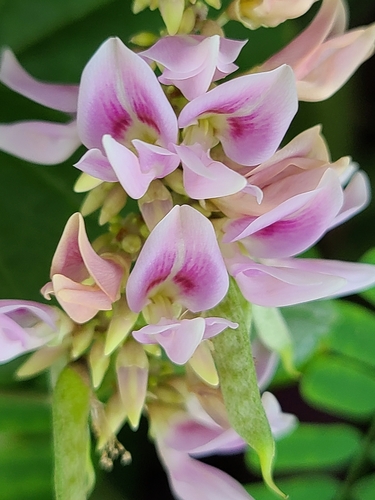
Dewevrea bilabiata
M. Micheli

gbif · cc-by
Meise Botanic Garden
Meise Botanic Garden

gbif · cc0
Royal Botanic Garden Edinburgh
Royal Botanic Garden Edinburgh
What to Eat
Edible parts: Leaves
Young leaves are cooked as a leafy vegetable and used as a flavouring.
Known Hazards
Where to Find It
A tropical plant.
Africa, Cameroon, Central Africa, Central African Republic, CAR, Congo DR,
Countries: Angola, Burkina Faso, Burundi, Benin, Botswana, Congo (DRC), Central African Republic, Congo (Republic), Cote d'Ivoire, Cameroon, Cape Verde, Djibouti, Algeria, Egypt, Eritrea, Ethiopia, Gabon, Ghana, Gambia, Guinea, Equatorial Guinea, Guinea-Bissau, Kenya, Comoros, Liberia, Lesotho, Libya, Morocco, Madagascar, Mali, Mauritania, Mauritius, Malawi, Mozambique, Namibia, Niger, Nigeria, Rwanda, Seychelles, Sudan, Sierra Leone, Senegal, Somalia, South Sudan, Sao Tome & Principe, Eswatini, Chad, Togo, Tunisia, Tanzania, Uganda, South Africa, Zambia, Zimbabwe
How to Identify
A tropical shrub or woody creeper in the legume family, occurring in warm regions.
How to Grow
Requires a sunny position. Plants are very rarely seen in fruit, though they flower all year round. The flowers are very fragrant.
Other Uses
The plant is used as an insecticide.
Names & Synonyms
Kata, Lofembembo, Okoyo
References (6)
- http://aflora.africa.kyoto-u.ac.jp
- ILDIS Legumes of the World http:www:ildis.org/Legume/Web
- Jardin, C., 1970, List of Foods Used In Africa, FAO Nutrition Information Document Series No 2.p 74
- Liengola, I. B., 2001, A contribution to the study of native edible plants by the Turumbu and Lokele of the Tshopo District, Province Orientale, D. R. Congo. Syst. Geogr. Pl. 71:687-698
- Martin, F.W. & Ruberte, R.M., 1979, Edible Leaves of the Tropics. Antillian College Press, Mayaguez, Puerto Rico. p 199
- Termote, C., et al, 2011, Eating from the wild: Turumbu, Mbole and Bali traditional knowledge of non-cultivated edible plants, District Tshopo, DRCongo, Gen Resourc Crop Evol. 58:585-618