Dictyopteris acrostichoides
(J. Agardh) Bornet
Brown algae
DictyotaceaeSeaweed

iNaturalist · cc-by-nc
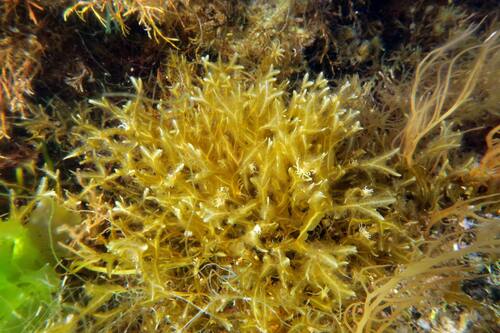
(c) Wayne Martin, some rights reserved (CC BY-NC), uploaded by Wayne Martin
(c) Wayne Martin, some rights reserved (CC BY-NC), uploaded by Wayne Martin

iNaturalist · cc-by-nc
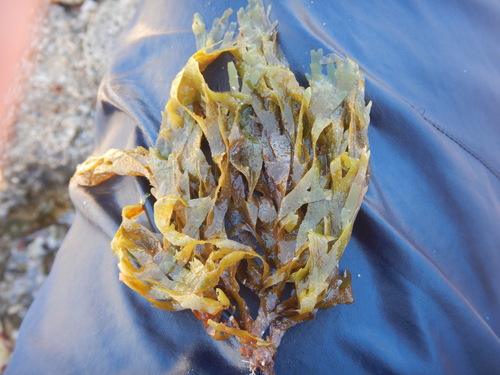
(c) Jonathan Lavan, underpressurephotog.com, some rights reserved (CC BY-NC), uploaded by Jonathan Lavan, underpressurephotog.com
(c) Jonathan Lavan, underpressurephotog.com, some rights reserved (CC BY-NC), uploaded by Jonathan Lavan, underpressurephotog.com

iNaturalist · cc-by-nc
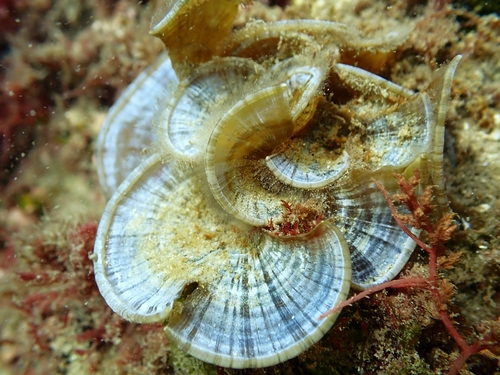
(c) obscurus, some rights reserved (CC BY-NC), uploaded by obscurus
(c) obscurus, some rights reserved (CC BY-NC), uploaded by obscurus
What to Eat
Edible parts: Algae, Seaweed
The fronds are boiled for a few minutes, then finely chopped and added to dishes such as potato salad.
Where to Find It
It grows in warm temperate waters. It grows below the tidal zone and in sheltered and slightly exposed shores.
Africa, Asia, Australia*, East Africa, India, Madagascar, Malaysia, SE Asia, Tasmania*,
Countries: United Arab Emirates, Afghanistan, Armenia, Angola, Australia, Azerbaijan, Bangladesh, Burkina Faso, Bahrain, Burundi, Benin, Brunei, Bhutan, Botswana, Congo (DRC), Central African Republic, Congo (Republic), Cote d'Ivoire, Cameroon, China, Cape Verde, Djibouti, Algeria, Egypt, Eritrea, Ethiopia, Gabon, Georgia, Ghana, Gambia, Guinea, Equatorial Guinea, Guinea-Bissau, Indonesia, Israel, India, Iraq, Iran, Jordan, Japan, Kenya, Kyrgyzstan, Cambodia, Comoros, North Korea, South Korea, Kuwait, Kazakhstan, Laos, Lebanon, Sri Lanka, Liberia, Lesotho, Libya, Morocco, Madagascar, Mali, Myanmar, Mongolia, Mauritania, Mauritius, Maldives, Malawi, Malaysia, Mozambique, Namibia, Niger, Nigeria, Nepal, Oman, Philippines, Pakistan, Qatar, Rwanda, Saudi Arabia, Seychelles, Sudan, Singapore, Sierra Leone, Senegal, Somalia, South Sudan, Sao Tome & Principe, Syria, Eswatini, Chad, Togo, Thailand, Tajikistan, Timor-Leste, Turkmenistan, Tunisia, Turkey, Taiwan, Tanzania, Uganda, Uzbekistan, Vietnam, Yemen, South Africa, Zambia, Zimbabwe
How to Identify
A seaweed. The fronds are ribbon like and branch frequently. They arise from a densely felted attachment. The fronds can be 50 cm long. There is a mid rib and hairs form lines of dots along the frond. There are dark reproductive bodies on each side of the midrib.
Names & Synonyms
Haliseris acrostichoides J. Agardh
References (3)
- Cribb, A.B. & J.W., 1976, Wild Food in Australia, Fontana. p 191
- Cribb, A.B., 1996, Seaweeds of Queensland A Naturalist's Guide. The Queensland Naturalists' Club Handbook No. 2. p 41
- www.algaebase.org