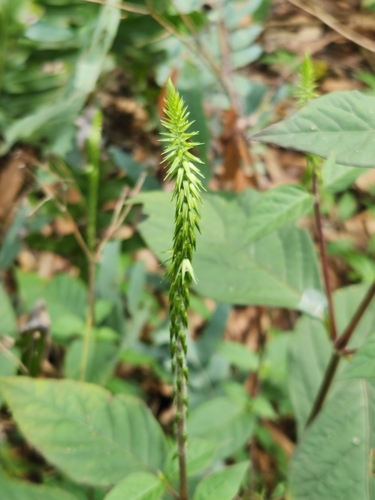
Digera muricata
(L.) Mart.
Wild rhubarb, False amaranth
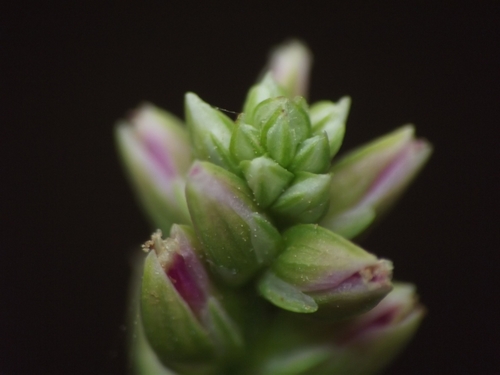
(c) Aditya Bari, some rights reserved (CC BY-NC)
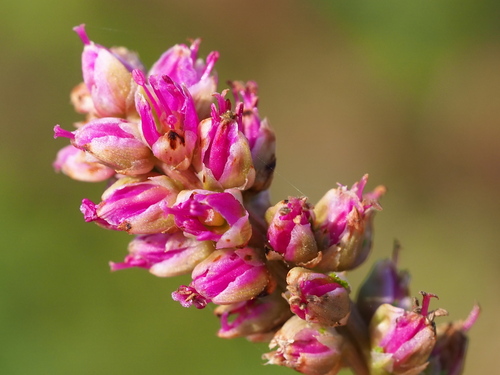
no rights reserved, uploaded by 葉子

(c) Anita, some rights reserved (CC BY-NC)
What to Eat
Edible parts: Leaves, Stems, Flowers, Nectar, Vegetable
The leaves are boiled and eaten as a vegetable, seasoned with salt and chilli or used in curries. The stems are also consumed, and nectar is sucked from the flowers.
Where to Find It
A tropical plant. Western Rajasthan. In Pakistan it grows up to 1,500 m altitude. In Kenya it grows between sea level and 1,500 m altitude. It can grow in dry savannah and semi-desert and moist locations. It is often near streams.
Afghanistan, Africa, Arabia, Asia, Bangladesh, Central Africa, Congo, East Africa, Ethiopia, India, Indonesia, Kenya, Madagascar, Malaysia, Middle East, Myanmar, Nigeria, Oman, Pakistan, Saudi Arabia, SE Asia, Senegal, Socotra, Somalia, South Sudan, Sri Lanka, Sudan, Tanzania, Uganda, West Africa, Yemen,
How to Identify
An annual herb. It grows 20-50 cm high. The leaf blade is narrowly oval. It lies over. It is branched from the base. The leaves are alternate. It is 2-6 cm long by 6-30 mm wide. The flowers are white or pink. They are small and long slender flower stalks. The fruit have one seed.
Nutrition Score: 30/100
| Part | Moisture | kJ | kcal | Protein | Vit A | Vit C | Iron | Zinc |
|---|---|---|---|---|---|---|---|---|
| Leaves boiled | — | — | — | — | — | — | — | — |
| Leaves | 83.8 | — | — | 4.3 | — | — | 17.7 | 0.6 |
How to Grow
A very adaptable plant, it occurs naturally in both tropical and subtropical regions, where it can be found in semi-arid through to quite moist areas. The plant often occurs as a weed in fields in its native range, and can sometimes become troublesome. Two distinct subspecies of this plant have been distinguished: subsp. Muricata, which occurs mainly in Asia, but also in eastern Africa and Madagascar; subsp. Trinervis, found mainly in Africa. Based on hairiness of leaves and on form of scales in sterile flowers, several varieties have been distinguished in subsp. Trinervis, of which var. patentipilosa seems most suitable as a leafy vegetable because it has large leaves.
Medicinal Uses
Used internally against digestive system disorders. The seeds and flowers are used to treat urinary disorders.
Other Information
The flowers are sucked by children. It is occasionally cultivated and sold in markets. It is a minor vegetable of local importance.
Notes
There is only one Digera species.
Names & Synonyms
Aghada, Athi, Booti, Chanchali, Chenchalikura, Chenchel kura, Chenchulaaku, Chererayan, Cheriyan, chu neyyi kura, ChenGitana, Getna, Gorji soppu, Gungatiya, Jamaika sak, Jonnachemchali, Kaprimet, Kari bhaji, Kari gandhari, Kattukkeerai, Khanjru, Kogatu, Korithusoppu, Kundursa, Kunzar, Kunzru, Kurdu, Lahsuva, Lal-lahuria, Lasua, Lata mouri, Lataroo, Latmhuria, Lehesua, Lehsua, Leswa, Lulur, Mareeri saag, Morang, Nazam hoora, Sermo, Tandala, Tandla, Tandoli, Tanduli-matala, Tanduljira, Tartara, Theyya, Thonthoni shak, Thoyya, Thoyyake-erai, Torcha, Torchata, Torqeta, Walange, Yut-na-daung
References (60)
- Addis, G., Asfaw, Z & Woldu, Z., 2013, Ethnobotany of Wild and Semi-wild Edible Plants of Konso Ethnic Community, South Ethiopia. Ethnobotany Research and Applications. 11:121-141
- Addis, G., et al, 2013, The Role of Wild and Semi-wild Edible Plants in Household Food Sovereignty in Hamer and Konso Communities, South Ethiopia. Ethnobotany Research & Applications. 11:251-271
- Ajain, M., Ali, T., & Siddiqui, M.F., 2015, A Survey of Ethnobotanically Important Herbaceous Plants of Tehsil Jatoi,District Muzaffar Garh, Punjab, Pakistan. Int. J. Biol. Res., 3(2): 87-92, 2015.
- Ambasta, S.P. (Ed.), 2000, The Useful Plants of India. CSIR India. p 171
- Ara, R. I. T., 2015, Leafy Vegetables in Bangladesh. Photon eBooks. p 133
- Arinathan, V., et al, 2007, Wild edibles used by Palliyars of the western Ghats, Tamil Nadu. Indian Journal of Traditional Knowledge. 6(1) pp 163-168
- Avinash, B. K., Kumar, R., et al, 2013, Ethnoboptany of Tharus of Dudhwa National Park, India. Mintage journal of Pharmaceutical & Medical Science 6-11
- Chowdhury, M. & Mukherjee, R., 2012, Wild Edible Plants Consumed by Local Communities of Maldah of West Bengal, India. Indian J.Sci.Res.3(2) : 163-170
- Datar, M. N. & Upadhye, A. S., 2015, Forest foods of Northern Western Ghats: Mode of Consumption, Nutrition, and Availability. Asian Agri-History Vol. 19, No. 4, 2015 (293–316)
- Dey, A. & Mukhererjee, A., 2015, Living and Survival Amidst Hunger: Wild Edible Botanicals as a Prime Forest Productivity in the Rural Purulia District, West Bengal, India from Colonial to Present. Research Journal of Forestry 9(3): 71-86
- Dobriyal, M. J. R. & Dobriyal, R., 2014, Non Wood Forest Produce an Option for Ethnic Food and Nutritional Security in India. Int. J. of Usuf. Mngt. 15(1):17-37
- GAMMIE (As Digera alternifolia)
- Grubben, G. J. H. and Denton, O. A. (eds), 2004, Plant Resources of Tropical Africa 2. Vegetables. PROTA, Wageningen, Netherlands. p 286
- Gupta, S., et al, 2005, Analysis of nutrient and antinutrient content of underutilized green leafy vegetables. LWT 38:339-345 (As Digera arvensis)
- Harisha, R. P. & Padmavathy, S., 2013, Knowledge and Use of Wild Edible Plants in Two Communities in Malai Madeshwara Hills, Southern India. International Journal of Botany 9(2): 64-72. (As Digera arvensis)
- Hedrick, U.P., 1919, (Ed.), Sturtevant's edible plants of the world. p 270 (As Digera arvensis)
- Herb., E. A., 1985,
- HOOPER (As Digera alternifolia)
- INFOODSUpdatedFGU-list.xls (Also as Digera arvensis)
- Jadhav, R., et al, 2015, Forest Foods of Northern Western Ghats: Mode of Consumption, Nutrition and Availability. Asian Agri-History Vol. 19, No. 4: 293-317
- Karthi, Sathya, & Salome, 2014, Uncultivated Edible Greens from Small Millet Farms Tamil Nadu India. IDRC (As Digera arvensis)
- Jardin, C., 1970, List of Foods Used In Africa, FAO Nutrition Information Document Series No 2.p 75 (As Digera alternifolia)
- Kahlon, L. K. & Singh, R., 2019, Traditional knowledge & Dynamics of edible plants of primitive tribal group ‘Paudi Bhuyan’ with changing demography migration patterns in Northern Odisha. Indian Journal of Traditional Knowledge Vol 18(1), pp 7-15
- Kannan, M., et al, 2015, Ethnobotanical survey on wild edible plants of Kalrayan Hills, Salem District, Tamil Nadu, India. Global J. Res. Med Plants & Indigen. med. 4(12): 236-246
- Khayde, M. S., et al, 2009, Wild Edible Plants Used by the tribes of Akole Tahasil of Ahmednagar District (MS), India. Ethnobotanical Leaflets 13:1328-36
- Kidane, B., et al, 2014, Wild and semi-wild leafy vegetables used by the Maale and Ari ethnic communities in southern Ethiopia. Genetic Resour Crop Evol. Springer. p 8
- Kiran, K. C., et al, 2019, Diversity and Seasonal Availability of Potential Wild Edible Plants from Vidarbha Region of Maharashtra State, India. Int.J.Curr.Microbiol.App.Sci (2019) 8(2): 1434-1446
- Kuhnlein, H. V., et al, 2009, Indigenous Peoples' food systems. FAO Rome p 192 (As Digera arvensis)
- Kuvar, S. D. & Shinde, R. D., 2019, Wild Edible Plants used by Kokni Tribe of Nasik District, Maharashtra. Journal of Global Biosciences. Volume 8, Number 2, 2019, pp. 5936-5945
- Lulekal, E., et al, 2011, Wild edible plants in Ethiopia: a review on their potential to combat food insecurity. Afrika Focus - Vol. 24, No 2. pp 71-121
- Majeed, M., et al, 2021, Gathered Wild Food Plants among Diverse Religious Groups in Jhelum District, Punjab, Pakistan. Foods 2021, 10, 594.
- Marandi, R. R. & Britto, S. J., 2015, Medicinal Properties of Edible Weeds of Crop Fields and Wild plants Eaten by Oraon Tribals of Latehar District, Jharkhand. International Journal of Life Science and Pharma Research. Vo. 5. (2) April 2015 (As Digera alternifolia)
- Martin, F. W. & Ruberte, R. M., 1979, Edible Leaves of the Tropics. Antillian College Press, Mayaguez, Puerto Rico. p 174 (As Digera alternifolia)
- Maundu, P. et al, 1999, Traditional Food Plants of Kenya. National Museum of Kenya. 288p
- Mutie, F. G., 2020, Conservation of Wild Food Plants and Their Potential for Combatting Food Insecurity in Kenya as Exemplified by the Drylands of Kitui County. Plants 2020, 9, 1017
- Mutie, F. M., et al, 2023, Important Medicinal and Food Taxa (Orders and Families) in Kenya, Based on Three Quantitative Approaches. Plants 2023, 12, 1145
- Ngugi, G., 2000, Case Study from Kenya on Indigenous Wild Vegetables. Paper 4 Workshop in Kenya 1999. p 34
- Nov. Actorum Acad. Caes. Leop.-Carol. German. Nat. Cur. 13:285. 1826
- Ocho, D. L., et al, 2012, Assessing the levels of food shortage using the traffic light metaphor by analyzing the gathering and consumption of wild food plants, crop parts and crop residues in Konso, Ethiopia. Journal of Ethnobiology and Ethnomedicine 8:30
- Peters, C. R., O'Brien, E. M., and Drummond, R.B., 1992, Edible Wild plants of Sub-saharan Africa. Kew. p 48
- Prabha, Y. P., et al, 2010, Documentation of Wild Edible Plants of Melghat Forest, Dist. Amravati, Maharashtra State, India. Ethnobotanical Leaflets 14: 751-58, 2010.
- Pradhan, R., et al, 2020, Potential Wild Edible Plants and its Significance in Livelihood of Indigenous People of Male Mahadeshwara Hills, Karnataka. Economic Affairs Vol. 64, No. 4 pp. 01-14 (As Digera arvensis)
- Qureshi, R., and Bhatti, G. R., 2009, Folklore Uses of Amaranthaceae family from Nara Desert, Pakistan. Pakistan J. Botany. 41(4):1565-1572
- Rajasab, A. H. et al, 2004, Documentation of folk knowledge on edible wild plants of North Karnataka. Indian Journal of Traditional Knowledge. Vol 3(4) pp 419-429
- Rajkalkshmi, P. et al, 2001, Total carotenoid and beta-carotene contents of forest green leafy vegetables consumed by tribals of south India. Plant Foods for Human Nutrition 56:225-238 (As murriculata) (Also as Digera arvensis)
- Ramachandran, V. S., 2007, Wild edible plants of the Anamalais, Coimbatore district, western Ghats, Tamil Nadu. Indian Journal or Traditional Knowledge. 6(1) pp 173-176
- Rao, M. L. S., et al, 2014, Indigenous Plant Foods which are commonly consumed by the tribal communities in Dumbriguda Area of Visakhapatnam District, Andhra Pradesh, India. Biolife. Vol 2, Issue 3
- Rasingam, L., 2012, Ethnobotanical studies on the wild edible plants of Irula tribes of Pillur Valley, Coimbatore district, Tamil Nadu, India. Asian Pacific Journal of Tropical Biomedicine. (2012) S1493-S1497
- Reddy, B. M., 2012, Wild edible plants of Chandrapur district, Maharashtra, India. Indian Journal of Natural Products and Resources. 3(1) pp 110-117
- Reddy, K. N. et al, 2007, Traditional knowledge on wild food plants in Andhra Pradesh. Indian Journal of Traditional Knowledge. Vol. 6(1): 223-229
- Seidemann J., 2005, World Spice Plants. Economic Usage, Botany, Taxonomy. Springer. p 136
- Sharma, B.D., & Lakshminarasimhan, P., 1986, Ethnobotanical Studies on the Tribals of Nasik District (Maharashtra). J. Econ. Tax. Bot. Vol. 8 No. 2 pp 439-446
- Singh, H. B., Arora, R. K.,1978, Wild edible Plants of India. Indian Council of Agricultural Research, New Delhi. p 25 (As Digera alternifolia)
- Singh, V. and Singh, P., 1981, Edible Wild Plants of Eastern Rajasthan. J. Econ. Tax. Bot. Vol 2 pp 197-207
- Sinha, R. & Lakra, V., 2007, Edible weeds of tribals in Jharkhand, Orissa and West Bengal. Indian Journal of Traditional Knowledge 6(1) January 2007 pp 217-222 (As Digera alternifolia)
- Termote, C., et al, 2014, Assessing the potential of wild foods to reduce the cost of a nutritionally adequate diet: An example from eastern Baringo District, Kenya. Food and Nutrition Bulletin, vol. 35, no. 4
- Thiselton-Dywer, W.T., (Ed.), 1913, Flora of Tropical Africa. Vol VI-section 1. Reeve, p 30 (As Digera alternifolia)
- WATT (As Digera alternifolia)
- World Checklist of Useful Plant Species 2020. Royal Botanic Gardens, Kew
- Zereen, A., et al, 2013, Ethnobotanical Studies of Wild Herbs of Central Punjab, Pakistan. Bangladesh J. Plant Taxon 20(1): 67-76