Dimocarpus longan
Lour.
Longan

(c) joch89, some rights reserved (CC BY-NC)

liushengyu

(c) nukusr, some rights reserved (CC BY-NC), uploaded by nukusr
(c) erinclaassen, some rights reserved (CC BY-NC)

(c) 津涵, some rights reserved (CC BY-NC)

(c) 津涵, some rights reserved (CC BY-NC)
What to Eat
Edible parts: Fruit, Leaves - tea, Seeds
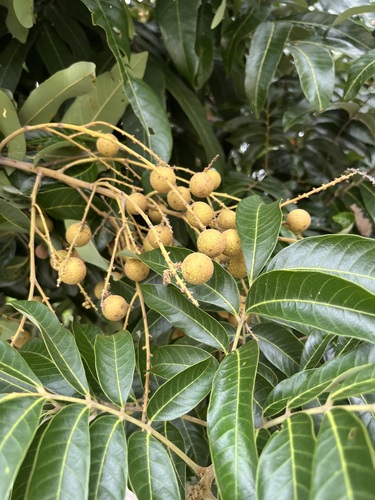
The fruit is eaten raw or cooked. The mucilaginous flesh is whitish, translucent, and somewhat sweet, though less flavoursome than the related lychee. It is delicious raw and can also be dried, preserved in syrup, cooked in sweet and sour dishes, or added to soups. The globose fruits are 12–25mm in diameter with a thin, brittle, yellow-brown to light reddish-brown rind. In China, most fruit is canned in syrup or dried. For drying, fruits are first heated to shrink the flesh and ease rind removal, then seeded and dried over a slow fire. The dried product is black, leathery, and smoky in flavour, and is mainly used to prepare a refreshing infusion.
Where to Find It
A tropical plant. It will grow in poorer soils and colder conditions than a litchi. It can stand frost and needs a period of cool temperature to fruit well. So they suit a subtropical to warm temperate climate, but will also grow in the lowland tropics. The chilling requirement is less than litchi which means it will fruit in more tropical areas. It does best with temperatures between 19-26°C. They can tolerate wind but drying winds at flowering affect fruit set. Excessive rainfall during flowering reduces fruit set. It suits monsoonal regions with a distinct wet and dry season. They can tolerate flooding for a few days. A rainfall of 1,500-2,000 mm is best. A pH of 4.5-6 is best. In XTBG Yunnan. It suits hardiness zones 11-12.
Asia, Australia, Bangladesh, Bermuda, Brazil, Cambodia, China*, Cook Islands, Cuba, East Timor, Guam, Hawaii, Himalayas, India, Indochina, Indonesia, Jamaica, Laos, Malaysia, Mauritius, Myanmar, North America, Northeastern India, Pacific, Pakistan, Papua New Guinea, PNG, Philippines, Puerto Rico, Reunion, SE Asia, Singapore, South America, Sri Lanka, Taiwan, Thailand, Timor-Leste, USA, Vietnam, West Indies,
How to Identify
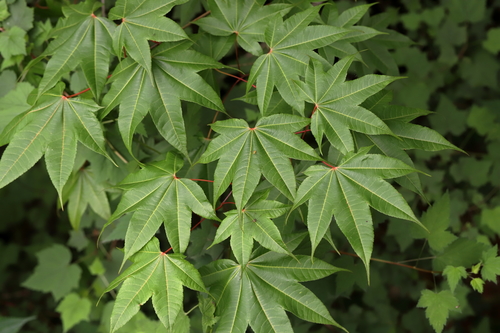
A tree up to 12-40 m high with a low trunk and spreading branches. The tree has a rounded crown. It keeps its leaves throughout the year. The trunk can be 80 cm across. There can be buttresses 2 m tall. The bark is corky. The twigs have 5 faint grooves. The leaves are 3-45 cm long by 1.8-20 cm wide. The leaves have petioles and six to nine leaflets. Leaflets are up to 12 cm long. Young leaflets are often red before turning green. The flowers occur in upright clusters. These are 8-40 cm long. They are produced on new growth. The flowers are small and reddish-brown. A progression of male, female and hermaphrodite flowers occur. Flowers are pollinated by insects. The fruit is similar to a litchi and about 2.5 cm across. They are yellow-brown when mature and with a pebbly surface. They occur in clusters of 10 to 80. The flesh or aril is white and sweet. The seed is small, round and brownish-black. There are several named cultivated varieties.
Nutrition Score: 39/100
| Part | Moisture | kJ | kcal | Protein | Vit A | Vit C | Iron | Zinc |
|---|---|---|---|---|---|---|---|---|
| Fruit - raw | 82 | 255 | 61 | 1.3 | — | 84 | 1.2 | 0.1 |
How to Grow
Seedlings do not produce true to type and take up to 20 years to fruit. So air layered or grafted plants are used and these fruit in 3-4 years. For air layering, mature shoots about 2-3 cm across are chosen which do not have active vegetative growth. A ring is cut around the twig 50 cm from the tip removing the bark and soft wood. A plastic sleeve is put over the twig and tied below the cut ring. Then peat moss or rooting mix is filled into the sleeve and this is tied off above the ring. When roots have formed the twig is cut off and planted. Cuttings and budding can also be used. Spacing needs to be 5-8 m apart. Deep rooting needs to be encouraged by good site preparation. This stops trees being blown over. Wind protection is essential. Although flowers need to be cross pollinated, this can be done between flowers on the same tree as flowers develop at different times. Very little pruning should be done. Fruit need to ripen on the tree. They do not ripen further after harvest.
Propagation: Most longan trees are grown from seed. After shade-drying for 4 days, seeds should be planted promptly at no more than 2cm depth, as deeper planting may result in multiple sprouts. Germination occurs within 7–10 days. Seedlings are transplanted to shaded nursery rows the following spring and moved to their permanent positions 2–3 years later during winter dormancy. Air-layering is also practised; air-layers bear fruit 2–3 years after planting. Grafting is another option.
Medicinal Uses
The fruit flesh is used as a stomachic, febrifuge, and vermifuge, and is regarded as an antidote for poison. A decoction of the dried flesh is taken as a tonic and treatment for insomnia and neurasthenic neurosis. In both North and South Vietnam, the seed's 'eye' is pressed against snakebites in the belief that it absorbs venom. Leaves and flowers are sold in Chinese herb markets but are not part of ancient traditional medicine; the leaves contain quercetin and quercitrin. The seeds are used to counteract heavy sweating, and the pulverised kernel — which contains saponin, tannin, and fat — serves as a styptic.
Other Uses
The seeds, due to their saponin content, are used like soapberries for shampooing hair. Seeds and rind are burnt as fuel. The heartwood is reddish brown and not clearly demarcated from the lighter sapwood. The wood is strong, tough, very hard, difficult to split, highly durable, and dries slowly but with little or no degradation. It is used for posts, agricultural implements, furniture, construction, shuttle pipes, bearings, textile weaving stands, and rifle butts. The wood is not highly valued for fuel.
Wikipedia
Source ↗Evergreen tree reaching 12 m tall and wide at fast growth rate. Hardy to UK zone 9. Self-fertile with flowers attracting wildlife. Tolerates light sandy, medium loamy, and heavy clay soils, preferring well-drained conditions across mildly acidic to mildly alkaline pH ranges. Grows in semi-shade or full sun and prefers moist soil.
Production
Seedlings grow slowly at first, but then grow more rapidly. Trees fruit after 7-10 years from seed and 3-5 years from vegetative plants. Up to 40 to 55 kg of fruit per tree are possible. Fruit mature in 120-150 days. Fruit can be stored for 6 weeks at 5°C when covered. Trees can live for 400 years.
Other Information
It is a cultivated food plants. The fruit are sold in local markets.
Notes
There are 6 Dimocarpus species. Fruit are high in folates 68μg/100.
Names & Synonyms
Arem litchi, Ashphal, Bambo, Buku, Chempoovam, Dieng-loba, Diengloba, Dopar, Dragon's eye, Ga-naing-gyo, Ihau, Kanakindeli, Kath lichu, Kelengkeng, Laam-yai, Lam-yai, Lamyai, Lengkeng, Long yean gan, Longana, Longyan, Loong narn, Lungan, Mahau, Malakcota, Mamoncillo chino, Marli, Mata kuching, Meanprey, Mien, Mirgoch, Mora, Mulei, Naga lichu, Nagalichi, Nhan, Nurai, Olho-de-dragao, Pasakotta, Peni mora, Pohon lengkeng, Poripuna, Puvatti, Rongan, Rupai, Ryugan, Shempuna, Shempuvan, Takuhis, Tating jala, Taw-kyetmauk, Taw-longan, Tayok-kyetmauk, Tegonog, Theifei-mung, Tokra, Umb, Vumb, Wumb
References (96)
- Longan references Euphoria longan/Dimocarpus
- AAK, 1980, Bertanam Pohon Buah-buahan. Penerbitan Yayasan Kanisius, Jogyakarta. p 69
- Alexander, D.M., Scholefield, P.B., Frodsham, A., 1982, Some tree fruits for tropical Australia. CSIRO, Australia. p 33
- Ambasta, S.P. (Ed.), 2000, The Useful Plants of India. CSIR India. p 214 (As Euphoria longan)
- Anderson, E. F., 1993, Plants and people of the Golden Triangle. Dioscorides Press. p 209
- Argent, G et al, nd, Manual of the Larger and More important non Dipterocarp Trees of Central Kalimantan Indonesia. Volume 2 Forest Research Institute, Samarinda, Indonesia. p 556
- Arora, R. K., 2014, Diversity in Underutilized Plant Species - An Asia-Pacific Perspective. Bioversity International. p 66
- Ashton, M. S., et al 1997, A Field Guide to the Common Trees and Shrubs of Sri Lanka. WHT Publications Ltd. pdf p 356
- Backer & Bakh. f. 1963-1968. Flora of Java.
- Bajpai, O., et al, 2015, Tree species of the Himalayan Terai region of Uttar Pradesh, India: a checklist. Check List 11(4): 1718
- BARC, 2016, State of Biodiversity for Food and Agriculture in Bangladesh. Bangladesh Agricultural Research Council.
- Barwick, M., 2004, Tropical and Subtropical Trees. A Worldwide Encyclopedic Guide. Thames and Hudson p 146
- Banerjee, A., et al, 2013, Ethnobotanical Documentation of Some Wild Edible Plants in Bankura District, West Bengal, India. The Journal of Ethnobiology and Traditional Medicine. Photon 120 (2013) 585-590
- Blench, R., 2004, Fruits and Arboriculture in the Indo-Pacific Region. Indo-Pacific Prehistory Association Bulletin 24. (Taipei Papers Volume 2) p 37
- Bodkin, F., 1991, Encyclopedia Botanica. Cornstalk publishing, p 465
- Burkill, I.H., 1966, A Dictionary of the Economic Products of the Malay Peninsula. Ministry of Agriculture and Cooperatives, Kuala Lumpur, Malaysia. Vol 2 (I-Z) p 1573 (As Nephelium longana)
- Castillo, C., 2013, The Archaeobotany of Khao Sam Kaeo and Phu Khao Thong: The Agriculture of Late Prehistoric Southern Thailand. Ph. D. thesis University College, London p 379 (As Euphoria longana)
- Chai, P. P. K. (Ed), et al, 2000, A checklist of Flora, Fauna, Food and Medicinal Plants. Lanjak Entimau Wildlife Sanctuary, Sarawak. Forestry Malaysia & ITTO. p 170
- Chandrashekara, U. M., 2009, Tree species yielding edible fruit in the coffee-based homegardens of Kerala, India: their diversity, uses and management. Food Sec. 1:361-370
- Chatterjee, A. S., 1997, Fruit Trees in Cambodian Home Gardens. Trainers' training manual. Home garden series No.3 p 17
- Coronel, R.E., 1982, Fruit Collections in the Philippines. IBPGR Newsletter p 6 (As Euphoria longana)
- Cundall, P., (ed.), 2004, Gardening Australia: flora: the gardener's bible. ABC Books. p 501
- Das, S. and De, B., 2013, Evaluation of Angiotension I-Converting Enzyme (ACE) inhibitory potential of some underutilized indigenous fruits of West Bengal using an in vitro model. Fruits, Vol. 68:499-506 (As Nephelium longana)
- Darley, J.J., 1993, Know and Enjoy Tropical Fruit. P & S Publishers. p 61 (As Euphoria longan)
- Encke, F., et al. 1984. Zander: Handworterbuch der Pflanzennamen, ed. 13.
- Engel, D.H., & Phummai, S., 2000, A Field Guide to Tropical Plants of Asia. Timber Press. p 47 (As Euphoria longan)
- Etherington, K., & Imwold, D., (Eds), 2001, Botanica's Trees & Shrubs. The illustrated A-Z of over 8500 trees and shrubs. Random House, Australia. p 263
- Facciola, S., 1998, Cornucopia 2: a Source Book of Edible Plants. Kampong Publications, p 224
- Flora of China. www.eFloras.org
- Fl. cochinch. 1:233. 1790
- Food Composition Tables for use in East Asia FAO http://www.fao.org/infoods/directory No. 901
- Gardner, S., et al, 2000, A Field Guide to Forest Trees of Northern Thailand, Kobfai Publishing Project. p 135
- Gouldstone, S., 1983, Growing your own Food-bearing Plants in Australia. Macmillan p 104 (As Euphoria longana)
- Hazarika, B. et al. (2020). An overview of the unexplored underutilized fruit crops of Assam, India. Journal of Applied and Natural Science, 12(3): 442 - 453 (As Euphoria longan)
- Hedrick, U.P., 1919, (Ed.), Sturtevant's edible plants of the world. p 435 (As Nephelium longana)
- Hibbert, M., 2002, The Aussie Plant Finder 2002, Florilegium. p 87
- Hu, Shiu-ying, 2005, Food Plants of China. The Chinese University Press. p 523
- INFOODS:FAO/INFOODS Databases
- Jadhav, R., et al, 2015, Forest Foods of Northern Western Ghats: Mode of Consumption, Nutrition and Availability. Asian Agri-History Vol. 19, No. 4: 293-317
- Jin, Chen et al, 1999, Ethnobotanical studies on Wild Edible Fruits in Southern Yunnan: Folk Names: Nutritional Value and Uses. Economic Botany 53(1) pp 2-14
- Johns, L.& Stevenson,V., 1979, The Complete Book of Fruit. Angus and Robertson. p 180
- Kar, A., et al, 2013, Wild Edible Plant Resources used by the Mizos of Mizoram, India. Kathmandu University Journal of Science, Engineering and Technology. Vol. 9, No. 1, July, 2013, 106-126
- Khan, D. & Shaukat, S.S., 2006, The Fruits of Pakistan: Diversity, Distribution, Trends of Production and Use. Int. J. Biol. Biotech., 3(3):463-499
- Kiple, K.F. & Ornelas, K.C., (eds), 2000, The Cambridge World History of Food. CUP p 1803
- Lalfakzuala, R., 2007, Ethnobotanical usages of plants in western Mizoram. Indian Journal of Traditional Knowledge. Vol 6(3) pp 480-493 (As Euphoria longan)
- Leenh. 1971. Blumea 19:122.
- Lembaga Biologi Nasional, 1977, Buah-Buahan, Balai Pustaka, Jakarta. p 80
- Liberty Hyde Bailey Hortorium. 1976. Hortus third.
- Llamas, K.A., 2003, Tropical Flowering Plants. Timber Press. p 341
- Lorenzi, H., Bacher, L., Lacerda, M. & Sartori, S., 2006, Brazilian Fruits & Cultivated Exotics. Sao Paulo, Instituto Plantarum de Estuados da Flora Ltda. p 607
- Lyle, S., 2006, Discovering fruit and nuts. Land Links. p 178
- Martin, F. W., et al, 1987, Perennial Edible Fruits of the Tropics. USDA Handbook 642 p 56 (As Euphoria longana)
- McMakin, P.D., 2000, Flowering Plants of Thailand. A Field Guide. White Lotus. p 109 (As Euphoria longan)
- Menzel, C., Watson, B., and Simpson, D., Longan (Euphoria longan ). The Australian New Crops Newsletter. 4. July. 1995
- Miguel, E., et al, 1989, A checklist of the cultivated plants of Cuba. Kulturpflanze 37. 1989, 211-357
- Morton, J. F., 1987, Fruits of Warm Climates. Wipf & Stock Publishers p 259
- Mozhui, R., et al, 2011, Wild edible fruits used by the tribals of Dimapur district of Nagaland, India. Pleione 5(1): 56 - 64. (As Nephelium longana)
- Pasha, M. K. & Uddin, S. B., 2019, Minor Edible Fruits of Bangladesh. Bangladesh J. Plant Taxon. 26(2): 299–313
- Patiri, B. & Borah, A., 2007, Wild Edible Plants of Assam. Geethaki Publishers. p 29
- Paul, A., 2013, Minor and uncultivated fruits of Eastern India, 2nd International Symposium on Minor Fruits and Medicinal Plants (As Euphoria longan)
- Peekel, P.G., 1984, (Translation E.E.Henty), Flora of the Bismarck Archipelago for Naturalists, Division of Botany, Lae, PNG. p 341
- Pegu, R., et al, 2013, Ethnobotanical study of Wild Edible Plants in Poba Reserved Forest, Assam, India. Research Journal of Agriculture and Forestry Sciences 1(3):1-10 (As Euphoria longan)
- Phangchopi, U., et al, 2015, Diversity of wild edible plants in Marat Longri Wildlife Sanctuary, Assam. Indian Journal of Natural Products and Resources Vol. 6(4), December 2015 pp. 305-313
- Phon, P., 2000, Plants used in Cambodia. © Pauline Dy Phon, Phnom Penh, Cambodia. p 234
- PROSEA (Plant Resources of South East Asia) handbook, Volume 2, 1991, Edible fruits and nuts.
- Rajapaksha, U., 1998, Traditional Food Plants in Sri Lanka. HARTI, Sri Lanka. p 446 (As Euphoria longana)
- Recher, P, 2001, Fruit Spirit Botanical Gardens Plant Index. www.nrg.com.au/~recher/ seedlist.html p 2 (As Euphoria longana)
- Sawian, J. T., et al, 2007, Wild edible plants of Meghalaya, North-east India. Natural Product Radiance Vol. 6(5): p 419 (As Nephelium longana)
- Schubert, B. G., 1975. Taxon 24:173.
- Sharma, B.B., 2005, Growing fruits and vegetables. Publications Division. Ministry of Information and broadcasting. India. p 83 (As Euphoria longan)
- Slik, F., www.asianplant.net
- Solomon, C., 2001, Encyclopedia of Asian Food. New Holland. p 222
- Sukarya, D. G., (Ed.) 2013, 3,500 Plant Species of the Botanic Gardens of Indonesia. LIPI p 231
- Suwardi, A. B., et al, 2020, Ethnobotany and conservation of indigenous edible fruit plants in South Aceh, Indonesia. Biodiversitas Vol. 21, No. 5, pp 1850-1860
- Tankard, G., 1987, Tropical fruit. Viking. p 60
- Tate, D., 1999, Tropical Fruit. Archipelago Press. Singapore. p 54
- Terrell et al. 1986. Agric. Handb. no. 505.
- Thitiprasert, W., et al, 2007, Country report on the State of Plant Genetic Resources for Food and Agriculture in Thailand (1997-2004). FAO p 95
- Thomson, G. & Morgan, W., (Ed.) 2004, Access to Asian Foods Newsletter, Vic Govt., Australia Issue 70
- Turreira Garcia, N., et al, 2017, Ethnobotanical knowledgeof the Kuy and Khmer people in Prey Lang, Cambodia. Cambodian Journal of Natural History 2017 (1): 76-101
- Valder, P., 1999, The Garden Plants of China. Florilegium. p 279
- van Wyk, B., 2005, Food Plants of the World. An illustrated guide. Timber press. p 176
- Walker, E., 1976. Flora of Okinawa and the southern Ryukyu Islands.
- Dimocarpus Cull, B.W., 1995, Fruit Growing in Warm Climates. Reed. p 170
- Forest Inventory and Planning Institute, 1996, Vietnam Forest Trees. Agriculture Publishing House p 650
- Lazarides, M. & Hince, B., 1993, Handbook of Economic Plants of Australia, CSIRO. p 81
- Macmillan, H.F. (Revised Barlow, H.S., et al) 1991, Tropical Planting and Gardening. Sixth edition. Malayan Nature Society. Kuala Lumpur. p 279
- Singh, H.B., Arora R.K.,1978, Wild edible Plants of India. Indian Council of Agricultural Research, New Delhi. p 59
- Smith, K., 1998. Growing Uncommon Fruits and Vegetables. New Holland. p 87
- Staples, G.W. and Herbst, D.R., 2005, A tropical Garden Flora. Bishop Museum Press, Honolulu, Hawaii. p 512 (Drawing)
- Striegel, L., et al, 2019, Promising Tropical Fruits High in Folates. Foods 2019, 8, 363; doi:10.3390/foods8090363. www.mdpi.com/journal/foods
- USDA, ARS, National Genetic Resources Program. Germplasm Resources Information Network - (GRIN). [Online Database] National Germplasm Resources Laboratory, Beltsville, Maryland. Available: www.ars-grin.gov/cgi-bin/npgs/html/econ.pl (10 April 2000)
- Wiersema, J. H. & Leon, B., 2013, World Economic Plants. A Standard Reference CRC Press. 2nd Ed. p 247
- Wild edible plants of Himachal Pradesh (As Euphoria longana)
- World Checklist of Useful Plant Species 2020. Royal Botanic Gardens, Kew
- www.worldagroforestrycentre.org/treedb/