Dipcadi viride
(L.) Moench
Green Dipcadi, Dainty green bells

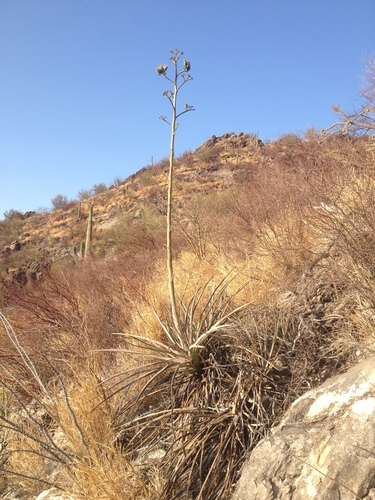
(c) Richard Gill, some rights reserved (CC BY-NC)

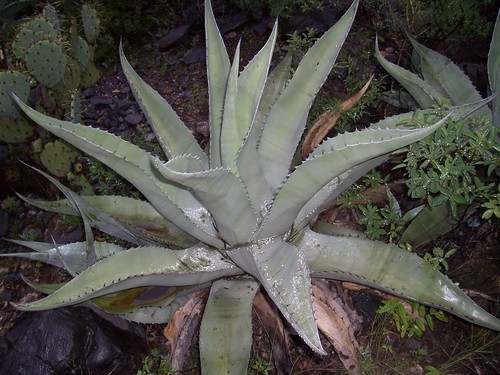
(c) Richard Gill, some rights reserved (CC BY-NC)

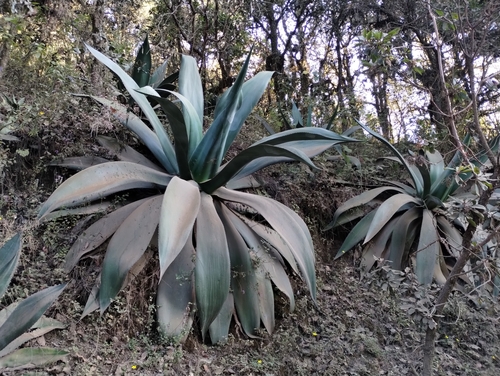
(c) Richard Gill, some rights reserved (CC BY-NC)
What to Eat
Edible parts: Bulb, Leaves
The bulbs are baked in ashes, and the leaves are used as a vegetable.
Known Hazards
Where to Find It
It is a subtropical plant. It grows in open woodland and wet grass savannah. In Nigeria it has been recorded at 2,300 m above sea level.
Africa, Australia, Botswana, East Africa, Eswatini, Guinea, Guinée, Guinea-Bissau, Lesotho, Mozambique, Nigeria, South Africa, Southern Africa, Swaziland, West Africa, Zambia, Zimbabwe,
How to Identify
A small hairless plant with a white bulb. It can have runners with small bulbs. The leaves occur as 1-4 per shoot. They vary in size but are long and sword shaped. They clasp the stem at the base. The flowers occur as 10 small flowers in a loose arrangement around the stalk. The stalk can be 20-50 cm long. The individual flowers are small and thread like. The fruit are on long angular capsules. The seeds are flat, round, shiny and black.
Nutrition Score: 22/100
| Part | Moisture | kJ | kcal | Protein | Vit A | Vit C | Iron | Zinc |
|---|---|---|---|---|---|---|---|---|
| Bulb | 86.3 | 215 | 51 | 0.8 | — | 0.1 | 0.5 | 5.1 |
Notes
They have also been put in the families Hyacinthaceae and Liliaceae.
Names & Synonyms
Gifbolletjie, Ligonhua, Morotoana-phookoana, Skaamblommetjie, Slymuintjie, Thelelimoro
References (18)
- Chapman, J. D. & Chapman, H. M., 2001, The Forest Flora of Taraba and Andamawa States, Nigeria. WWF & University of Canterbury. p 210
- FAO, 1988, Traditional Food Plants, FAO Food and Nutrition Paper 42. FAO Rome p 249
- Fowler, D. G., 2007, Zambian Plants: Their Vernacular Names and Uses. Kew. p 86
- Fox, F. W. & Young, M. E. N., 1982, Food from the Veld. Delta Books. p 251
- Gillarmod, J., 1966, 1971,
- Hibbert, M., 2002, The Aussie Plant Finder 2002, Florilegium. p 87
- http://aflora.africa.kyoto-u.ac.jp
- Jardin, C., 1970, List of Foods Used In Africa, FAO Nutrition Information Document Series No 2.p 75 (As Dipcadi filamentosum)
- Lee, 1979,
- Long, C., 2005, Swaziland's Flora - siSwati names and Uses http://www.sntc.org.sz/flora/
- Malaisse, F., 1997, Se nourrir en floret claire africaine. Approche ecologique et nutritionnelle. CTA., p 91.
- Peters, C. R., O'Brien, E. M., and Drummond, R.B., 1992, Edible Wild plants of Sub-saharan Africa. Kew. p 30
- Plowes, N. J. & Taylor, F. W., 1997, The Processing of Indigenous Fruits and other Wildfoods of Southern Africa. in Smartt, L. & Haq. (Eds) Domestication, Production and Utilization of New Crops. ICUC p 190
- Ruiters-Welcome, A. K., 2019, Food plants of southern Africa. Ph.D. thesis. Univ. of Johannesburg p 65
- Suppl. Meth. 267. 1802
- Tanaka, 1980,
- Tredgold, M.H., 1986, Food Plants of Zimbabwe. Mambo Press. p 44
- Welcome, A. K. & Van Wyk, B.-E., 2019, An inventory and analysis of the food plants of southern Africa. South African Journal of Botany 122 (2019) 136–179