Allantodia aspera
(Blume) Ching
Rang Songquan, Lingur
(c) liangfern, some rights reserved (CC BY-NC)
(c) liangfern, some rights reserved (CC BY-NC)
(c) liangfern, some rights reserved (CC BY-NC)
What to Eat
Edible parts: Fronds, Leaves, Vegetable
Young curled fronds are used as a vegetable, traditionally cooked with dry fish. Fronds are sold in markets.
Known Hazards
Where to Find It
A tropical plant. It grows along water channels. It grows up to 2200 m altitude.
Asia, Australia, Bangladesh, China, Himalayas, India, Indochina, Indonesia, Malaysia, Northeastern India, Pakistan, Philippines, SE Asia, Sri Lanka, Taiwan, Thailand, Vietnam,
How to Identify
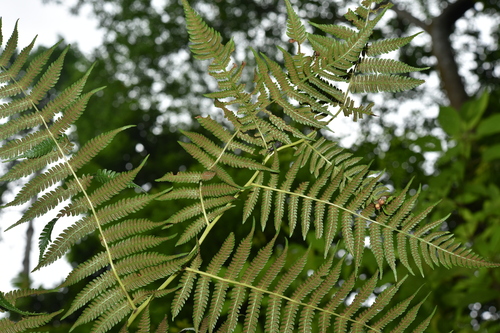
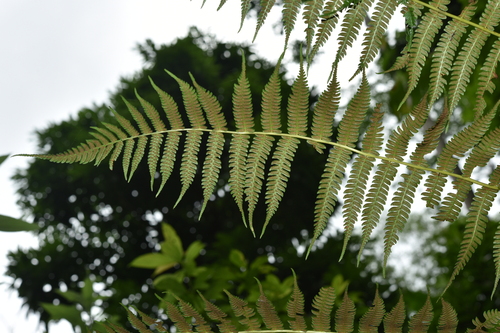
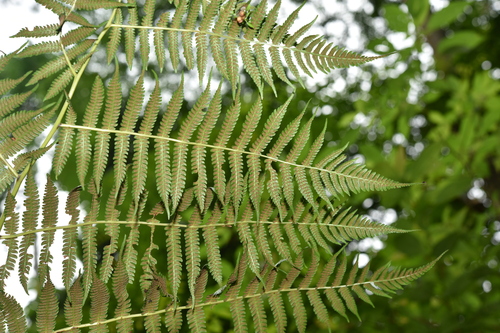
A large fern. The rhizome creeps widely. There are brown scales at the tip. It has spines along the stalk. The fronds are 1.5 m long. They are twice divided. The frond blade is 90 cm long by 50 cm wide.
Other Information
The fronds are sold in markets.
Notes
There are about 300-600 Diplazium species. They have also been put in the families Aspleniaceae and Woodsiaceae.
Names & Synonyms
Dheki shak, Muikhun chak, Mukhaindebusa
References (8)
- Delos Angeles, M. D., & Buot Jr., I. E., 2012, Orders and Families of Philippine Pteridophytes. Journal of Nature Studies 11 (1 & 2): 19-33 (As Diplazium polypodioides)
- Enum. pl. Javae 194. 1828 (As Diplazium polypodioides)
- Gul, A., et al, 2016, Traditional, medicinal and food uses of Pteridophytes of district Mansehra (Pakistan) and their some adjacent areas. International Journal of Biosciences Vol. 9, No. 5 p. 116-133 (As Diplazium polypodioides)
- Hossain, U. & Rahman, A., 2018, Study and quantitative analysis of wild vegetable floral diversity available in Barisal district, Bangladesh. Asian J. Med. Biol. Res. 2018, 4 (4), 362-371 (As Diplazium polypodioides)
- Pande, P.C. & Pangtey, Y.P.S., 1987, Studies on Ethnobotany - 1. on some less known edible and economic ferns of Kumaun Region of Western Himalaya. J. Econ. Tax. Bot. Vol 11 No.1 pp 81-85 (As Diplazium polypodioides)
- Pham-Hoang Ho, 1999, An Illustrated Flora of Vietnam. Nha Xuat Ban Tre. p 169 (As Diplazium polypodioides)
- Sarker, S. K., & Enayet Hossain, A. B. M., 2009, Pteridophytes of Greater Mymensingh District of Bangladesh used as Vegetables and Medicines. Bangladesh J. Plant Taxon. 16(1) 47-56. p 52 (As Diplazium polypodioides)
- USDA, ARS, National Genetic Resources Program. Germplasm Resources Information Network - (GRIN). [Online Database] National Germplasm Resources Laboratory, Beltsville, Maryland. Available: www.ars-grin.gov/cgi-bin/npgs/html/econ.pl (10 April 2000) (As Diplazium polypodioides)


