Dracaena mannii
Baker
Asparagus tree, Small-leaved dragon tree
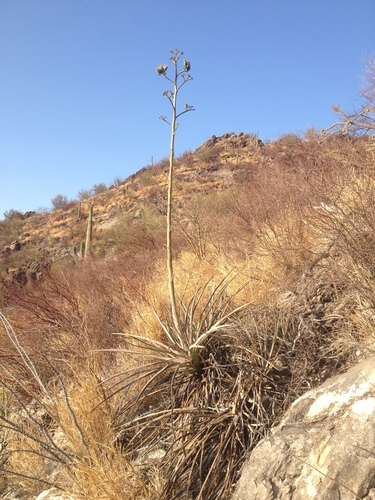
(c) Claudia Baider, some rights reserved (CC BY-NC), uploaded by Claudia Baider

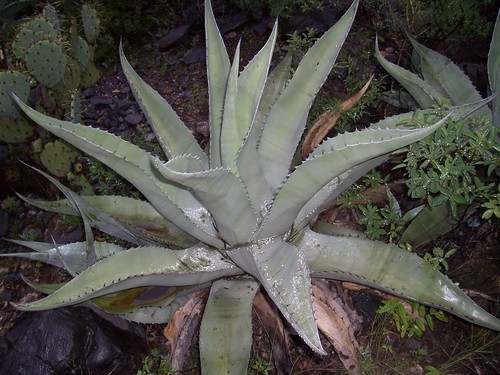
(c) Roddy CJ Ward, some rights reserved (CC BY-NC), uploaded by Roddy CJ Ward
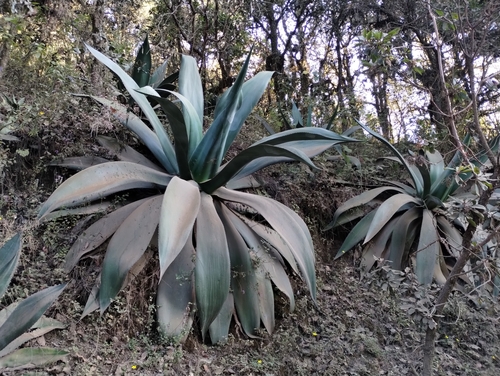
(c) Theo Damen, some rights reserved (CC BY-NC), uploaded by Theo Damen
What to Eat
Edible parts: Leaves, Flowers, Vegetable
The very young shoots are eaten like asparagus. The leaves and flowers are also edible portions, though the plant is not a popular food and is typically eaten only when food is scarce.
Where to Find It
A tropical plant. It grows in the forest in West Africa. In Malawi it grows between 500-1,600 m altitude. It grows on the edges of evergreen forest. It can be on forests along rivers, in palm groves and along the edges of mangroves.
Africa, Angola, Central Africa, Central African Republic, CAR, Congo DR, East Africa, Gabon, Gambia, Ghana, Guinea, Guinée, Guinea-Bissau, Kenya, Malawi, Mozambique, Senegal, Sierra Leone, South Africa, Southern Africa, Tanzania, West Africa, Zambia, Zimbabwe,
How to Identify
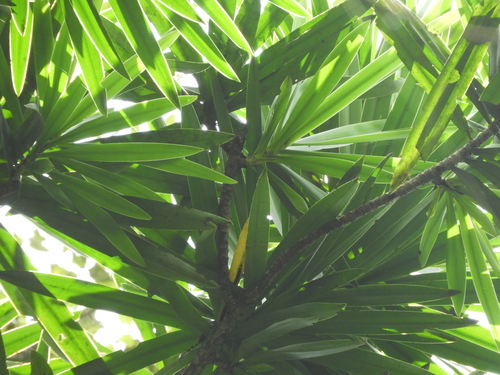
A shrub or tree. It can grow 15-30 m tall. The trunk is branched. It can have stilt roots. The leaves are narrow and in rings at the top of the plant. The leaves are 50 cm long. The flowers are at the end. The flowers are greenish-white. The fruit are orange red.
How to Grow
It can be grown from fresh seeds. It can also be grown from large cuttings. It re-grows after cutting.
Propagation: Seed - Cuttings. Dracaena species are generally easy to propagate. Only a small piece of the plant is required to form a new plant, and even when thrown away it may easily root.
Medicinal Uses
The ash of the plant is used as a vermifuge. The roots are washed, chopped and soaked in cold water. The infusion is used to treat stomach-ache, gonorrhoea and chest pains. The leaves are chopped, boiled and the decoction drunk to treat chest pains and mental illness.
Other Uses
A soap is produced from the leaves. A light-coloured dye is produced from the trunk. The tree is often cultivated as living fence in Africa.
Wikipedia
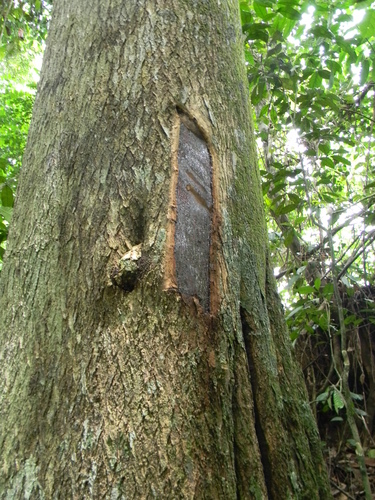
Source ↗Dracaena mannii Baker or small-leaved dragon tree, also called Kalala Kabwe, is a small to medium-sized tree, though recorded up to 35 m tall with stem to 2 m in diameter (second only to Dracaena draco within the genus) in Cameroon and Gabon. It occurs from Senegal to Angola along the African west coast, is widespread in tropical Africa and is found along the African east coast from Kenya to Kosi Bay in northern KwaZulu-Natal. It prefers lowland, submontane and montane forests which are either moist and evergreen, swampy or on coastal dunes. It is also found along forest edges, in clearings and on river banks from sea level to 1,800 metres. It is one of some 120 species currently recognised in its genus, which occur primarily in Africa and southern Asia with a single vagrant species in Central America. The species is named after Gustav Mann (1836–1916), a German botanist, who corresponded with John Gilbert Baker. This species is evergreen, single-stemmed or much branched from near the ground, sometimes stilt-rooted, and has linear to narrowly oblong-elliptic leaves with numerous parallel nerves, up to 400 x 20 mm, mostly in terminal clusters, clasping the stem for half its circumference (half-amplexicaul). Flowers are in terminal spikes or panicles (racemose to paniculate), cream or pure white in colour, yellow-green on the outside, and sweetly fragrant when opening at night. The fruit is some 30 mm in diameter, berry-like, brown at first turning bright red when ripe. Bark is white, papery and smooth, with prominent, crescent-shaped leaf scars. Old bark is smooth and grey, and longitudinally fissured, producing resin when damaged.
Other Information
It is not a popular food but eaten when food is scarce. It is cultivated.
Notes
There are about 40-60 species of Dracaena. Also put in the family Dracaenaceae.
Names & Synonyms
Betenhe, Kesene, Kikiadi, Kucatacata, Ndiadi mbulu, Taga, Thebo, Tolala
References (14)
- Abbiw, D.K., 1990, Useful Plants of Ghana. West African uses of wild and cultivated plants. Intermediate Technology Publications and the Royal Botanic Gardens, Kew. p 42
- Burkill, H. M., 1985, The useful plants of west tropical Africa, Vol. 4. Kew.
- Dalziel, J. M., 1937, The Useful plants of west tropical Africa. Crown Agents for the Colonies London.
- Fowler, D. G., 2007, Zambian Plants: Their Vernacular Names and Uses. Kew. p 67
- Grubben, G. J. H. and Denton, O. A. (eds), 2004, Plant Resources of Tropical Africa 2. Vegetables. PROTA, Wageningen, Netherlands. p 561
- Jardin, C., 1970, List of Foods Used In Africa, FAO Nutrition Information Document Series No 2.p 76
- Kakeya, 1976, (As Dracaena usambarensis)
- Latham, P., 2004, Useful Plants of Bas-Congo province. Salvation Army & DFID p 116
- Martin, F.W. & Ruberte, R.M., 1979, Edible Leaves of the Tropics. Antillian College Press, Mayaguez, Puerto Rico. p 202
- Peters, C. R., O'Brien, E. M., and Drummond, R.B., 1992, Edible Wild plants of Sub-saharan Africa. Kew. p 18
- Terra, G.J.A., 1973, Tropical Vegetables. Communication 54e Royal Tropical Institute, Amsterdam, p 45
- White, F., Dowsett-Lemaire, F. and Chapman, J. D., 2001, Evergreen Forest Flora of Malawi. Kew. p 99
- World Checklist of Useful Plant Species 2020. Royal Botanic Gardens, Kew
- Zeven, A. C. & de West, J. M. J., 1982, Dictionary of cultivated plants and their regions of diversity. Wageningen. p 122