Eberhardtia aurata
(Pierre ex Dubard) Lecomte
Mountain loquat

Wikimedia Commons - Eberhardtia_aurata.jpg

Wikimedia Commons (via Wikimedia Commons)
What to Eat
Edible parts: Seeds - oil
Oil extracted from the seeds is edible.
Where to Find It
A tropical plant. They occur in mixed forest in China and Vietnam between 700-1300 m. It needs shade when young. It needs deep, well-drained soils. In Yunnan.
Asia, China, Indochina, SE Asia, Vietnam,
How to Identify
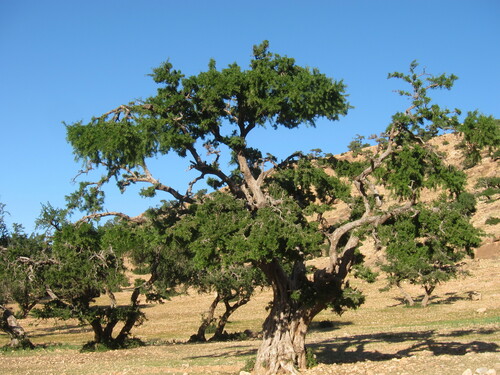
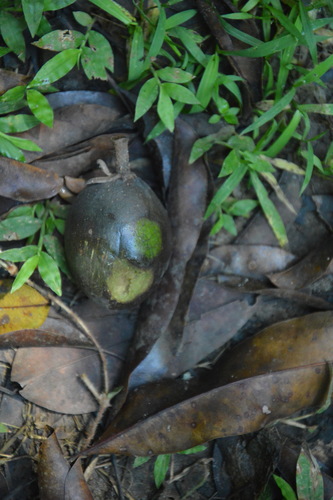
A small tree 7-15 m tall. The trunk is 20-40 cm across about 1 m from the ground. The bark is dark grey. The leaf stalk is 2-3.5 cm long. They are rust coloured and hairy. The leaf blade is oblong and 12-24 cm long by 4.5-9.5 cm wide. The flowers have a smell. The fruit have a persistent calyx. The fruit are almost round and 2.5-3.5 cm across. They have 5 ribs. The seeds are flat and shiny and 1.5 by 2.5 cm in size.
Other Uses
An oil from the seed is used for making soap. A high quality timber is obtained from the tree.
Wikipedia
Source ↗Eberhardtia aurata is a plant in the family Sapotaceae. It grows as a tree up to 8 metres (30 ft) tall. The twigs are rusty brown. Fruit is subglobose, rusty-brown, up to 5 centimetres (2 in) long. Its habitat is forests. E. aurata is found in China and northern Vietnam.
Production
A fast growing tree.
Names & Synonyms
Bara vang, Cong sua, Mae nieng, Xiu mao suo zi guo
References (4)
- Flora of China. Vol. 15, p 207 and Flora of China. www.eFloras.org
- Forest Inventory and Planning Institute, 1996, Vietnam Forest Trees. Agriculture Publishing House p 663
- Hu, Shiu-ying, 2005, Food Plants of China. The Chinese University Press. p 620
- Pham-Hoang Ho, 1999, An Illustrated Flora of Vietnam. Nha Xuat Ban Tre. p 636