Eberhardtia tonkinensis
H. Lecomte
Cong sua bac bo

(c) Phan Vũ Phúc Lân, some rights reserved (CC BY-NC)

(c) Phan Vũ Phúc Lân, some rights reserved (CC BY-NC)

(c) Phan Vũ Phúc Lân, some rights reserved (CC BY-NC)
What to Eat
Edible parts: Seeds - oil
The seeds contain oil that can be pressed out and used for cooking or eaten directly.
Where to Find It
A tropical plant. It grows between 100-1,000 m altitude. It occurs in primary and secondary forests. It is a light demanding tree, but needs shade when young. A temperature between 20-25°C is best. A rainfall of 1,300 mm is the minimum. It needs a deep, moist soil. In Yunnan.
Asia, China, Indochina, Laos, SE Asia, Vietnam,
How to Identify
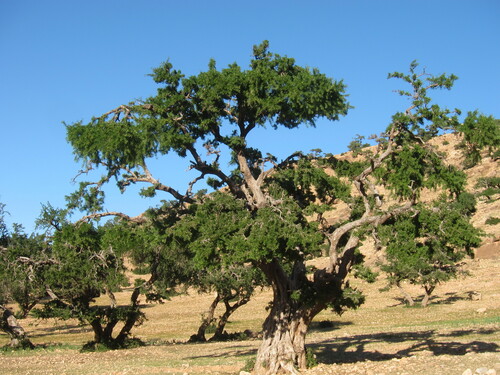
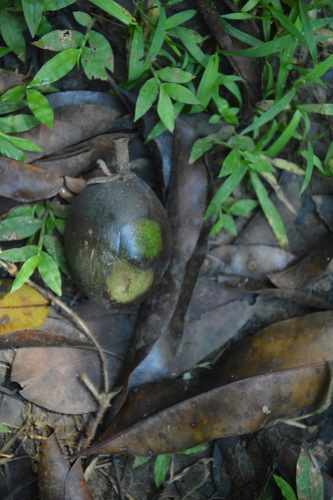
A medium sized tree. It is 18-20 m high. The trunk is straight and 20-40 cm across. The leaves are 15-30 cm long by 7-12 cm wide. The fruit are round or oval and 4-5 cm across. They have 5 seeds. The seeds are flat and shiny and 4 cm long by 2 cm wide.
How to Grow
Young plants are shade tolerant, but become increasingly light-demanding as they grow older. A fast-growing species. Plants respond well to coppicing.
Other Uses
The yellowish-white wood is fine-grained, resistant to termites. It is used for construction and making furniture.
Names & Synonyms
Bara bacbo
References (3)
- Forest Inventory and Planning Institute, 1996, Vietnam Forest Trees. Agriculture Publishing House p 664
- Pham-Hoang Ho, 1999, An Illustrated Flora of Vietnam. Nha Xuat Ban Tre. p 637
- Van Sam, H. et al, 2004, Trees of Laos and Vietnam: A Field Guide to 100 Economically or Ecologically Important Species. Blumea 29 (2004) 201-349