Echinocactus polycephalus
Engelm. & Bigelow
Cotton top cactus
(c) Ashley Duval, some rights reserved (CC BY-NC)
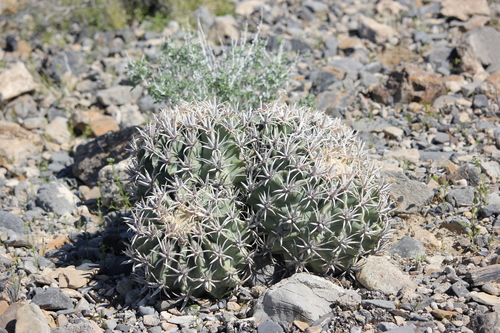
(c) Ashley Duval, some rights reserved (CC BY-NC)
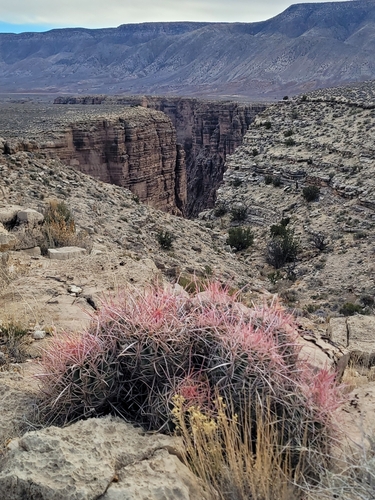
(c) billburg, some rights reserved (CC BY-NC)
What to Eat
Edible parts: Flesh
The flesh is edible.
Where to Find It
It is a temperate plant. They grow in the Sonoran desert. They need full sunlight. It needs a temperature above 10°C. It can grow in arid places. It suits hardiness zones 9-11.
Australia, Central America, Mexico, North America, USA,
How to Identify
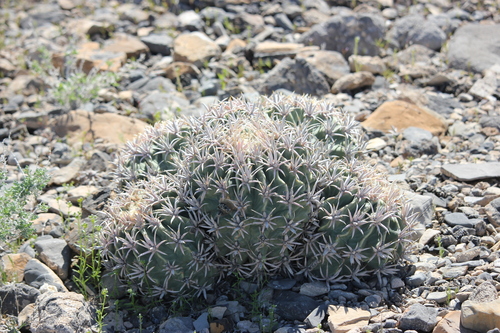
A round cactus. Sometimes it is longer and 40-70 cm high. It can be 18-25 cm wide. It starts out single but then forms clumps. There are 13-21 ribs with whitish grey spine spots 3 cm apart. The spines are reddish-brown and have 4-8 somewhat flat spines which radiate out. They are 5 cm long. In the centre of these there are 4 spines 4-9 cm long. It flowers in the daytime. The flowers are yellow. They are 5-6 cm long.
Notes
There are about 10 Echinocactus species.
Names & Synonyms
Biznaga de chilitos, Harem cactus
References (8)
- Anderson, E.F., 2001, The Cactus Family, Timber Press p 229
- Beckstrom-Sternberg, Stephen M., and James A. Duke. "The Foodplant Database." http://probe.nalusda.gov:8300/cgi-bin/browse/foodplantdb.(ACEDB version 4.0 - data version July 1994)
- Benson, L., 1969, The Native Cacti of California. Stanford University Press. p 203
- Brickell, C. (Ed.), 1999, The Royal Horticultural Society A-Z Encyclopedia of Garden Plants. Convent Garden Books. p 386
- Cundall, P., (ed.), 2004, Gardening Australia: flora: the gardener's bible. ABC Books. p 526
- Innes, C. and Glass, C., 1997, The Illustrated Encyclopedia of Cacti. Sandstone Books. p 67
- Moerman, D. F., 2010, Native American Ethnobotany. Timber Press. p 206
- Tull, D., Edible and Useful Plants of the Southwest: Texas, New Mexico, and Arizona. Univ of Texas Press.