Ehretia microphylla
(Vahl.) Masune
Philippine tea, Fujien tea
no rights reserved, uploaded by 葉子

(c) yuhu6458, some rights reserved (CC BY-NC)

(c) lenisutcliffe, some rights reserved (CC BY-NC)
What to Eat
Edible parts: Leaves - tea, Fruit
The leaves are dried in the shade and used as a tea substitute. The rounded yellow fruits are eaten fresh.
Known Hazards
Where to Find It
A tropical plant. They are common and widely distributed in areas of shrubs throughout the Philippines. It grows well in hot, sunny positions. It will grow on limestone near the seaside. In XTBG Yunnan.
Asia, Australia, China, Christmas Island, Hawaii, India, Indonesia, Japan, Pacific, Papua New Guinea, PNG, Philippines, Ryukyu, SE Asia, Solomon Islands, Taiwan, USA,
How to Identify
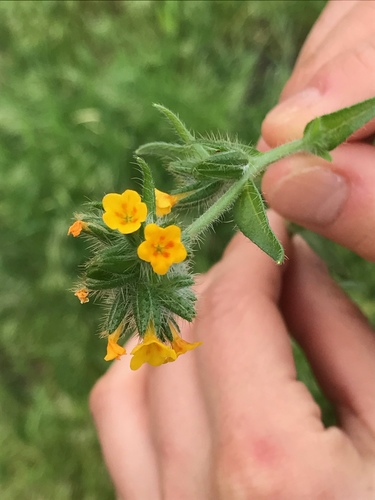
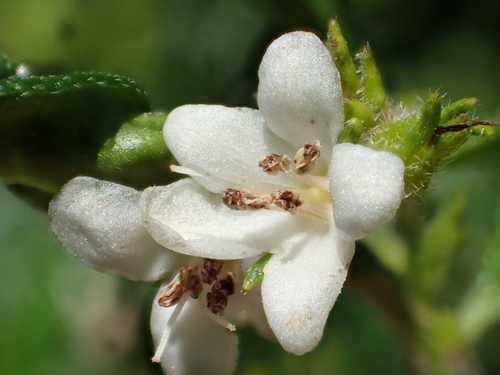
An erect shrub with many branches. It can grow 1-10 m tall. The leaves have short leaf stalks and occur in clusters in the short branches. The leaves have a rough surface and are entire although somewhat toothed or lobed near the tip. The fused flower petals are white. The fruit are yellow, rounded and with a fleshy outer part, an inner stony part and four seeds.
How to Grow
It can be grown from seed. These germinate easily. It can also be grown from cuttings.
Medicinal Uses
The plant is popular in Penjing in China. The leaves are used medicinally in the Philippines to treat cough, colic, diarrhea and dysentery.
Wikipedia
Source ↗Ehretia microphylla is commonly known as the Fukien tea tree or Philippine tea tree, is a species of flowering plant. The genus Ehretia is placed in the family Ehretiaceae.
Names & Synonyms
Bapanaburi, Barranki, Buri, Bute, Ennebutige, Fukien tea, Fuku-man-gi, Icha, Kalamoga, Kattuvettilai, Kinangan, Kujapponno, Kuruvingi, Pala, Perdu kalajengking, Piccaka, Pisniki, Pitta, Ponnomari, Scorpion bush
References (18)
- Altschul, S.V.R., 1973, Drugs and Foods from Little-known Plants. Notes in Harvard University Herbaria. Harvard Univ. Press. Massachusetts. no. 3560 (As Ehretia microphylla)
- Ambasta, S.P. (Ed.), 2000, The Useful Plants of India. CSIR India. p 106, 190
- Brown, W.H., 1920, Wild Food Plants of the Philippines. Bureau of Forestry Bulletin No. 21 Manila. p 151 (As Ehretia microphylla)
- Burkill, I.H., 1966, A Dictionary of the Economic Products of the Malay Peninsula. Ministry of Agriculture and Cooperatives, Kuala Lumpur, Malaysia. Vol 1 (A-H) p 905 (As Ehretia microphylla)
- Facciola, S., 1998, Cornucopia 2: a Source Book of Edible Plants. Kampong Publications, p 93
- Kannan, M., et al, 2015, Ethnobotanical survey on wild edible plants of Kalrayan Hills, Salem District, Tamil Nadu, India. Global J. Res. Med Plants & Indigen. med. 4(12): 236-246 (As Carmona retusa)
- Martin, F.W. & Ruberte, R.M., 1979, Edible Leaves of the Tropics. Antillian College Press, Mayaguez, Puerto Rico. p 107, 179 (As Ehretia microphylla)
- May, R.J., 1984, Kaikai Aniani. A Guide to Bush Foods Markets and Culinary Arts of Papua New Guinea. Robert Brown and Associates. p 81 (As Ehretia microphylla)
- Monsalud, M.R., Tongacan, A.L., Lopez, F.R., & Lagrimas, M.Q., 1966, Edible Wild Plants in Philippine Forests. Philippine Journal of Science. p 449 (As Ehretia microphylla)
- Reis, S. V. and Lipp, F. L., 1982, New Plant Sources for Drugs and Foods from the New York Botanical Garden herbarium. Harvard. p 248
- Staples, G.W. and Herbst, D.R., 2005, A tropical Garden Flora. Bishop Museum Press, Honolulu, Hawaii. p 196
- Sukarya, D. G., (Ed.) 2013, 3,500 Plant Species of the Botanic Gardens of Indonesia. LIPI p 623
- Tabl. encycl. 1(vol. 2):425. 1792
- Tamil herbs, 2007, Edible Plants of the Tropical Dry Evergreen Forest.
- Tanaka,
- Trans. Nat. Hist. Soc. Taiwan 30:61. 1940
- Uphof,
- World Checklist of Useful Plant Species 2020. Royal Botanic Gardens, Kew