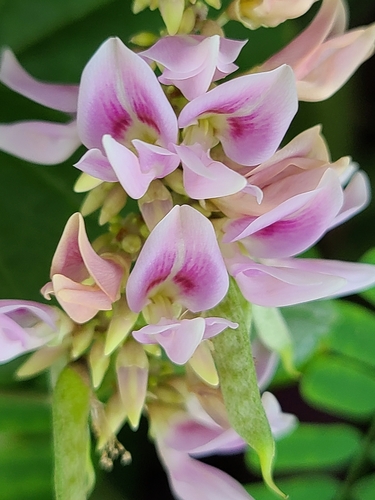
Acacia cochliacantha
Humb. & Bonpl. ex Willd.
Boat-spine acacia

(c) Brenda Navarro Alvarado, some rights reserved (CC BY-NC)

(c) Brenda Navarro Alvarado, some rights reserved (CC BY-NC)

(c) Brenda Navarro Alvarado, some rights reserved (CC BY-NC)
What to Eat
Edible parts: Seeds
The young seeds can be eaten fresh, or the seeds can be ground into powder and used for tortillas.
Where to Find It
It is a tropical plant.
Central America, Mexico, North America,
How to Identify
A shrub or small tree. It grows 5 m tall. There are prickles along the stem. The leaves are twice divided and there are 8-18 pairs of pinnae. There are up to 50 pairs of pinnules on each pinnae. The flowers are yellow. They are in large clusters at the ends of branches. The pods are flattened.
How to Grow
Plants are grown from seeds. Seeds are soaked in boiling water that is then allowed to cool and the are soaked for another 24-48 hours. Seedlings can be transplanted from the nursery after 4 months.
Notes
There are about 1,350 Acacia species. Over 1,000 occur in Australia. Also as Mimosaceae.
Names & Synonyms
Cubata
References (3)
- Felger, R.S., Ancient Crops for the Twenty first century, in Rickie, G.A., (ed), 1979, New Agricultural Crops, AAAS Selected Symposium 38. Westview Press, Colarado. p 10
- Sp. pl. 4(2):1081. 1806
- Yetman, D., 2002, The Guarijios of the Sierra Madre: Hidden People of Northwestern Mexico. University of New Mexico Press. p 197