Agave cerulata subsp. dentiens
(Terl.) Gentry
Century plant
AsparagaceaeLeaves

iNaturalist · cc-by-nc
(c) Glenn Ehrenberg, some rights reserved (CC BY-NC), uploaded by Glenn Ehrenberg
(c) Glenn Ehrenberg, some rights reserved (CC BY-NC), uploaded by Glenn Ehrenberg

iNaturalist · cc-by-nc
(c) Glenn Ehrenberg, some rights reserved (CC BY-NC), uploaded by Glenn Ehrenberg
(c) Glenn Ehrenberg, some rights reserved (CC BY-NC), uploaded by Glenn Ehrenberg
iNaturalist · cc-by-nc
(c) Morgan Cantrell, some rights reserved (CC BY-NC), uploaded by Morgan Cantrell
(c) Morgan Cantrell, some rights reserved (CC BY-NC), uploaded by Morgan Cantrell
What to Eat
Edible parts: Leaves
The leaves are charred and the liquid is eaten.
Where to Find It
Sonoran desert. It can grow in arid places.
Central America, Mexico, North America,
Countries: Antigua & Barbuda, Barbados, Bahamas, Belize, Canada, Costa Rica, Cuba, Dominica, Dominican Republic, Grenada, Guatemala, Honduras, Haiti, Jamaica, St Kitts & Nevis, St Lucia, Mexico, Nicaragua, Panama, Puerto Rico, El Salvador, Trinidad & Tobago, United States, St Vincent
How to Identify
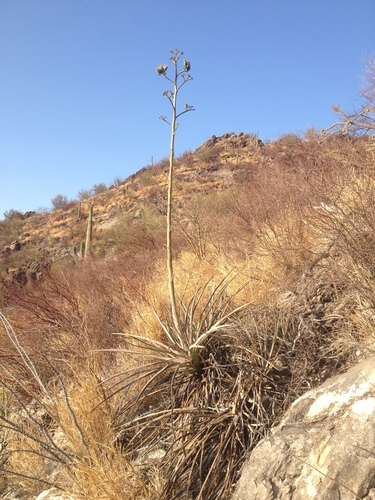
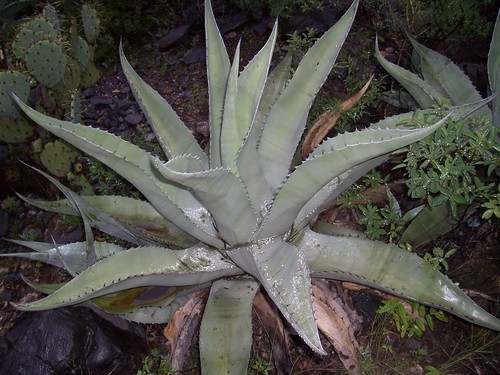
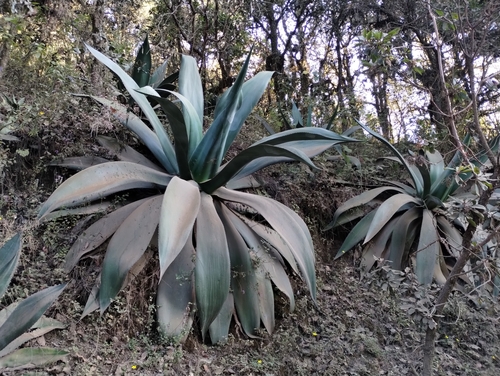
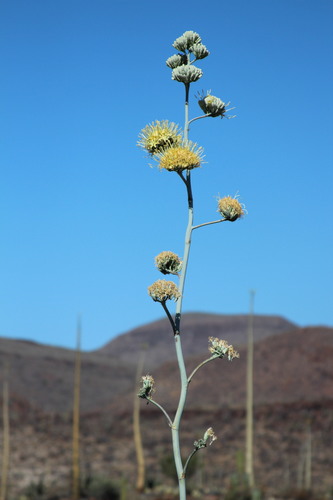
An agave found in the arid Sonoran desert, belonging to the Asparagaceae family.
Notes
There are about 250 Agave species. The Agavaceae are mostly in the tropics and subtropics.
References (3)
- FELGER & MOSER,
- MINNIS
- World Checklist of Useful Plant Species 2020. Royal Botanic Gardens, Kew