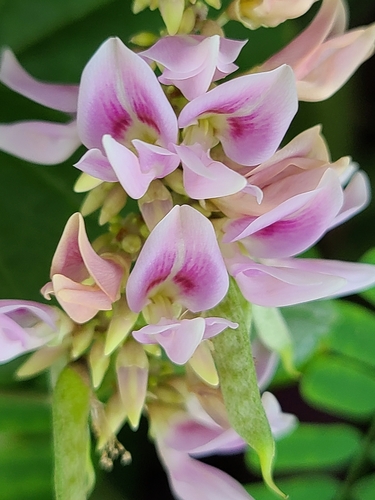
Lupinus mutabilis
Sweet.
Pearl Lupin, Tarwi

Richyvil (via Wikimedia Commons)

Maltfield (via Wikimedia Commons)

John Lindley (via Wikimedia Commons)
What to Eat
Edible parts: Oil, Oil, Seed
Oil. Seed - cooked. Used as a protein-rich vegetable or savoury dish in any of the ways that cooked beans are used. The seed can also be ground into a meal and then used with cereal flours in making bread etc. The seed contains up to 50% protein that is rich in lysine and cystine but very low in methionine. If the seed is bitter this is due to the presence of toxic alkaloids, these alkaloids can usually be removed by soaking the seed overnight and discarding the water. Another report suggests that the seed needs to be soaked for 2 - 3 days in order to leech out the alkaloids. An edible oil is obtained from the seed. It is relatively rich in unsaturated fatty acids, including the nutritionally essential linoleic acid.
Known Hazards
Where to Find It
S. America - Colombia.
Coming Soon
How to Identify
Lupinus mutabilis is a ANNUAL growing to 1.5 m (5ft) by 0.3 m (1ft in). See above for USDA hardiness. It is hardy to UK zone 9 and is frost tender. It is in leaf from May to October, in flower from June to August, and the seeds ripen from August to September. The species is hermaphrodite (has both male and female organs) and is pollinated by Bees. It can fix Nitrogen. Suitable for: light (sandy), medium (loamy) and heavy (clay) soils and can grow in nutritionally poor soil. Suitable pH: mildly acid and neutral soils. It cannot grow in the shade. It prefers moist soil and can tolerate drought. The plant can tolerates strong winds but not maritime exposure.
How to Grow
An easily grown plant, succeeding in any moderately good soil in a sunny position. Requires an acid to neutral soil. This species might be intolerant of lime. Succeeds on poor soils, its taproot breaking up the sub-soil. Once established, it is a very drought tolerant plant. Mature plants tolerate frost. This has not been our experience, although they tolerate light frosts, the plants are killed by heavy or prolonged frosts. The pearl lupin is cultivated in Tropical and Sub-tropical zones for its edible seed, there are many named varieties. The seed of most forms contains bitter alkaloids that need to be leached out before the seed can be eaten, however there are some forms that have sweet alkaloid-free seeds. This species has excellent potential as a food crop in temperate zones. It is day-length neutral, flowering and fruiting well at most latitudes. The plants flower and ripen seed continuously until killed by cold weather, making mechanical harvesting difficult. Plants take from 5 - 11 months to fully ripen their crop. The genes for low-alkaloid types are recessive so they have to be grown separated from other forms if the strains are to be kept pure. It is also probable that plants will hybridize with other species in this genus. This species has a symbiotic relationship with certain soil bacteria, these bacteria form nodules on the roots and fix atmospheric nitrogen. Some of this nitrogen is utilized by the growing plant but some can also be used by other plants growing nearby. When removing plant remains at the end of the growing season, it is best to only remove the aerial parts of the plant, leaving the roots in the ground to decay and release their nitrogen.
Propagation: Pre-soak the seed for 24 hours in warm water and sow in mid spring in situ. You may need to protect the seed from mice. Germination should take place within 2 weeks. The seed can also be sown in situ as late as early summer as a green manure crop.
Other Uses
Green manure Oil Oil. Seed yields up to 18% of an edible oil with uses similar to Soya oil (Glycine soya). Soya oil has a very wide range of applications and is commonly used in the chemical industry. It is also used in making soap, plastics, paints etc. An excellent green manure crop, it is able to fix as much as 400kg of atmospheric nitrogen per hectare.