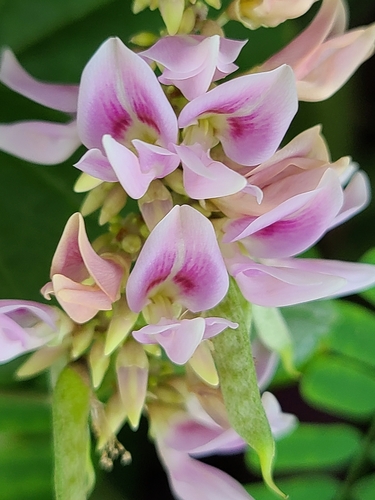
Inga cinnamomea
Spruce ex Benth.
Inga Assu, Inga Acu

(c) h_kassiasimoes, some rights reserved (CC BY-NC)

Paul Taubert (via Wikimedia Commons)
What to Eat
Edible parts: Fruit
Fruit - raw. The seeds are covered in a dense, white aril that has a sweet flavour. The fruit is a legume up to 30cm long and 8cm wide, containing 8 - 15 large seeds.
Where to Find It
S. America - Brazil, Bolivia, Peru, Ecuador, Colombia, French Guiana, Surinam.
SOUTHERN AMERICA: French Guiana, Suriname, Brazil, Acre, Amazonas, Pará, Rondônia, Bolivia, El Beni, Colombia, Vaupés, Ecuador, Napo, Pastaza, Peru, Loreto, Madre de Dios, Ucayali,
How to Identify
Inga cinnamomea is an evergreen Tree growing to 12 m (39ft) by 12 m (39ft) at a fast rate. See above for USDA hardiness. It is hardy to UK zone 10. It can fix Nitrogen. Suitable for: light (sandy), medium (loamy) and heavy (clay) soils and prefers well-drained soil. Suitable pH: mildly acid, neutral and basic (mildly alkaline) soils. It cannot grow in the shade. It prefers moist soil.
How to Grow
Grows best in a sunny position. Plants can withstand periodic inundation of the soil. A fast-growing tree. The branches are generally infested with boring ants. This species has a symbiotic relationship with certain soil bacteria, these bacteria form nodules on the roots and fix atmospheric nitrogen. Some of this nitrogen is utilized by the growing plant but some can also be used by other plants growing nearby.
Propagation: Seed - it needs to be sown as soon as possible once it is ripe. Sow in a partially shaded position in a nursery seedbed. Germination rates are usually almost 100%, with the seed sprouting within 10 - 20 days.
Other Uses
Containers Fuel Pioneer Wood. Agroforestry Uses: The tree is often used to provide shade in plantations, often by being left as the native forest is cleared. A natural pioneer species within its native range, it is fast-growing and a popular food crop so should make an excellent pioneer for re-establishing woodland. Other Uses: The wood is coarse-textured, irregular to spiral-grained, light in weight, hard to cut, with a low resistance to rot. It is used for scaffolding, temporary constructions, interior ornamental screens, boxes etc. The wood is used for fuel.