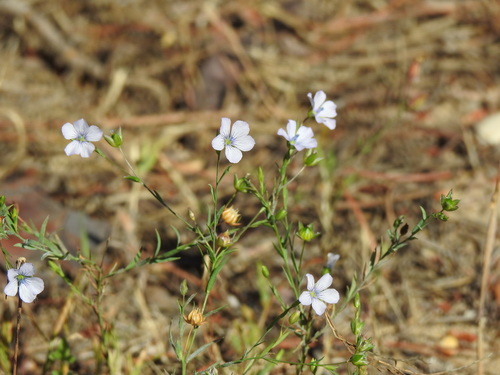
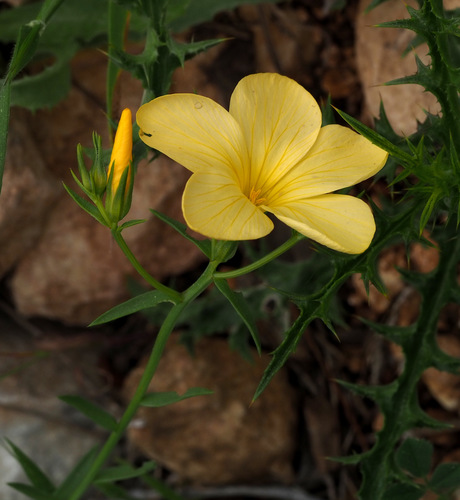
Linum hybrids
Various
Perennial Flax
What to Eat
Edible parts: Oil, Seed
Carbon Farming Solutions - Staple Crop: oil (The term staple crop typically refers to a food that is eaten routinely and accounts for a dominant part of people's diets in a particular region of the world).
Known Hazards
Where to Find It
Origin: Hypothetical.
Coming Soon
How to Identify
Linum hybrids is a PERENNIAL growing to 0.8 m (2ft 7in) by 0.2 m (0ft 8in) at a fast rate. See above for USDA hardiness. It is hardy to UK zone 4. Suitable for: light (sandy), medium (loamy) and heavy (clay) soils and prefers well-drained soil. Suitable pH: mildly acid, neutral and basic (mildly alkaline) soils. It cannot grow in the shade. It prefers moist soil.
How to Grow
Industrial Crop: Fiber Management: Hay Management: Standard Staple Crop: Oil Under Development. Climate: boreal to warm temperate. Humidity: semi-arid to humid. Carbon Farming Solutions - Cultivation: under development? Management: standard, hay (Describes the non-destructive management systems that are used in cultivation).
Propagation: See individual species.
Medicinal Uses
Analgesic Antiinflammatory Antitussive Cancer Cardiotonic Demulcent Emollient Expectorant Laxative Nervine Pectoral Resolvent Urinary. Linseed has a long history of medicinal use, its main effects being as a laxative and expectorant that soothes irritated tissues, controls coughing and relieves pain. The seed, or the oil from the seed are normally used. The seed is analgesic, demulcent, emollient, laxative, pectoral and resolvent[4, 9, 21, 46, 165, 218, 240]. The crushed seed makes a very useful poultice in the treatment of ulceration, abscesses and deep-seated inflammations. An infusion of the seed contains a good deal of mucilage and is a valuable domestic remedy for coughs, colds and inflammation of the urinary organs. If the seed is bruised and then eaten straight away, it will swell considerably in the digestive tract and stimulate peristalsis and so is used in the treatment of chronic constipation. The oil in the seed contains 4% L-glutamic acid, which is used to treat mental deficiencies in adults. It also has soothing and lubricating properties, and is used in medicines to soothe tonsillitis, sore throats, coughs, colds, constipation, gravel and stones. When mixed with an equal quantity of lime water it is used to treat burns and scalds. The bark and the leaves are used in the treatment of gonorrhoea. The flowers are cardiotonic and nervine. The plant has a long history of folk use in the treatment of cancer. It has been found to contain various anticancer agents. The German Commission E Monographs, a therapeutic guide to herbal medicine, approve Linum usitatissimum for constipation, inflammation of the skin (see for critics of commission E).
Other Uses
Fibre Oil Carbon Farming Solutions - Industrial Crop: fiber (Crops grown for non-food uses. Industrial crops provide resources in three main categories: materials, chemicals, and energy. Traditional materials include lumber and thatch, paper and cardboard, and textiles).
Names & Synonyms
Flax. Flax hybrids. Sometimes misspelt as Linium