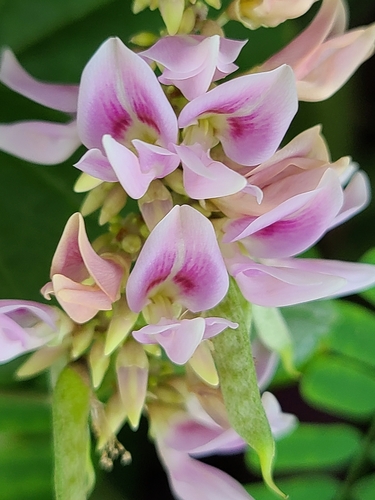
Lupinus albus
L.
White Lupin

(c) Todd Boland, some rights reserved (CC BY), uploaded by Todd Boland

(c) jmneiva, some rights reserved (CC BY-NC), uploaded by jmneiva

(c) Sarah Gregg, some rights reserved (CC BY-NC)
What to Eat
Edible parts: Oil, Oil, Seed
Oil. Seed - cooked. Used as a protein-rich vegetable or savoury dish in any of the ways that cooked beans are used, they can also be roasted or ground into a powder and mixed with cereal flours in making bread etc. If the seed is bitter this is due to the presence of toxic alkaloids and the seed should be thoroughly leached by soaking it and then discarding the soak water before cooking. Seeds contain 32 - 40% protein, 8 - 12% oil. The roasted seeds can be used as a snack in much the same way as peanuts. An edible oil is obtained from the seed. The roasted seed is used as a coffee substitute.
Known Hazards
Where to Find It
S. Europe to Asia.
TEMPERATE ASIA: Turkey (west) EUROPE: Former Yugoslavia, Albania, Bulgaria, Greece (incl. Crete)
How to Identify
Lupinus albus is a ANNUAL growing to 1.2 m (4ft) by 0.3 m (1ft in) at a medium rate. See above for USDA hardiness. It is hardy to UK zone 7. It is in flower from June to July, and the seeds ripen from August to September. The species is hermaphrodite (has both male and female organs) and is pollinated by Bees. The plant is self-fertile. It can fix Nitrogen. It is noted for attracting wildlife. Suitable for: light (sandy) and medium (loamy) soils. Suitable pH: mildly acid, neutral and basic (mildly alkaline) soils and can grow in very acid soils. It cannot grow in the shade. It prefers moist soil.
How to Grow
An easily grown plant, succeeding in any moderately good soil. It prefers a light acid soil but tolerates adverse conditions. Requires a sunny position. The white lupin is sometimes cultivated, especially in S. Europe, for its edible seed and also as a green manure crop. There are some named varieties, many of which have bitter seeds that contain toxic alkaloids and require leaching before they are eaten but some sweet varieties have also been developed. These sweet varieties are perfectly wholesome as food for humans and include the cultivar 'Kiev'. There is some confusion between this species and L. nanus. A deep rooting plant. This species has a symbiotic relationship with certain soil bacteria, these bacteria form nodules on the roots and fix atmospheric nitrogen. Some of this nitrogen is utilized by the growing plant but some can also be used by other plants growing nearby. When removing plant remains at the end of the growing season, it is best to only remove the aerial parts of the plant, leaving the roots in the ground to decay and release their nitrogen. Lupinus albus, commonly known as white lupin, is generally suited to USDA Hardiness Zones 6 through 9 when grown as an annual crop, although it can sometimes be cultivated in Zone 5 with a long enough growing season and protection from late frosts. It is a cool-season legume that prefers mild temperatures and does not tolerate extreme heat or prolonged frost. Ideal temperatures for growth range between 50–75°F (10–24°C). In warmer climates, it’s typically grown over the cooler months, while in cooler climates it’s planted in spring after the last frost. Though not frost-hardy once mature, it can handle cool soils at germination and is sometimes fall-sown in Mediterranean climates.
Propagation: Pre-soak the seed for 24 hours in warm water and sow in mid spring in situ. You may need to protect the seed from mice. Germination should take place within 2 weeks.
Medicinal Uses
Diuretic Emmenagogue Hypoglycaemic Vermifuge. The seeds, taken internally, are diuretic, emmenagogue, hypoglycaemic and vermifuge. When bruised and soaked in water they are used as a poultice on ulcers etc.
Other Uses
Cosmetic Fibre Green manure Oil Oil. The seed contains up to 12% oil. This is used in making soap. A fibre obtained from the stems is used for making cloth etc. A cosmetic face-mask can be made from lupin flour, this is used to invigorate tired skin. A useful spring-sown green manure crop, especially on light soils. It is deep rooting, fairly fast growing, produces a good bulk and fixes atmospheric nitrogen. Dynamic accumulator.