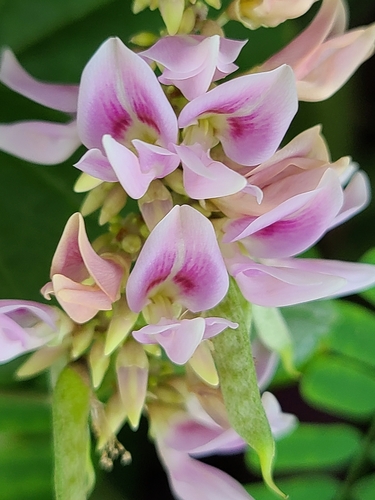
Lupinus angustifolius
L.
Blue Lupin, Narrowleaf lupine

(c) Anna Pavlyuk, some rights reserved (CC BY-NC), uploaded by Anna Pavlyuk

(c) emmafrew, some rights reserved (CC BY-NC)

(c) Roberto Sindaco, some rights reserved (CC BY-NC-SA), uploaded by Roberto Sindaco
What to Eat
Edible parts: Seed
Seed - cooked. Used as a protein-rich vegetable or savoury dish in any of the ways that cooked beans are used, they can also be roasted or ground into a powder. If the seed is bitter this is due to the presence of toxic alkaloids and the seed should be thoroughly leached before being cooked. The seeds of low-alkaloid varieties is used in making 'tempeh'. The seed is rich in protein, though it is deficient in the amino-acid methionine. The protein has a high digestibility (90%) and biological value(53%).
Known Hazards
Documented Toxic Effects
Source: Encyclopedia of Life TraitBank. Toxicity often varies by plant part — consult the hazards section above for preparation-specific details.
Where to Find It
Europe - Mediterranean.
TEMPERATE ASIA: Cyprus, Israel, Lebanon, Syria (west), Turkey EUROPE: Bulgaria, Greece (incl. Crete), Italy (incl. Sardinia, Sicily), Spain, France (s. & Corsica), Portugal AFRICA: Algeria, Egypt, Morocco
How to Identify
Lupinus angustifolius is a ANNUAL growing to 1 m (3ft 3in) by 0.3 m (1ft). See above for USDA hardiness. It is hardy to UK zone 7. It is in leaf from April to October, in flower from June to August, and the seeds ripen from August to September. The species is hermaphrodite (has both male and female organs) and is pollinated by Bees. It can fix Nitrogen. Suitable for: light (sandy) and medium (loamy) soils. Suitable pH: mildly acid and neutral soils and can grow in very acid soils. It cannot grow in the shade. It prefers moist soil.
How to Grow
An easily grown plant, it succeeds in any moderately good soil. Requires a sunny position. Prefers a light acid soil but tolerates adverse conditions. Dislikes limey soils. Sometimes cultivated for its edible seeds, there are some named varieties that are low in the bitter toxic alkaloids. 'Uniwhite' is a low-alkaloid variety with a permeable seed coat. It has reduced pod-shattering and so is easier to harvest mechanically. The blue lupin is a good companion plant for most vegetables. This species has a symbiotic relationship with certain soil bacteria, these bacteria form nodules on the roots and fix atmospheric nitrogen. Some of this nitrogen is utilized by the growing plant but some can also be used by other plants growing nearby. When removing plant remains at the end of the growing season, it is best to only remove the aerial parts of the plant, leaving the roots in the ground to decay and release their nitrogen.
Propagation: Pre-soak the seed for 24 hours in warm water and sow in mid spring in situ. You may need to protect the seed from mice. Germination should take place within 2 weeks. The seed can also be sown in situ as late as early summer as a green manure crop.
Other Uses
Green manureA good green manure plant, it produces a good bulk of organic matter and fixes atmospheric nitrogen. It also makes phosphorus in the soil more available to other plants.