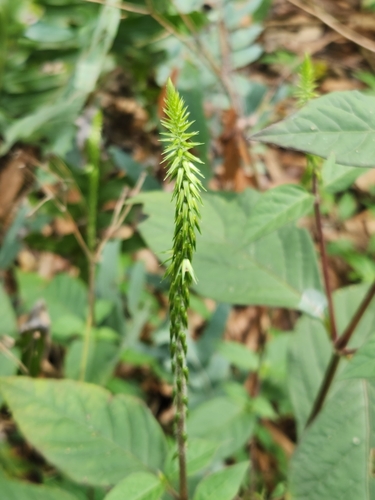
Saccharum hybrids
Various
Energy Cane
What to Eat
Edible parts: Sap, Stem
Carbon Farming Solutions - Staple Crop: sugar (The term staple crop typically refers to a food that is eaten routinely and accounts for a dominant part of people's diets in a particular region of the world).
Known Hazards
Where to Find It
Not known as a wild plant. Hybrid of Asian species.
Coming Soon
How to Identify
Saccharum hybrids is a PERENNIAL growing to 6 m (19ft) by 1.5 m (5ft) at a fast rate. See above for USDA hardiness. It is hardy to UK zone 10. It can fix Nitrogen. Suitable for: light (sandy), medium (loamy) and heavy (clay) soils. Suitable pH: mildly acid, neutral and basic (mildly alkaline) soils and can grow in very acid and saline soils. It cannot grow in the shade. It prefers moist or wet soil.
How to Grow
Need not be grown in large monocultures as is common in homegardens around the world. Global sugarcane biomass yields averaged 70.2t/ha in 2012. Sugarcane and energy cane breeding is active and ongoing including GMO types.
Propagation: Seed - Cuttings, consisting of 2 - 3 joints of the upper part of a stem that has been selected from a vigorous, healthy plant. They are placed in the ground with only 2 - 5cm of the cutting projecting above the surface. In about two weeks from planting the 'eyes' at each node will send forth shoots, and roots will grow from the nodes themselves. As the shoots develop, the parent stem decays and the young plants produce roots of their own.
Medicinal Uses
Possible. See individual species.
Other Uses
Fodder Carbon Farming Solutions - Industrial Crop: biomass (Crops grown for non-food uses. Industrial crops provide resources in three main categories: materials, chemicals, and energy. Traditional materials include lumber and thatch, paper and cardboard, and textiles). "Noble" cane types are optimized for sugar production while Energy cane types have three times the fiber for use as biofuel. Many energy canes are the result of crosses with biomass grasses like Miscanthus, raising the interesting possibility of cold-tolerant sugarcane. Fodder: bank.
Names & Synonyms
Sugarcane hybrids, Energy Cane, Energy Cane hybrids