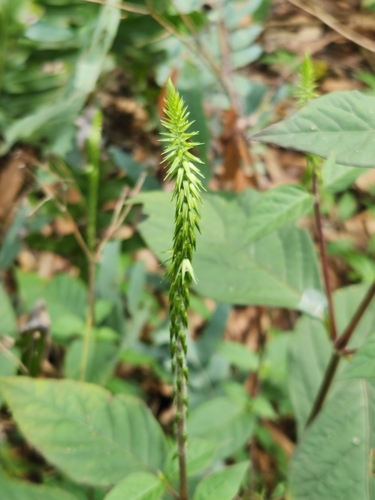
Arundinaria spp
Various
Running Bamboo

arronhendershott

arronhendershott

Tyler Brooks
What to Eat
Edible parts: Seed, Shoots
Young shoots - cooked. Used as a pot-herb. Seed - cooked. It can be used as a wheat substitute, for which it is not much inferior, but it is rather small and difficult to collect in quantity. The plants only flower at irregular intervals of several years. See individual species for more information.
Where to Find It
Asia, North America
Coming Soon
How to Identify
Arundinaria spp is an evergreen Bamboo growing to 10 m (32ft) by 3 m (9ft) at a fast rate. See above for USDA hardiness. It is hardy to UK zone 4. Suitable for: light (sandy), medium (loamy) and heavy (clay) soils and prefers well-drained soil. Suitable pH: mildly acid, neutral and basic (mildly alkaline) soils. It can grow in full shade (deep woodland) semi-shade (light woodland) or no shade. It prefers moist soil. The plant can tolerates strong winds but not maritime exposure.
How to Grow
Fodder: Bank Industrial Crop: Biomass Management: Managed Multistem Minor Global Crop. There are three recognized species of the genus Arundinaria accepted: Arundinaria appalachiana Triplett, Weakley & L.G.Clark – Hill cane, Arundinaria gigantea (Walt.) Muhl. – River cane, Arundinaria tecta Muhl. – Switch cane. Climate: cold to warm temperate. Humidity: humid. Carbon Farming Solutions - Managed bamboo forest sequester more carbon than wild bamboo and the same as fast-growing tropical trees like eucalyptus. Cultivation: minor global crop. Management: managed multistem (Describes the non-destructive management systems that are used in cultivation).
Propagation: Seed - surface sow as soon as it is ripe in a greenhouse at about 20°c. Do not allow the compost to dry out. Germination usually takes place fairly quickly so long as the seed is of good quality, though it can take 3 - 6 months. When large enough to handle, prick the seedlings out into individual pots and grow them on in a lightly shaded place in the greenhouse until large enough to plant out. Bamboos only flower at intervals of several years and so seed is rarely available. Division in late spring as new growth commences. Take divisions with at least three canes in the clump, trying to cause as little root disturbance to the main plant as possible. Grow them on in light shade in a greenhouse in pots of a high fertility sandy medium. Mist the foliage regularly until plants are established. Plant them out into their permanent positions when a good root system has developed, which can take a year or more. Rhizome cuttings. Basal cane cuttings.
Medicinal Uses
See individual species.
Other Uses
Fodder. Agroforestry Uses: With its extensive running root system, the plant is ideal for helping to control soil erosion, especially along the sides of rivers. The extense growth of the plant provides streambank stabilization, sediment retention, and bioaccumulation of nutrients and toxins.So long as it can be restrained, the plant makes an excellent, dense hedge or screen. The canes are used as pipe-stems, are woven into baskets and mats plus a variety of other purposes. The hollow stems can be made into flutes. Carbon Farming Solutions - Industrial Crop: biomass (Crops grown for non-food uses. Industrial crops provide resources in three main categories: materials, chemicals, and energy. Traditional materials include lumber and thatch, paper and cardboard, and textiles). Fodder: bank.
Names & Synonyms
Arundinaria spp, Arundinaria species. Arundinaria appalachiana, Hill cane, Arundinaria gigantea, River cane, Arundinaria tecta, Switch cane.