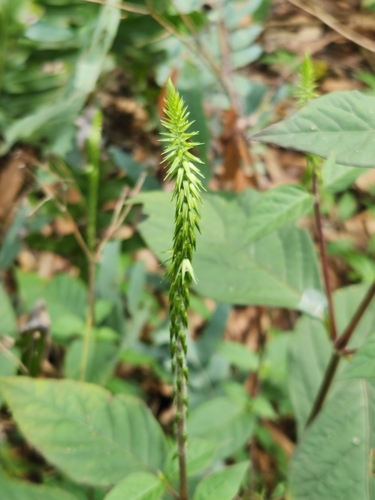
Atriplex hastata
L.
Hastate Orach

Willow Coleman

julieluetzelschwab

julieluetzelschwab
What to Eat
Edible parts: Leaves, Seed
Leaves - cooked. Used as a spinach substitute, they have a fairly bland flavour and are often mixed with stronger tasting leaves. Seed - cooked. Ground into a powder and used to thicken soups etc or added to wheat flour and used in making bread. Very fiddly to harvest because the seed is quite small.
Known Hazards
Where to Find It
Most of Europe, including Britain, south from Scandanavia to N. Africa, east to Asia.
EUROPE: Denmark, Finland (south), Norway (south), Sweden (south), Germany (north), Poland (north), Estonia, Lithuania, Latvia
How to Identify
Atriplex hastata is a ANNUAL growing to 0.8 m (2ft 7in). It is not frost tender. It is in flower from July to September. The species is monoecious (individual flowers are either male or female, but both sexes can be found on the same plant) and is pollinated by Wind. Suitable for: light (sandy) and medium (loamy) soils, prefers well-drained soil and can grow in nutritionally poor soil. Suitable pH: mildly acid, neutral and basic (mildly alkaline) soils and can grow in very alkaline and saline soils. It cannot grow in the shade. It prefers dry or moist soil. The plant can tolerate maritime exposure.
How to Grow
Requires a position in full sun in any well-drained but not too fertile soil. Tolerates saline and very alkaline soils. A polymorphic species. This species is a poor companion for potatoes, inhibiting their growth when growing close to them.
Propagation: Seed - sow April/May in situ. Germination is usually rapid.
Other Uses
Dynamic accumulator.