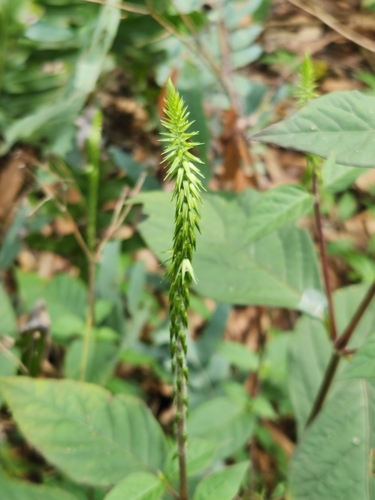
Atriplex obovata
Moq.
Mound Saltbrush

(c) Bobby McCabe, some rights reserved (CC BY), uploaded by Bobby McCabe

(c) Bobby McCabe, some rights reserved (CC BY), uploaded by Bobby McCabe
What to Eat
Edible uses & rating: Leaves (cooked), possibly seeds. Edibility rating: 2–3/5. Taste & processing notes: Typical salty/“cheno” flavor reduced by boiling; use broth cautiously or discard. Season/harvest: Late summer–autumn bloom/seed set. Cautions: Oxalates—limit servings; always cook.
Known Hazards
Where to Find It
Arizona to SW. Colorado and NE. Mexico.
Arizona, Colorado, Mexico Northeast, New Mexico, Texas, Utah.
How to Identify
Atriplex obovata is an evergreen Shrub growing to 1 m (3ft 3in) by 1 m (3ft 3in) at a medium rate. See above for USDA hardiness. It is hardy to UK zone 6 and is not frost tender. The flowers are pollinated by Wind. It is noted for attracting wildlife. Suitable for: light (sandy), medium (loamy) and heavy (clay) soils, prefers well-drained soil and can grow in nutritionally poor soil. Suitable pH: mildly acid, neutral and basic (mildly alkaline) soils and can grow in very alkaline and saline soils. It cannot grow in the shade. It prefers dry or moist soil and can tolerate drought.
How to Grow
A subshrub or shrub growing primarily in the temperate biome. Growing conditions: Full sun; arid, alkaline loams/clays; very drought-tolerant. Hardiness: ~USDA 5–9. Habitat & range: Colorado Plateau, pinyon-juniper zones and valleys. Size & habit: 0.3–1 m rounded mound. Cultivation: Useful for erosion control in alkaline sites; low-water landscape. Weed potential: Low. Atriplex obovata (mound / Navajo saltbush). Flowers are inconspicuous, often unisexual, with no showy petals and lots of exposed anthers—textbook for the genus. Primarily wind-pollinated, with pollen shed into open air and caught by feathery stigmas. Insects may be present but are incidental.
Propagation: Seed (fall sow), or cuttings.
Other Uses
Wildlife/ecology: Browse for wildlife; seed for birds. Useful for erosion control in alkaline sites; low water landscape.
Names & Synonyms
Mound Saltbrush, Navajo Saltbrush, Mound Saltbush, Navajo Saltbush.