Agave shawii
Engelm.
Shaw's agave
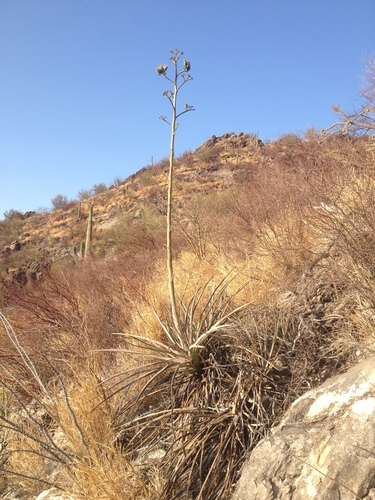
(c) Alma Delia Giles Guzmán, some rights reserved (CC BY-NC-SA), uploaded by Alma Delia Giles Guzmán

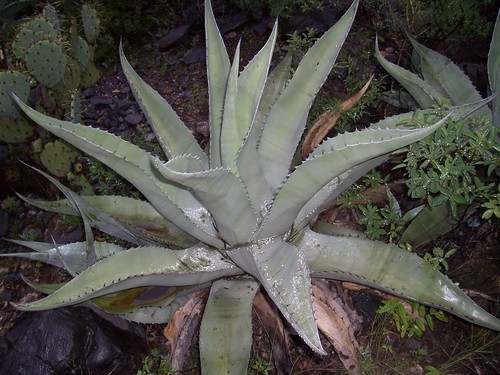
(c) Steven Mlodinow, some rights reserved (CC BY-NC), uploaded by Steven Mlodinow
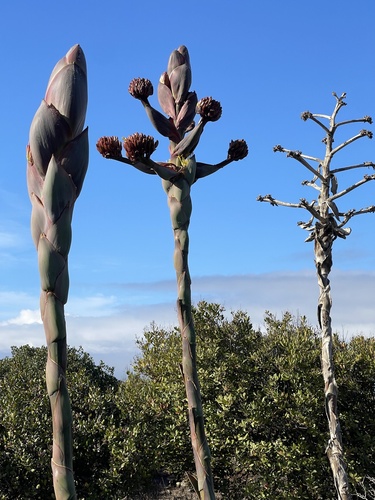
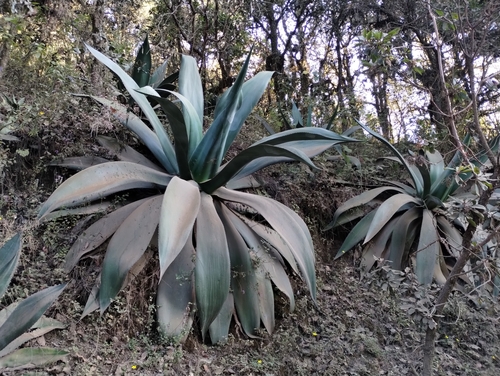
(c) susanbar, some rights reserved (CC BY-NC)
What to Eat
Edible parts: Sap - flowers, Stem pith
The sap from the base of the flowers is eaten, and the stem pith is also edible.
Known Hazards
Where to Find It
It is a warm temperate plant. It grows in coastal areas in Mexico. It suits hardiness zones 9-11.
Australia, Mexico, North America, Tasmania,
How to Identify
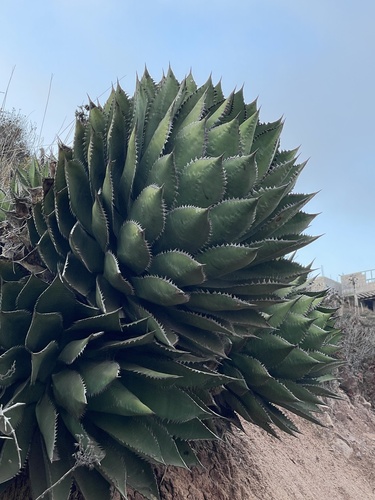
A succulent plant. It grows 2-4.5 m tall and spreads 100-150 cm wide. It normally occurs in clusters. They leaves are green. They are slightly rough. The edges can be wavy. There are teeth along the edge. They are red-brown. They are 6-18 mm long. The flowering stalk is 2-4.5 m long. The flowers are greenish.
Wikipedia
Source ↗Agave shawii is a species of monocarpic succulent plant in the genus Agave, commonly known as Shaw's agave. It is a rosette-forming plant characterized by glossy, green leaves with toothed margins. After several years of slow growth, the plant puts all of its resources to produce a towering stalk of flowers, and then dies. The death of the flowering rosette is compensated by the growth of numerous clonal pups. This species is segregated into two subspecies, one native to the coast of southwestern California and northwestern Baja California, known commonly as the coast agave, and another native to the Baja California desert, known as the Goldman agave. For centuries, this species proved to be an invaluable source of accessible and abundant food for the indigenous peoples in the region, like the Kumeyaay, Tiipai and Paipai. After the European colonization of the Americas, the Spanish missionaries discouraged use of the agave, and moved the native peoples inland. Further development of the agave's habitat by American settlers contributed to the dwindling population of the species. Only two small populations are left within the political boundaries of the United States, one with only a single individual. In Mexico, it is still abundant but threatened by coastal development. Subspecies shawii is designated as an endangered species by the California Native Plant Society and the IUCN. The plant is named for Henry Shaw, the founder of the Missouri Botanical Garden.
Notes
There are about 250 Agave species. The Agavaceae are mostly in the tropics and subtropics. This one is an endangered species.
Names & Synonyms
References (5)
- Beckstrom-Sternberg, Stephen M., and James A. Duke. "The Foodplant Database." http://probe.nalusda.gov:8300/cgi-bin/browse/foodplantdb.(ACEDB version 4.0 - data version July 1994)
- Cundall, P., (ed.), 2004, Gardening Australia: flora: the gardener's bible. ABC Books. p 115
- Facciola, S., 1998, Cornucopia 2: a Source Book of Edible Plants. Kampong Publications. p 3
- Nugent, J., 1999, Agaves and cacti., Permaculture plants. Sustainable Agriculture Research Institute. PO Box 10, Nanup, WA, 6275
- World Checklist of Useful Plant Species 2020. Royal Botanic Gardens, Kew