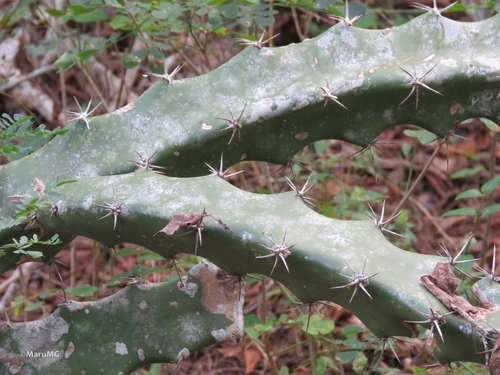
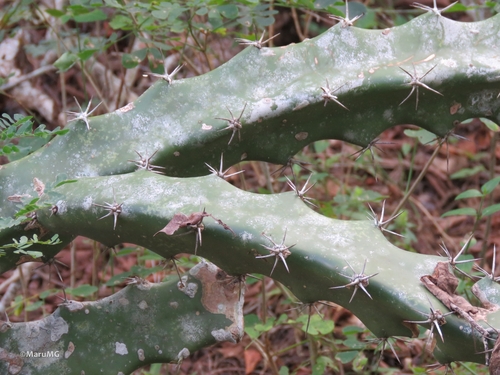
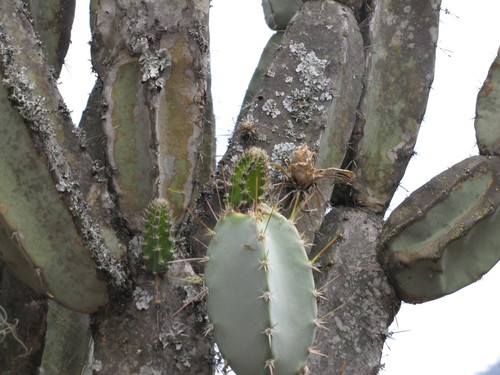
Cylindropuntia spp.
Various
Cholla

azhyd

drylandalgae

drylandalgae
What to Eat
Edible parts: Fruit, Leaves, Seed
See individual species including Opuntia.
Known Hazards
Where to Find It
Mesoamerica. Native to the southwest and southcentral United States, Mexico, and the West Indies. Introduced to South America (Chile, Ecuador, Peru) and South Africa.
NORTHERN AMERICA: Mexico, United States SOUTHERN AMERICA: West Indies
How to Identify
Cylindropuntia spp. is an evergreen Perennial growing to 2 m (6ft) by 2 m (6ft) at a slow rate. See above for USDA hardiness. It is hardy to UK zone 10. Suitable for: light (sandy), medium (loamy) and heavy (clay) soils, prefers well-drained soil and can grow in nutritionally poor soil. Suitable pH: mildly acid, neutral and basic (mildly alkaline) soils. It can grow in semi-shade (light woodland) or no shade. It prefers dry soil and can tolerate drought.
How to Grow
Requires a sandy or very well-drained soil. Dry situations. In the harsher areas of the North American deserts, a Cholla may be the only cactus present where only creosote bush (Larrea tridentada) grows as its companion. Carbon Farming Solutions - Cultivation: minor global crop. Management: standard (Describes the non-destructive management systems that are used in cultivation).
Propagation: Seed - sow early spring in a very well-drained compost. Cuttings of leaf pads at any time in the growing season. Remove a pad from the plant and then leave it in a dry sunny place for a couple of days to ensure that the base is thoroughly dry and has begun to callous. Pot up into a sandy compost. Very easy, rooting quickly.
Medicinal Uses
See individual species.
Other Uses
Carbon Farming Solutions - Agroforestry Services: living fence (Agroforestry is a land use management system in which trees or shrubs are grown around or among crops or pastureland).
Names & Synonyms
Cylindropuntia species. Tree Chola, Cholla, Cylindrical stemmed Opuntia, Jumping Cholla