Eriobotrya deflexa
(Hemsl.) Nakai
Taiwan loquat
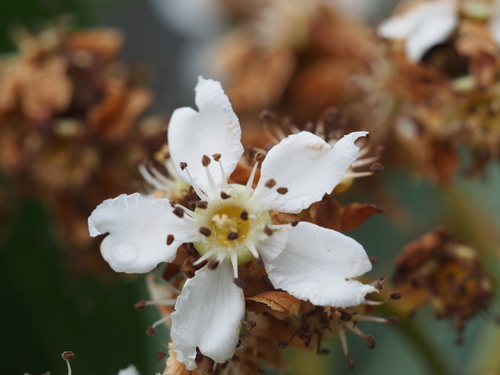
(c) 羅忠良, some rights reserved (CC BY-NC), uploaded by 羅忠良

(c) BunnyTailGra22 | 兔尾草, some rights reserved (CC BY-NC), uploaded by BunnyTailGra22 | 兔尾草
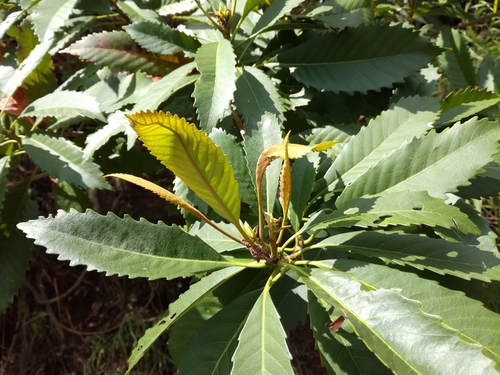
(c) Langzi, some rights reserved (CC BY-NC), uploaded by Langzi
What to Eat
Edible parts: Fruit
The juicy, sweet fruit are eaten fresh.
Where to Find It
A tropical plant. It grows in tropical and subtropical evergreen broad-leaved forests. It occurs on low hills below 1,000 m altitude in Vietnam. It needs to be frost free. In southern China it grows between 1,000-2,100 m above sea level. In Townsville palmetum.
Asia, Australia, China, Europe, France, Indochina, SE Asia, Taiwan, Vietnam,
How to Identify
An evergreen tree. It grows 12-15 m high. The trunk is 25-30 cm across. The small branches are robust. The new growth is deep red. The flowers are white. The flower stalks are rusty brown. The fruit are 1-2.2 cm across. They are red-yellow.
Production
It China plants flower in May to June and fruit in June to August.
Notes
There are 30 Eriobotrya species.
Names & Synonyms
Ti ba mep cuon
References (9)
- Barwick, M., 2004, Tropical and Subtropical Trees. A Worldwide Encyclopedic Guide. Thames and Hudson p 165
- Bot. Mag. (Tokyo) 30:18. 1916
- Flora of China @ efloras.org Volume 9
- Forest Inventory and Planning Institute, 1996, Vietnam Forest Trees. Agriculture Publishing House p 612
- Hu, Shiu-ying, 2005, Food Plants of China. The Chinese University Press. p 432
- Kuo, W. H. J., (Ed.) Taiwan's Ethnobotanical Database (1900-2000), http://tk.agron.ntu.edu.tw/ethnobot/DB1.htm
- Pham-Hoang Ho, 1999, An Illustrated Flora of Vietnam. Nha Xuat Ban Tre. p 778
- Reis, S. V. and Lipp, F. L., 1982, New Plant Sources for Drugs and Foods from the New York Botanical Garden herbarium. Harvard. p 98
- www.desert-tropicals.com
More from Rosaceae


