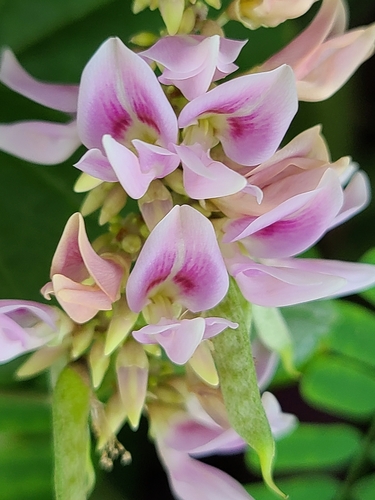
Astragalus gummifer
Labill.
Tragacanth, Gum tragacanth milkvetch

(c) דבורה שיצר, some rights reserved (CC BY-NC), uploaded by דבורה שיצר

(c) Ron Frumkin, some rights reserved (CC BY-NC), uploaded by Ron Frumkin

(c) יאיר אור, some rights reserved (CC BY-NC-SA), uploaded by יאיר אור
What to Eat
A source of a high quality gum tragacanth - used as a thickener in confections, salad dressings, sauces etc[2, 4, 57, 64, 105, 114]. It is an approved additive to food and has the E number E413. Some of the gum exudes naturally from the root and from damaged stems, more can be obtained by incision of the stem about 5cm below ground level.
Known Hazards
Where to Find It
W. Asia - Iraq, Kurdistan
TEMPERATE ASIA: Lebanon, Syria, Turkey,Iraq.
How to Identify
Astragalus gummifer is an evergreen Shrub growing to 0.3 m (1ft) by 0.3 m (1ft in) at a medium rate. See above for USDA hardiness. It is hardy to UK zone 8. The species is hermaphrodite (has both male and female organs) and is pollinated by Bees, Lepidoptera (Moths & Butterflies). The plant is self-fertile. It can fix Nitrogen. It is noted for attracting wildlife. Suitable for: light (sandy) and medium (loamy) soils and prefers well-drained soil. Suitable pH: mildly acid, neutral and basic (mildly alkaline) soils and can grow in very acid soils. It cannot grow in the shade. It prefers dry soil.
How to Grow
Requires a dry well-drained soil in a sunny position. Succeeds in poor soils. Tolerates a pH in the range 3.2 to 7.8. This species is not hardy in the colder areas of the country, it tolerates temperatures down to between -5 and -10°c. Whilst it is likely to tolerate low temperatures it may not be so happy with a wet winter. Plants are intolerant of root disturbance and are best planted in their final positions whilst still small. This plant is a sub-shrub and although it produces woody stems these tend to die back almost to the base each winter. This species has a symbiotic relationship with certain soil bacteria, these bacteria form nodules on the roots and fix atmospheric nitrogen. Some of this nitrogen is utilized by the growing plant but some can also be used by other plants growing nearby. Many members of this genus can be difficult to grow, this may be due partly to a lack of their specific bacterial associations in the soil. The leaves and young shoots can be harvested in spring and early summer. The seeds are typically harvested in late summer to early autumn. stragalus species usually flowers from late spring to mid-summer. Astragalus species generally have a moderate growth rate, establishing within the first year and often reaching full maturity in two to three years.
Propagation: Seed - best sown as soon as it is ripe in a cold frame. A period of cold stratification may help stored seed to germinate. Stored seed, and perhaps also fresh seed, should be pre-soaked for 24 hours in hot water before sowing - but make sure that you do not cook the seed. Any seed that does not swell should be carefully pricked with a needle, taking care not to damage the embryo, and re-soaked for a further 24 hours. Germination can be slow and erratic but is usually within 4 - 9 weeks or more at 13°c if the seed is treated or sown fresh. As soon as it is large enough to handle, prick the seedlings out into individual pots and grow them on in the greenhouse for their first winter, planting them out into their permanent positions in late spring or early summer, after the last expected frosts.
Medicinal Uses
Adaptogen Antitumor Demulcent. The gum obtained from the root and stem is demulcent, though it is not often used internally because it is not completely soluble. This gum has recently been shown to stimulate the immune system and to suppress tumours. The gum has long been employed externally as a dressing for burns and is also used in lozenges in order to bind the ingredients and impart consistency to the product.
Other Uses
Gum Gum Incense Size. Milk Vetch is often used as a cover crop and for erosion control. It improves soil fertility through nitrogen fixation and can be used in mixed plantings to enhance biodiversity. Gum tragacanth is obtained from the stem (see above). It has a wide range of uses including:- a thickening agent in preparing dyes for calico printing, textile dyes and for dressing fabrics, it is also a thickener in making glues, watercolours, ink (where it supplies a gloss), it is a binding agent in paper making, a culture medium in laboratories etc. Both the stems and the gum can be burnt as a fragrant incense.