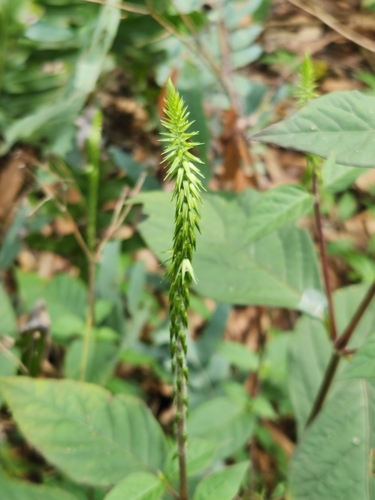
Atriplex mucronata
Raf.

(c) wsimmons, some rights reserved (CC BY-NC), uploaded by wsimmons
What to Eat
Edible parts: Leaves
Leaves - cooked. A salty taste.
Known Hazards
Where to Find It
Eastern N. America - Florida to Texas, north to southern New Hampshire.
Coming Soon
How to Identify
Atriplex mucronata is a ANNUAL growing to 0.4 m (1ft 4in). It is in flower from July to September, and the seeds ripen from August to October. The species is hermaphrodite (has both male and female organs) and is pollinated by Wind. Suitable for: light (sandy), medium (loamy) and heavy (clay) soils and prefers well-drained soil. Suitable pH: mildly acid, neutral and basic (mildly alkaline) soils and can grow in very alkaline and saline soils. It cannot grow in the shade. It prefers dry or moist soil. The plant can tolerate maritime exposure.
How to Grow
We have very little information on this species and do not know if it will be hardy in Britain, though it should be possible to grow it as a spring-sown annual. The following notes are based on the general needs of the genus. Succeeds in full sun in any well-drained but not too fertile soil. Most species in this genus tolerate saline and very alkaline soils.
Propagation: Seed - sow April/May in situ. Germination is usually rapid.