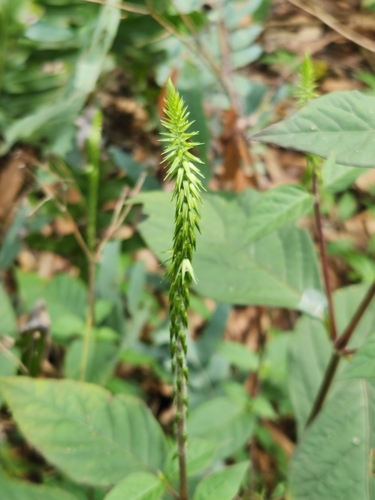
Dendrocalamus hookeri
Munro
Bhalu bans, Bhutan Green Bamboo

Royal Botanic Gardens, Kew

Royal Botanic Gardens, Kew

Royal Botanic Gardens, Kew
What to Eat
Edible parts: Shoots
Young shoots - cooked as a vegetable.
Where to Find It
E. Asia - northeast India, Bhutan, Nepal and Myanmar.
TROPICAL ASIA: Bhutan, India (Arunachal Pradesh, Assam, Manipur, Meghalaya, Mizoram, Nagaland), Nepal (east), Myanmar (Kachin)
How to Identify
Dendrocalamus hookeri is an evergreen Bamboo growing to 20 m (65ft) by 2 m (6ft) at a fast rate. See above for USDA hardiness. It is hardy to UK zone 10. The flowers are pollinated by Wind. Suitable for: light (sandy), medium (loamy) and heavy (clay) soils and prefers well-drained soil. Suitable pH: mildly acid, neutral and basic (mildly alkaline) soils. It can grow in semi-shade (light woodland) or no shade. It prefers moist soil.
How to Grow
Industrial Crop: Biomass Management: Managed Multistem Minor Global Crop Other Systems: Multistrata Other Systems: Strip intercrop. Bamboos have an interesting method of growth. Each plant produces a number of new stems annually - these stems grow to their maximum height in their first year of growth, subsequent growth in the stem being limited to the production of new side branches and leaves. In the case of some mature tropical species the new stem could be as much as 30 metres tall, with daily increases in height of 30cm or more during their peak growth time. This makes them some of the fastest-growing species in the world. Bamboos in general are usually monocarpic, living for many years before flowering, then flowering and seeding profusely for a period of 1 - 3 years before usually dying.
Propagation: Seed - many, if not all, members of this genus have a short viability and should be sown within 2 - 3 months of harvest. Sow in containers in a lightly shaded position and only just cover. Germination usually takes place readily. Prick out into individual pots as soon as the plants are large enough to handle. Plant out into permanent positions when 20cm tall. Plants may remain in their low-growing juvenile state for several years - cutting the culms to the ground level can stimulate taller adult growth. Rhizome, culm and branch cuttings. The propagules are raised in the nursery and after they have produced roots they are planted out in the field before or during the first half of the rainy season.
Other Uses
The culms are used for house construction, particularly roofing. Strips from the culms are used for weaving baskets and buckets. Thin culms are used as walking sticks, whilst large ones are used as containers. The culms are also pulped for paper making. The dark green stems are 15 - 20 metres long, 10 - 15cm in diameter, with many long internodes 40 - 50 cm long, and walls around 25mm thick. Harvesting may start 3 - 4 years after a clump has begun to produce culms of maximum size. Only culms older than 3 years are harvestable and harvesting should never be done during the growing season. It is recommended to cut the culms lower than 30cm above the ground level, but not below the 2nd node. Debris and cut branches should always be removed completely. Other uses: Erosion Control ? Landslip Control, Dust Suppression ? Dust Capture, Edible Shoots ? Poles, Shading, Live Fencing, Carbon Sequestration, Stock Feed.
Names & Synonyms
Bhutan green bamboo, Wabo-e