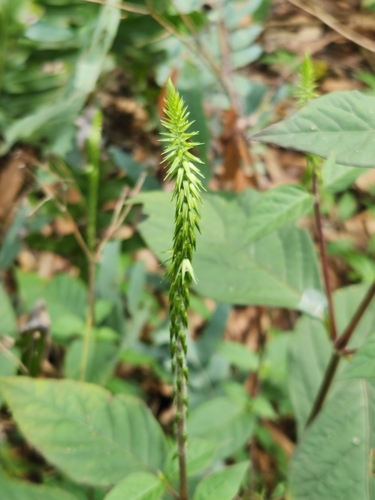
Elymus glauca
Buckley.
Blue Wild Rye

Dean Lyons

Dean Lyons

Dean Lyons
What to Eat
Edible parts: Seed
Seed - cooked. It can be ground into a flour and used to make bread. Very fiddly to use, the seed is small and difficult to extract.
Where to Find It
N. America - Ontario and Michigan to British Columbia, south to Colorado and California.
Coming Soon
How to Identify
Elymus glauca is a PERENNIAL growing to 1 m (3ft 3in) by 0.5 m (1ft 8in). See above for USDA hardiness. It is hardy to UK zone 5 and is not frost tender. It is in flower in August, and the seeds ripen from September to October. The species is hermaphrodite (has both male and female organs) and is pollinated by Wind. Suitable for: light (sandy), medium (loamy) and heavy (clay) soils, prefers well-drained soil and can grow in nutritionally poor soil. Suitable pH: mildly acid, neutral and basic (mildly alkaline) soils. It cannot grow in the shade. It prefers dry or moist soil. The plant can tolerate maritime exposure.
How to Grow
An easily grown plant, it succeeds in most soils, preferring a sandy soil and a sunny position.
Propagation: Seed - sow mid spring in situ and only just cover the seed. Germination should take place within 2 weeks. If the supply of seed is limited, it can also be sown in mid spring in a cold frame. Only just cover the seed. When large enough to handle, prick the seedlings out into individual pots and plant them out in summer Division in spring or summer. Very easy, larger clumps can be replanted direct into their permanent positions, though it is best to pot up smaller clumps and grow them on in a cold frame until they are rooting well. Plant them out in the spring.
Other Uses
Soil stabilization Weaving. The leaves are used for making mats, rope, paper etc. Often planted near the coast to stabilize sand dunes.