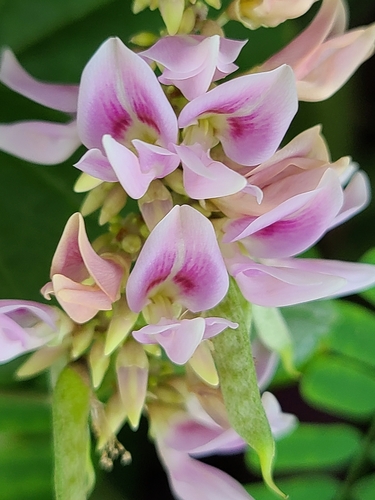
Lathyrus sativus
L.
Chickling Pea, White pea

(c) H. Zell, some rights reserved (CC BY-SA)

(c) יאיר אור, some rights reserved (CC BY-NC-SA), uploaded by יאיר אור

No machine-readable author provided. Chocid~commonswiki assumed (based on copyright claims). (via Wikimedia Commons)
What to Eat
Edible parts: Leaves, Seed, Seedpod, Shoots
The immature seed can be eaten like green peas. The mature seed is eaten cooked. It needs to be soaked and well cooked before being eaten. The seed can also be ground into a powder and mixed with wheat in a ratio of one part vetch to 3 parts of wheat flour to make a protein-enhanced bread. Some caution is advised, see the notes above on toxicity. Young seedpods - cooked. Young shoots - cooked.
Known Hazards
Where to Find It
The original habitat is obscure, possibly S. Europe.
Coming Soon
How to Identify
Lathyrus sativus is a ANNUAL growing to 0.6 m (2ft). It is in flower from June to July, and the seeds ripen from August to September. The species is hermaphrodite (has both male and female organs) and is pollinated by Insects. It can fix Nitrogen. Suitable for: light (sandy), medium (loamy) and heavy (clay) soils. Suitable pH: mildly acid, neutral and basic (mildly alkaline) soils. It cannot grow in the shade. It prefers moist soil.
How to Grow
An easily grown plant, succeeding in any moderately good garden soil but preferring a position in full sun. The chickling pea is cultivated for its edible seed in India and the Middle East, but see notes above on toxicity. This species has a symbiotic relationship with certain soil bacteria, these bacteria form nodules on the roots and fix atmospheric nitrogen. Some of this nitrogen is utilized by the growing plant but some can also be used by other plants growing nearby. When removing plant remains at the end of the growing season, it is best to only remove the aerial parts of the plant, leaving the roots in the ground to decay and release their nitrogen.
Propagation: Pre-soak the seed for 24 hours in warm water and then sow in early spring in a cold frame. When they are large enough to handle, prick the seedlings out into individual pots and plant them out in the summer. If you have sufficient seed, then it can also be sown in situ in mid spring. Division in spring. It may not transplant well so care should be taken.
Medicinal Uses
Cathartic. The oil from the seeds is a powerful and dangerous cathartic.
Other Uses
Green manure Soil stabilization. The plant has an extensive root system and fixes atmospheric nitrogen through bacteria that live on the roots. It makes a good soil-enriching green manure crop or can be planted for erosion control.