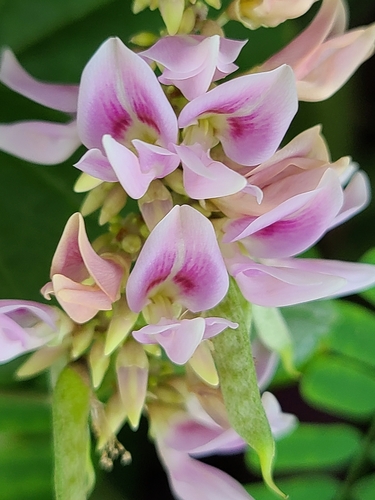
Medicago polymorpha
L.
Toothed Bur-Clover, Burclover

(c) hfabela, some rights reserved (CC BY-NC)

(c) Daniel Ruppel, some rights reserved (CC BY-NC), uploaded by Daniel Ruppel

(c) Piermario Maculan, some rights reserved (CC BY-NC), uploaded by Piermario Maculan
What to Eat
Edible parts: Flowers, Leaves, Seed, Shoots
Leaves and young shoots - raw or cooked as a potherb. Only the young leaves are eaten raw. Plants can be harvested on a cut and come again basis, the first harvest can be made about one month after sowing, plants can then be harvested another 3 - 4 times at intervals of a few weeks. The young leaves contain about 6% protein, 0.14% fat, 9.5% carbohydrate, 1.4% ash. They are rich in vitamins A, C, and E. Flowers - raw or cooked. Seed - cooked. The seed can be parched, ground into a powder and mixed with water to make a mush.
Where to Find It
Central and southern Europe, including Britain, south and east to N. Africa and Asia.
TEMPERATE ASIA: United Arab Emirates, Oman, Qatar, Yemen, Afghanistan, Cyprus, Iran, Iraq, Israel, Jordan, Lebanon, Syria, Turkey, Russian Federation-Ciscaucasia (Ciscaucasia), Azerbaijan, Georgia, Russian Federation (Dagestan), Kazakhstan, Kyrgyzstan, Tajikistan, Turkmenistan, Uzbekistan EUROPE: United Kingdom, Austria, Germany, Ukraine (incl. Krym), Former Yugoslavia, Albania, Bulgaria, Greece (incl. Crete), Italy (incl. Sardinia, Sicily), Romania, Spain (incl. Baleares), France (incl. Corsica), Portugal AFRICA: Spain (Canarias), Portugal (Madeira Islands), Algeria, Egypt, Libya, Morocco, Tunisia
How to Identify
Medicago polymorpha is a ANNUAL growing to 0.6 m (2ft). It is not frost tender. It is in flower from May to August, and the seeds ripen from July to September. The species is hermaphrodite (has both male and female organs). The plant is self-fertile. It can fix Nitrogen. Suitable for: light (sandy) and medium (loamy) soils and prefers well-drained soil. Suitable pH: mildly acid, neutral and basic (mildly alkaline) soils. It cannot grow in the shade. It prefers dry or moist soil.
How to Grow
Prefers a dry neutral soil and dislikes shade. Prefers a light well-drained soil. A very variable plant. Cultivated for its edible leaves in China. This species has a symbiotic relationship with certain soil bacteria, these bacteria form nodules on the roots and fix atmospheric nitrogen. Some of this nitrogen is utilized by the growing plant but some can also be used by other plants growing nearby. When removing plant remains at the end of the growing season, it is best to only remove the aerial parts of the plant, leaving the roots in the ground to decay and release their nitrogen.
Propagation: Pre-soak the seed for 12 hours in warm water and then sow in spring in situ. The seed can also be sown in situ in the autumn.
Other Uses
Green manure. Used as a green manure, it fixes atmospheric nitrogen.