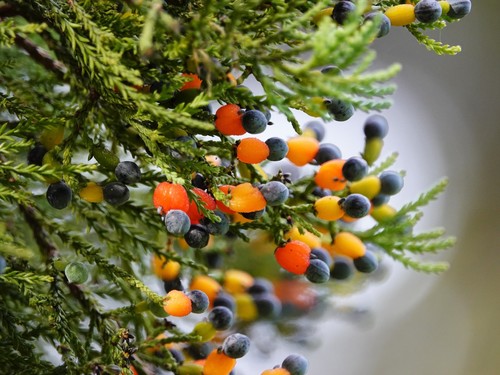
Microcachrys tetragona
Hook.f.

(c) dracophylla, some rights reserved (CC BY-NC-SA)

(c) Matt Berger, some rights reserved (CC BY), uploaded by Matt Berger

(c) Matt Berger, some rights reserved (CC BY), uploaded by Matt Berger
What to Eat
Edible parts: Fruit
Fruit - raw. It is rather small, about the size of a small blackcurrant, and does not have much flavour.
Where to Find It
Australia - Tasmania.
AUSTRALASIA: Australia (Tasmania)
How to Identify
Microcachrys tetragona is an evergreen Shrub growing to 0.2 m (0ft 8in) by 2 m (6ft) at a slow rate. See above for USDA hardiness. It is hardy to UK zone 8. It is in leaf all year. The species is dioecious (individual flowers are either male or female, but only one sex is to be found on any one plant so both male and female plants must be grown if seed is required). and is pollinated by Wind. The plant is not self-fertile. Suitable for: light (sandy), medium (loamy) and heavy (clay) soils. Suitable pH: mildly acid, neutral and basic (mildly alkaline) soils. It can grow in semi-shade (light woodland) or no shade. It prefers moist soil.
How to Grow
Requires a moist soil and very high humidity with plenty of rain. Succeeds on a north facing slope. This species is fairly hardy in Britain, succeeding outdoors in all but the coldest parts of the country. A slow growing plant. Plants are usually dioecious but monoecious forms are sometimes found. Female plants can set fruit in the absence of a male but male plants must also be grown if fertile seed is required.
Propagation: Seed - best sown as soon as it is ripe in a cold frame. The seed can be very slow to germinate, stored seed often requiring 12 months stratification. When they are large enough to handle, prick the seedlings out into individual pots and grow them on in the greenhouse for at least their first winter. Plant them out into their permanent positions in late spring or early summer, after the last expected frosts. Bird-sown seedlings, if they can be obtained, are the best way of propagating this plant.
Names & Synonyms
More from Podocarpaceae