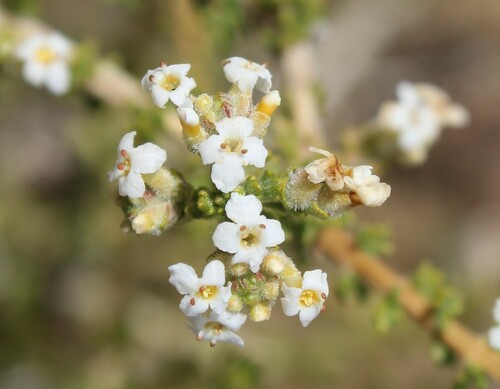
Callicarpa macrophylla
Vahl.

(c) Sagnik Dutta Roy, some rights reserved (CC BY), uploaded by Sagnik Dutta Roy

(c) Dr. Alexey Yakovlev, some rights reserved (CC BY), uploaded by Dr. Alexey Yakovlev

(c) zhangyuhong, some rights reserved (CC BY-NC), uploaded by zhangyuhong
What to Eat
Edible parts: Fruit
Fruit - raw. The white spongy fruit is sweet and succulent when fully ripe
Where to Find It
E. Asia - Himalayas.
TEMPERATE ASIA: China (Guangdong Sheng, Guangxi Zhuangzu Zizhiqu, Guizhou Sheng, Yunnan Sheng) TROPICAL ASIA: Bhutan, India, Sri Lanka, Nepal, Myanmar, Thailand, Vietnam
How to Identify
Callicarpa macrophylla is a deciduous Shrub growing to 2.5 m (8ft 2in). See above for USDA hardiness. It is hardy to UK zone 9. It is in flower from June to October, and the seeds ripen from August to October. The species is hermaphrodite (has both male and female organs). Suitable for: light (sandy), medium (loamy) and heavy (clay) soils and prefers well-drained soil. Suitable pH: mildly acid, neutral and basic (mildly alkaline) soils. It can grow in semi-shade (light woodland) or no shade. It prefers moist soil.
How to Grow
Requires a sunny position or light dappled shade. Prefers a highly fertile well-drained loamy soil. This species is only likely to be hardy in the very mildest parts of Britain, requiring a warm sunny corner. Requires cross-pollination for good fruit production. Plants in this genus are notably resistant to honey fungus.
Propagation: Seed - sow February in a greenhouse. Only just cover the seed. Germination usually takes place within 1 - 3 months at 18°c. When large enough to handle, prick the seedlings out into individual pots and grow them on in the greenhouse for at least their first winter, planting them out into their permanent positions in late spring or early summer, after the last expected frosts. Cuttings of half-ripe wood 10cm long, July/August in a frame. High percentage. Cuttings of mature wood of the current season's growth with a heel taken in early spring.
Medicinal Uses
Antirheumatic Aromatic Dysentery Poultice Stomachic. The leaves are heated and applied as a poultice to ease the pain of rheumatic joints. A decoction of the leaves is used in the treatment of diarrhoea and dysentery. A juice made from the leaves mixed with equal portions of Drymaria diandra and Oxalis corniculata is used in the treatment of gastric troubles. The root is chewed to relieve rashes on the tongue. A paste made from the roots is used to treat fevers. The juice of the root is used to treat indigestion. An oil obtained from the roots is aromatic and stomachic. It is assumed that this is an essential oil. The inner bark is pounded and used as a poultice on cuts and wounds. The fruits are chewed to treat boils on the tongue. The juice of ripe fruits is used in the treatment of indigestion and fevers.
Other Uses
Wood. Wood - soft. It is used as a fuel.